Siemens launches digital decarbonisation tool at Climate Week NYC to help simplify the path to Net-Zero Facilities


- The Decarbonization Business Optimizer (DBO™) provides baseline carbon assessments and more efficient pathways to net-zero emissions based on location, type and size of commercial and industrial facilities
- Integrates verified data sets and tools from the US Department of Energy, Environmental Protection Agency, and National Renewable Energy Laboratory
- Built on Amazon Web Services (AWS) using serverless architecture to minimize the tool’s carbon footprint
Siemens Financial Services launched the Decarbonization Business Optimizer (DBO™), a cloud-based tool created to help address the overwhelming complexity of decarbonizing buildings and the financing needed to get to net-zero emissions. The DBO is a free, digital web tool that removes the initial knowledge barrier and uncovers more efficient strategies to help decarbonize a company’s facilities. The scenario modeling and optimization tool aggregates and leverages data from relevant governmental agencies including the U.S. Department of Energy (DOE), the Environmental Protection Agency (EPA), and the DOE’s National Renewable Energy Laboratory (NREL).
“Companies, specifically those in the supply chain, are increasingly asked to report their carbon footprint to their customers — yet many do not know where to begin,” said Anthony Casciano, President and CEO of Siemens Financial Services, Inc. “The DBO addresses these barriers by taking action and puts companies of all sizes, and at all stages, in a better position to create long-term value, accelerating participation in the transition to net-zero emissions.”
The DBO generates cost effective decarbonization scenarios for each facility using the address, facility size and type (for example, a hospital, office building, manufacturing plant, etc.). The estimated carbon footprint calculated for the facility, as well as the energy cost, is based on data relevant to its geographic location, enabling a more accurate estimate than using country-wide averages. The tool also considers site-specific data such as the annual energy use or load profile, if available, to generate an even more accurate result.
“A lack of data sometimes can deter companies from initiating a sustainability strategy,” said Lee Evangelakos from American Industrial Partners (AIP). “As an initial tester, we found that the DBO tool is a great way to get started in estimating facility footprints. The tool enables industrial businesses to think through the building blocks of their emissions profiles and how they could begin to take action towards decarbonization.”
Users can discover and choose a combination of generation and storage technologies that makes the most sense for their site such as solar panels, combined heat and power (CHP), thermal energy storage, battery storage, and more. Customized decarbonization scenarios can also be generated based on a desire for specific technologies, resilience to grid outages, or a maximum budget, enabling data-driven decarbonization decision making. The tool also provides a summary of estimated return on investment (ROI).
“Trusted data sets coupled with credible modeling and analysis tools are vital in the complex decision-making process to achieve a clean energy future,” said Roderick Jackson, Laboratory Program Manager for Building Technologies at NREL. “NREL-developed tools are built to be leveraged in this way—including ComStock™, REopt®, and our Annual Technology Baseline framework. It’s great to see that in practice.”
SFS developed the tool in partnership with Siemens Technology, the company’s central R&D department. The tool is built on AWS, utilizing server-less architecture to lower its workload carbon footprint by allowing the DBO to operate only when needed, rather than running constantly. A recent study estimates AWS’s infrastructure is up to 4.1 times more efficient than on-premises, and when workloads are optimized on AWS, the associated carbon footprint can be reduced by up to 99 percent.
The tool also leverages public data made available through the Amazon Sustainability Data Initiative (ASDI) to help estimate thermal properties of materials in buildings. ASDI works with sustainability-focused government agencies to host, and deploy key datasets on the AWS Cloud, including weather observations and forecasts, climate projection data, satellite imagery, hydrological data, air quality data, and ocean forecast data.
“At AWS, we are committed to helping our customers build a more sustainable future,” said Chris Walker, Director of Sustainability for AWS. “This is a shared goal we have with Siemens and all of our customers. We also provide knowledge and tools, such as Amazon Sustainability Data Initiative (ASDI), for organizations of all sizes, and across all sectors, to build and implement solutions like DBO that support their sustainability goals.”
Looking ahead, SFS will add a vehicle fleet analyzer to assist companies with fleet electrification and a climate resiliency feature to help identify a site’s ability to withstand extreme weather.
Source: BUSINESS WIRE



Related News.

Cyprus Marine Club Welcomes a Full House for Aphentrica’s War Risks Presentation
The Cyprus Marine Club marked its return after the summer break with a full house at Gazebo Mare on Tuesday, 22 September, bringing together members,…
IMO seeks feedback on Maritime Single Window implementation
The International Maritime Organization (IMO) has launched a global survey to assess the implementation and use of Maritime Single Windows (MSWs),…

World Maritime Day industry panel to examine the gap between maritime policy and the reality of life at sea
OneCare Group will bring together crewing, safety, insurance and wellbeing specialists for a World Maritime Day webinar examining how shipping can…

IUMI President – Marine insurers are war insurers
Marine insurers are at the heart of managing war risks to global shipping and must continue to develop the tools needed to support and facilitate…
Seafarer welfare is improving amongst leading companies, but five years of evidence shows this progress is far from the norm
Five years on, the Seafarers’ Rights Code of Conduct is driving more than 1,000 companies to participate in RightShip’s Crew Welfare…

The UK ETS arrives for shipping what it means for charterers
Introduction The UK Emissions Trading Scheme (UK ETS) was extended to domestic maritime activity on 1 July 2026, following the EU ETS, FuelEU…
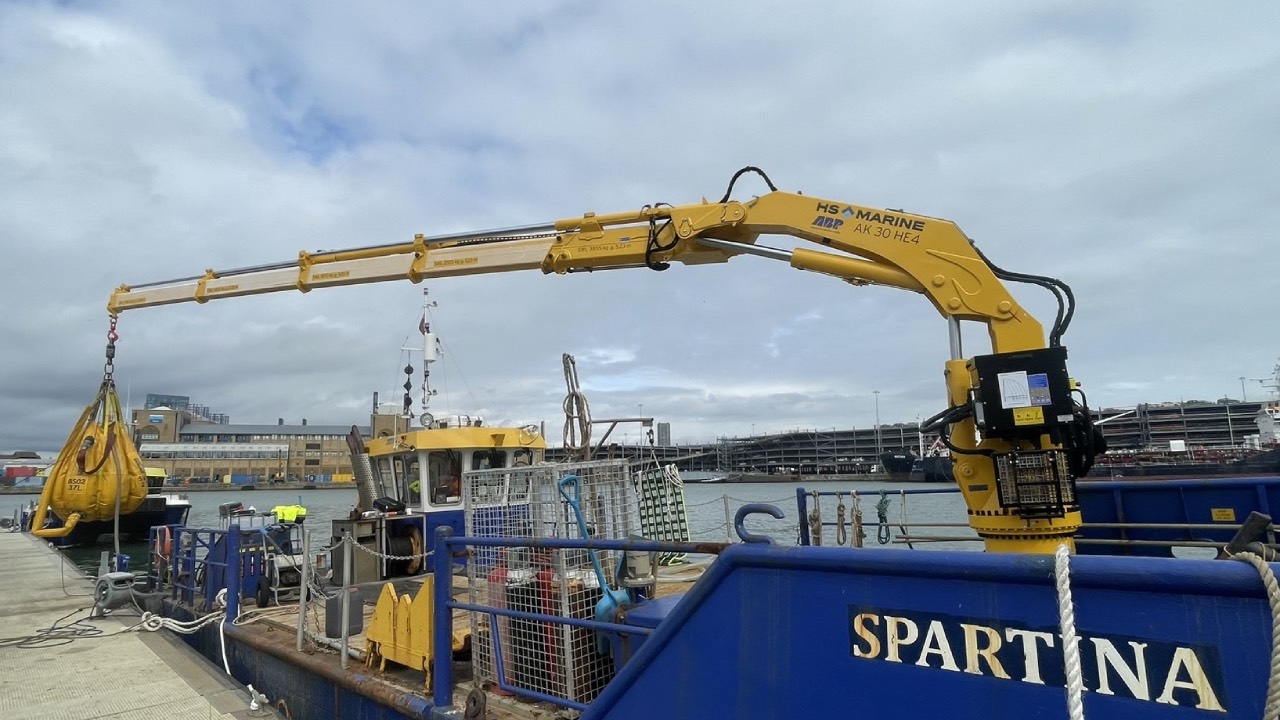
ABP Southampton invests locally with Marine Cranes to boost capability
Associated British Ports , the UK’s largest port operator, has invested a new marine deck crane aboard Spartina, one of the Port of Southampton’s…
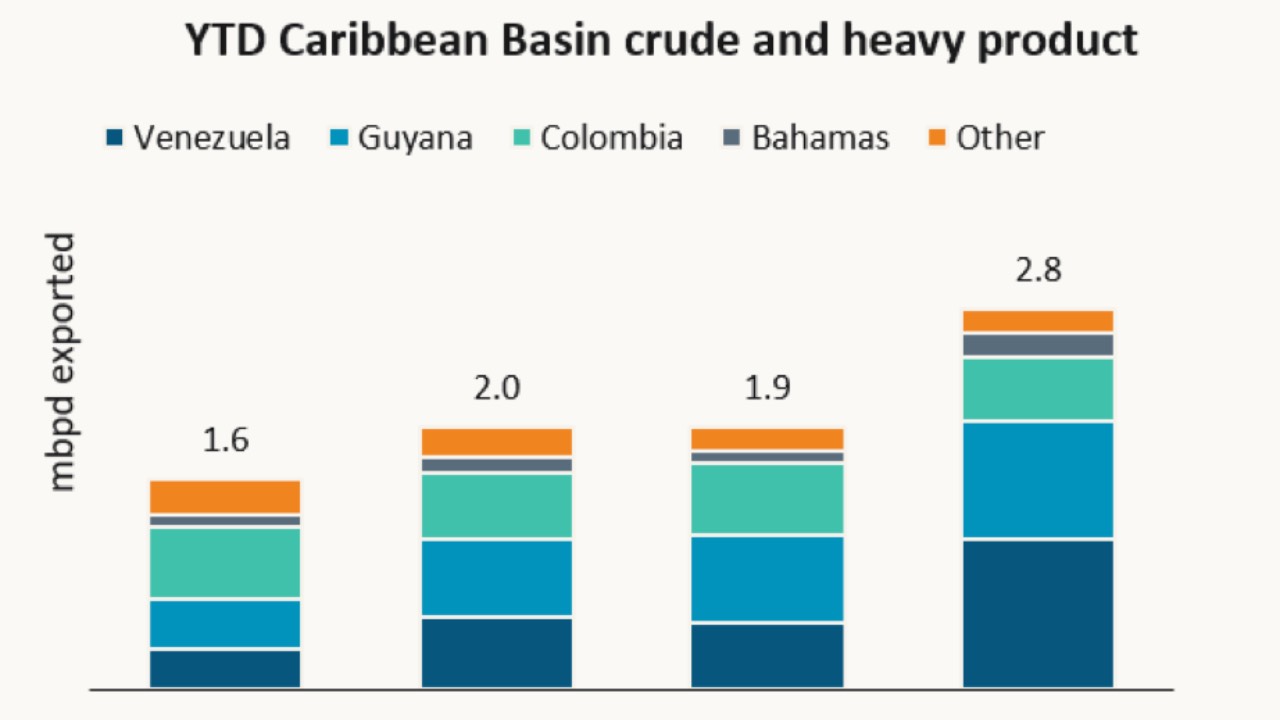
BIMCO Shipping Number of the Week
Caribbean Basin crude oil and heavy product exports jump 45% “Seaborne exports of crude oil and heavy products from the Caribbean Basin have…

xclusiv S&P Report 21th September 2026
Pls find below the [xclusiv] S&P Report 21th September 2026 [xclusiv] 2026_09_21
Marine insurance supply remains stable as geopolitical and technical changes reshape the market, says IUMI President
The global marine insurance market remains in a stable position, with premium growth strongly supported by a weak USD in hull and cargo. Meanwhile…
Subscribe to our newsletter!
if you dont want to swim alone in the ocean of news, sign up for the newsletter, and you will receive daily all the important news of world shipping!
