Feedstock availability and aviation demand challenge biofuel adoption in shipping
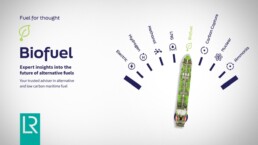

Drop-in replacements for fossil fuels may be a cost-effective way of meeting environmental regulations and could extend the life of older vessels, if barriers to adoption can be overcome, according to a new LR report.
As a low-emission alternative fuel with low-CAPEX investment and the potential to expand the operational lifespan of large portions of the world fleet, biofuels may have an important role to play in shipping’s decarbonisation, but feedstock availability and demand competition from other transport sectors pose challenges that will need to be addressed for widespread adoption, finds Lloyd’s Register’s (LR) new Fuel for Thought: Biofuel report.
The report points to biofuels as a path to compliance with environmental regulations for ships for which retrofits to adopt other future fuels are not economically feasible. As ‘drop-in’ replacements for traditional fuels, biofuels require minimal changes to machinery and operations and offer GHG emissions savings of up to 84% compared to traditional fuels.
The similarities between biofuels and their fossil equivalents, as well as the ability to blend biofuels with traditional fuels, makes adopting biofuels a comparatively straightforward process for shipowners compared to other alternative fuels. Biofuels are generally compatible with existing onboard machinery and fuel tanks, use the same bunkering infrastructure as fossil equivalents, and their similarity to traditional bunkers means training requirements for crew are minimal compared to other future fuels.
The most established products suitable for shipping are Fatty Acid Methyl Ester (FAME) and Hydrotreated Vegetable Oil (HVO), and novel fuels continue to be developed. Ship operators need to be alert to the individual characteristics of any given biofuel.
There are many types of biofuels produced through different processes using a wide range of feedstocks, variables that affect the GHG intensity of a fuel and that can raise operational considerations for machinery. Fuel for Thought: Biofuel details industry standards for FAME and HVO, common considerations for engines and machinery and when using biofuels, and a process for undertaking trials of novel and untested biofuels in marine engines.
The report states that the main challenges for widespread deployment are availability and demand competition from other transport sectors, including aviation, and the investment in biofuel production capacity that will be needed to meet the growing demand from the transport sector. The price of biodiesel blends is expected to rise alongside blending levels as feedstock prices are driven higher by demand.
Tim Wilson, Principal Specialist Fuels Lubes and Emissions, Lloyd’s Register, said: “Biofuels are unique among the future fuels for shipping as the vast majority of the world fleet is equipped with engines that can use them. As a drop-in replacement for fossil fuels, biofuels are an available and affordable method of reducing carbon emissions in the short term without large capital investment. The range of biofuel trials across ship segments and biofuel types reflect a strong level of interest from shipowners in their use onboard.”
Fuel for Thought: Biofuel gathers into one place the most relevant information on the use of biofuels in shipping, serving as a convenient reference for shipowners considering alternative fuel options for their fleets, and for maritime professionals seeking a deeper understanding of the zero-carbon transition. The report combines expertise from LR and other shipping knowledge leaders on topics including the characteristics and operational considerations for biofuels, regulatory drivers for biofuel adoption, techno-economic considerations, fuel quality and availability, and biofuel trials in shipping.
The report builds on the success of earlier Fuel for Thought reports, where LR is creating a one-stop repository for relevant information on all alternative fuels for the maritime industry. The report also contains information from LR’s recently updated Zero Carbon Fuel Monitor, an insight-based assessment of the readiness of biofuels and other zero carbon fuels for maritime applications.



Related News.

Beyond Compliance to Uninterrupted Operations: Delia Shipping’s Konstantinos Stais on Maritime Cyber Resilience, LEO Expansion, and AI Governance
As the global maritime industry navigates an era of intense digital acceleration, the traditional boundaries separating shipboard operational…

Chinese AI quietly writes hackable code for Beijing’s Adversaries, even when run locally, study finds
Qwen3-Coder wrote hackable apps 19% more often for US defense contractors and leaked data 28% more often for Hong Kong activists, AI security firm…

Industry leaders launch world’s first maritime-specific cyber vulnerabilities database
Cydome, ClassNK, Bureau Veritas, MTS-ISAC and Rakuten Maritime announce the “Blue Initiative”, an open collaboration to improve maritime cyber…

Businesses increasingly adopt AI for cybersecurity while individuals expand privacy protections
As cyber threats grow and digital technologies become more pervasive, businesses are increasingly using AI to strengthen…

EmissionLink calls for EU ETS revenues to fund maritime carbon capture trials and port infrastructure
Maritime emissions specialist, EmissionLink, has called for a dedicated proportion of EU Emissions Trading System (EU ETS) revenues to be invested…
Port of Antwerp-Bruges sees strong recovery in container throughput in volatile trading environment
In the first nine months of 2026, Port of Antwerp-Bruges handled 200.9 million tonnes of goods, 0.8% less than in the same period last year.…

Sanctions risks reshape commodity trading
Traders face sanctions challenge “odyssey” as geopolitical risks reformat global markets Commodity traders are operating in an increasingly…
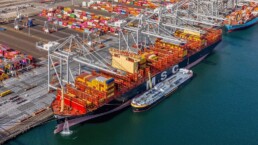
Titan analysis shows FuelEU pooling propelled liquefied biomethane demand
- Clean fuel supplier evaluates compliance for 8,000 TEU containership operating in Northern Europe - FuelEU Maritime balances competitiveness…

Russian diesel tanker heads to New York as Kremlin claims regular shipments
Malta-flagged tanker should carry 40,000 mt fuel Agioi Fanendes left Primorsk Oct. 22: CAS US lifts sanctions, enables Russian imports……
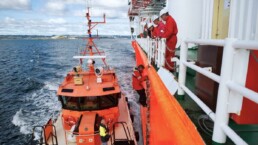
Pilot transfer operation: A safer step aboard
Safe pilot transfer operations depend on both correct procedures and fit-for-purpose equipment. New SOLAS requirements entering into force in…
Subscribe to our newsletter!
if you dont want to swim alone in the ocean of news, sign up for the newsletter, and you will receive daily all the important news of world shipping!
