DeepSea Technologies: Revolutionising Maritime Efficiency with AI-Driven Solutions
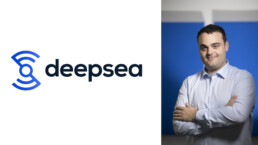

Interview between Adonis Violaris of CSN Konstantinos Kyriakopoulos, CEO, DeepSea Technologies
Can you provide an overview of DeepSea Technologies’ mission and its core focus within the maritime industry?
We’re an AI solutions developer supporting decarbonisation in the maritime industry, and proud hyper-optimisers. There’s a huge amount of waste in how ships are operated in 2024: our mission is to identify that waste and provide our clients with capabilities to eliminate it.
The primary obstacle to this has always been a lack of understanding about how ships behave (basically, burn fuel) in the ever-changing landscape of the sea – there are so many parameters involved that it’s almost impossible to make sense of the data. There’s only one tool that can truly capture these complex dynamics – and that is artificial intelligence.
From that foundation, DeepSea exploits AI-generated models to answer the critical questions: How fast should I be going? When should I change heading? How fouled is my hull? Is my main engine functioning optimally?
How does DeepSea Technologies’ technology contribute to enhancing maritime operations and safety?
The vast majority of vessel inefficiency comes from operators wrongly answering those questions I’ve mentioned above. The impact is directly measurable: when we give our clients the tools to answer them correctly, we regularly see efficiency gains in excess of 10% – which equates to tens of millions of dollars of fuel annually for some of our larger clients.
What are the key features or benefits that DeepSea Technologies offers to shipowners and operators?
I think one of the key things to note is that efficiency isn’t necessarily as simple a concept as it might seem. For example, whilst pure sailing efficiency, i.e. fuel burned divided by distance travelled, gets a lot of attention, there’s also commercial efficiency to consider, calculated as voyage revenue minus voyage costs and opportunity costs. The two don’t always align – which is where optimisation companies often fall down.
Understanding the real-life context of a voyage is critical to providing shipowners and operators with a tool that can help them be at the top of their game: functional, profitable, and sustainable. That means being able to optimise vessels and voyages with consideration for things like TCE, flexible ETAs, high-risk areas, CII impact, and many other factors.
Our approach is entirely focused on cutting the waste out of our clients’ operations in a way that helps them achieve their business objectives.
Can you discuss the importance of data analytics and artificial intelligence in maritime decision-making, and how DeepSea Technologies is leveraging these technologies?
Since my earliest days as an AI researcher at Cambridge University – and, coming from Greece – I always wondered why AI hadn’t been applied to shipping. I knew early on that this technology was the only way to break through the “efficiency barrier” that existed in the industry – so Roberto and I founded DeepSea in 2017.
As I mentioned before, these modern techniques are all about giving our clients the correct information to make decisions. Sometimes that’s comparatively simple – like showing them what’s happening in each of their main engine’s pistons. And sometimes it’s more complex – like telling them when to adjust their speed given an impending lull in conditions, an uplift in market rates, and a 7% efficiency loss due to fouling, for example.
It’s these more complex areas where AI really comes to the fore – synthesising huge amounts of complex data into simple, optimal suggestions which put dollars back into our clients’ pockets while minimising environmental damage. Even better – this is ‘low hanging fruit’: these really significant gains are not driven by large chunks of multi-million-dollar metal grafted onto a hull; they’re driven by algorithms that can take effect instantly with zero downtime or risk.
How does DeepSea Technologies ensure the accuracy and reliability of its AI-driven maritime solutions?
This is a good question. Many of you reading this will have some experience of data analytics and will therefore know that gauging the accuracy of any sort of model in the ‘real world’ is not a trivial task. One should always beware of casually-mentioned error figures, unsupported by a clearly defined framework (sadly the norm these days).
The fact is that every client has different sorts of input data – different qualities, quantities, breadths, sources, etc. Our AI systems approach every vessel completely independently – a ‘one-size-fits-all’ approach just doesn’t work. As part of that process, we provide each of our clients with a thorough understanding of the accuracy of their models, per-vessel – and if needed, work together to improve the data sources. After just a short time cooperating, our models are almost always a more accurate reflection of vessel behaviour than the raw data.
What role does collaboration with maritime authorities, shipowners, and other industry stakeholders play in DeepSea Technologies’ strategy for delivering effective solutions?
The sort of platforms we develop are very new to the industry – and there is always, understandably, a degree of suspicion around new approaches, especially when “AI” is in the title. With that in mind, we put a lot of focus on encouraging class societies to heavily scrutinise our technology; often we find that, because these are completely new approaches, we need to work together to define new certification procedures. Two recent examples are the endorsement by ClassNK of our optimisation platform, and the type-approval certification by DNV for our autonomous speed-controller. Through these sorts of initiatives, the tide is turning.
Can you share a success story or a significant project where DeepSea Technologies’ solutions had a notable impact on maritime operations or safety?
There are too many to name, but a good place to start is reading our case study with Wallenius Wilhelmsen, which yielded a fully-validated 7% saving – equating to roughly a 620-tonne fuel saving per vessel per year. more than a $5 0m annual saving across the fleet, and an improvement in the average vessel’s CII grade by at least one .
What are the main trends or challenges that you observe in the maritime industry, and how is DeepSea Technologies positioned to address these?
At the moment, we’re seeing a lot of buzz around automation in the industry. This is often seen coming from global organisations or think tanks in the form of ‘blue-sky thinking’ about the ship of the future. More interesting to me, though, is the wave of grassroots automation tools that are springing up rapidly in response to immediate, well-defined industry problems.
The DNV certification I mentioned previously concerns our new HyperPilot solution – a speed controller which precisely applies the suggestions from our AI-powered voyage optimisation tool, Pythia, directly to the main engine. Why? Because we observed two things to be true: the more precise a ship can be when following Pythia’s speed changes the more fuel could be saved, and the more attention it required from the bridge crew. HyperPilot is the solution to the latter, for those companies that want to take the next step in advanced voyage optimisation.
Yes, this is automation – but, more meaningfully, it represents the stage that optimisation has reached in 2024.
How does DeepSea Technologies plan to continue innovating in the field of maritime technology, and what new developments can we expect from your company?
Last year, we were honoured to become part of the Nabtesco group of companies. This Japanese giant – which already has its engine-management equipment installed on around half of the global fleet – is committed to driving a compelling, practical vision of what ships will look like over the coming decades. Our teams are now working closely with those of Nabtesco on a host of innovation projects that I can’t wait to announce as they progress. Having started DeepSea only seven years ago, it’s been a real whirlwind – and it’s fantastic to know that our AI-driven technology is certain to play an increasingly pivotal role in the industry moving forward.
Looking to the future, what are the long-term goals for DeepSea Technologies in the maritime industry, and how do you envision your company’s role in shaping the future of maritime technology?
Despite my previous answer, our key focus right now is finding more like-minded shipping companies to work with for voyage and vessel optimisation. I couldn’t be happier about the list of companies we’re already working with. It includes many of the world’s very best in their respective sectors, and we’ve formed very close, fruitful working relationships. When you find partners who are on your wavelength, i.e. pro-innovation, constructive in their way of working and with the strategic vision to make real change to future-proof their fleets, you can accomplish truly groundbreaking things – as we have together.



Related News.
Hong Kong Global Maritime Trade Summit to return for third edition
The International Chamber of Shipping, in collaboration with the Transport and Logistics Bureau of the Government of Hong Kong and the Hong Kong…

Appetite for US crude oil exports climbs despite high freight
South Korea tops US crude destinations at 568,600 b/d VLCC rates to Asia double, closing arbitrage window European refining margins…
Shipping stocks Rally as Hormuz Traffic plunges 75%
Ship traffic through the Strait of Hormuz — a critical chokepoint handling about 20% of global crude oil and liquefied natural gas shipments — has…
Diana Shipping announces Time Charter Contract for m/v G P Zafirakis with Classic Maritime
Diana Shipping, a global shipping company specializing in the ownership and bareboat charter-in of dry bulk vessels, announced that, through a…
New IMO ESP Code framework for Remote Inspection Techniques
The International Maritime Organisation, through Resolution MSC.584(111) , has adopted amendments to the International Code on the Enhanced…

ABS opens Offshore & Marine Support Center in Bergen
ABS has expanded its capabilities in the Norwegian maritime market with the opening of a cutting-edge support center in Bergen, bringing advanced…

MOL holds giant step memorial ceremony and beach cleanup at Kashima Coast
Memorial and Reflection 20 Years After the Accident: Learning from the Past to Foster an Even Stronger Safety Culture Mitsui O.S.K. Lines, announced…

KEZAD-based Arabian Gulf Steel Industries achieves lowest verified Carbon Footprint for Rebar
CARES UK verified Environmental Product Declaration confirms 139 kg CO₂e per tonne for rebar produced at AGSI’s KEZAD Abu Dhabi facility Arabian…
Indian Register of Shipping announces launch of first fleet support ship INS Surya
Indian Register of Shipping continues to strengthen its role in supporting the Indian Navy and India’s naval shipbuilding capabilities through the…

VLCCs Climbing the Record Charts
LR2 The TC1 75kt MEG/Japan index decreased by only a single point this week to WS928. The corresponding Baltic round-trip TCE fell by $2,000 to…
Subscribe to our newsletter!
if you dont want to swim alone in the ocean of news, sign up for the newsletter, and you will receive daily all the important news of world shipping!
