Technology and protocols for ensuring passenger safety at sea


Ensuring passenger safety on cruise ships is paramount for operators, and a combination of rigorous protocols, advanced technology, and comprehensive training ensures that ships remain safe environments for travelers. The team at COLUMBIA cruise services are highly experienced in the crucial passenger safety realm and are particularly immersed in the ways new technologies can assist. In this blog, we discuss key ways cruise ship operators ensure passenger safety at sea.
Modern cruise ships are equipped with fully enclosed, motorised lifeboats that are designed to withstand rough seas. They are launched using gravity-based davits, allowing for quick deployment. In addition to lifeboats, inflatable life rafts are available. These rafts are compact and can be deployed quickly to provide additional capacity for passengers and crew.
Cruise ships are fitted with extensive sprinkler systems that automatically activate in the event of a fire, helping to control and extinguish it. Advanced fire detection systems with smoke and heat detectors and smart sensors are installed throughout the ship. These systems are monitored continuously from a central control room. Automatic fire doors help contain the spread of fire, allowing for safe evacuation routes and minimising damage.
Cruise ships have onboard medical centres staffed by qualified doctors and nurses. These centres are equipped to handle a range of medical emergencies, from minor injuries to serious conditions. Most cruise ships are also equipped with telemedicine capabilities, allowing onboard medical staff to consult with specialists onshore for more complex medical issues. In severe cases, ships coordinate with coastal authorities for medical evacuations using helicopters or fast boats.
The latest technology comes into play with cruise ship communications and security monitoring. Ships use satellite communication systems for real-time contact with maritime authorities, enabling rapid response in emergencies. Global Positioning System (GPS) and Automatic Identification System (AIS) technologies are used for accurate navigation and tracking of the ship’s location, ensuring safe passage and collision avoidance. Closed-circuit television (CCTV) cameras are installed throughout the ship for security monitoring and incident recording. Strict access control measures prevent unauthorized individuals from boarding the ship. This includes ID checks, security screenings, and the use of key cards. Trained security personnel are on board to handle any security incidents, ensuring the safety of passengers and crew.

Technology also plays a role in ship comfort with the vessel being outfitted with equipment that includes stabilizers to reduce motion and improve stability in rough seas, enhancing passenger comfort and safety. Likewise, advanced weather monitoring systems track weather conditions in real-time, allowing ships to alter course to avoid severe weather.

Preparing for an emergency is a process that is taken extremely seriously on a cruise ship. Passengers are required to participate in muster drills at the beginning of each voyage. These drills educate passengers on emergency procedures, including how to locate and use life jackets and lifeboats. Crew members undergo rigorous safety training, including firefighting, first aid, and crowd management. Regular refresher courses and drills ensure preparedness. Advanced simulators are used to train bridge and engineering crews in handling emergency scenarios, improving their ability to respond effectively. Cruise ships are equipped with emergency power systems, including backup generators, to maintain essential operations like lighting, navigation, and communication in the event of a power failure. Critical systems often have redundancies in place, ensuring that if one system fails, another can take over seamlessly.
Environmental safety is another area that is considered. For example, the cruise ship has systems in place to treat ballast water, preventing the introduction of invasive species and protecting marine environments. Advanced waste management systems ensure that waste is processed and disposed of safely, minimising environmental impact.
By integrating these systems and protocols, cruise ship operators provide a safe and secure environment for passengers, ensuring that safety is maintained through advanced technology, stringent regulations, and continuous training.
Source: COLUMBIA cruise services



Related News.

ISLAND OIL: Unveiling of the Sculpture “Cyprus’s Journey Through the Ages” in Protaras – A Tribute and Landmark to Cyprus’s Historical Memory and Cultural Heritage
In a modest ceremony marked by a moving atmosphere, the sculpture “Cyprus’s Journey Through the Ages”, created by acclaimed Cypriot sculptor…
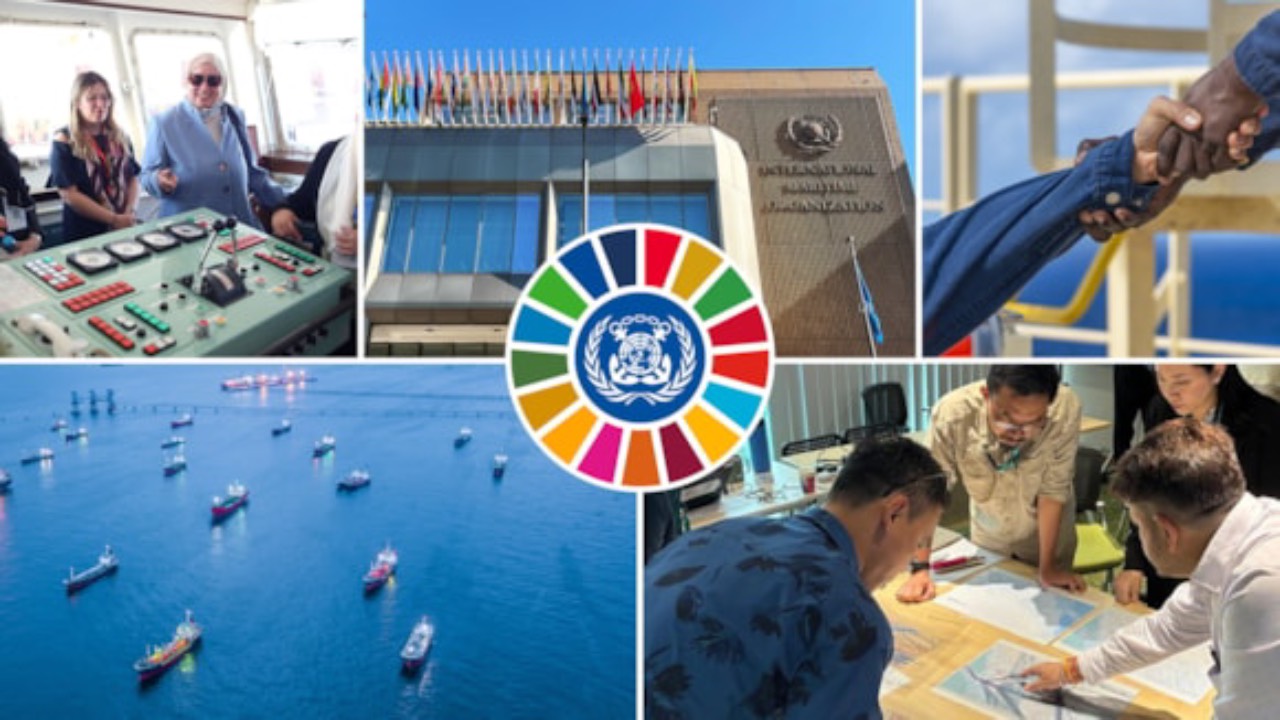
World Maritime Day 2026 from Policy to Practice – powering Maritime Excellence
Global regulations will deliver safer, more resilient shipping when they are implemented worldwide. The international maritime community marks…

Diana Shipping announces Time Charter Contract for m/v DSI Polaris with Dai An Ocean Shipping
Diana Shipping , a global shipping company specializing in the ownership and bareboat charter-in of dry bulk vessels, announced that, through a…

Chief Economists Expect Global Economy to Stabilize, but Fiscal Constraints, Rising Living Costs and AI Investment Uncertainty Threaten Growth
The global economy is stabilizing, but the fiscal support that cushioned successive shocks since 2020 is unlikely to play the same role in the year…

V. welcomes its new graduate cohort as programme expands across the group
Twelve graduates from nine nationalities join 11th year of V.’s expanded international management programme. V., the global ship manager and marine…

From Policy to Practice: Why Seafarers Are the Key to Maritime Excellence
The shipping industry is no stranger to regulation. Seafarers and ship operators work within a vast framework of international conventions, national…

Intermodal Report – Week 38 2026
Please find below the Intermodal market report for week 38 2026. Intermodal Report Week 38 2026 Market Insight By Nikos Tagoulis, Head of…

Allied – Weekly Market Review – Week 38
Please find below the Allied Weekly Report for Week 38 | 2026 ALLIED - Weekly Market Report- Week 38

Record year on the Northeast Passage but Arctic shipping remains very limited
In 2025, a record 103 transit voyages were made via the Northeast Passage. However, this is still equivalent to only around a day and a half of…

[xclusiv] S&P Report 21th September 2026
Please find below the [xclusiv] latest Weekly S&P Report [xclusiv] 2026_09_21 Market Commentary: VLCCs: Freight Boom Reprices the Fleet The VLCC…
Subscribe to our newsletter!
if you dont want to swim alone in the ocean of news, sign up for the newsletter, and you will receive daily all the important news of world shipping!
