Hamburg scores points for sustainable transport
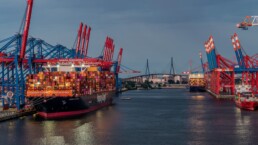

Container handling in the Port of Hamburg remained steady in the first half of 2024, with 3.8 million TEU processed, reflecting a stable trend in both transhipment and continental traffic. The impact of the energy transition is becoming increasingly evident, particularly with the decline in coal volumes, which has contributed to a decrease in bulk cargo throughput. The port handled a total of 55.9 million tonnes of seaborne cargo during this period. However, there was notable growth in both the number of container ship calls and the share of rail transport in seaport hinterland traffic.
Increase in Loaded Container Handling
Despite challenges in the Red Sea region and moderate economic performance in Germany, container handling stayed consistent. From January to June 2024, the Port of Hamburg processed 3.8 million TEU, maintaining a nearly unchanged level compared to the first half of last year (-0.3 percent).
Loaded container volumes showed a slight increase of 0.5 percent, reaching 3.4 million TEU. The handling of conventional general cargo also posted positive results, increasing by 4.3 percent to 585,000 tonnes. Overall, general cargo throughput remained stable at 39.2 million tonnes (+/- 0.0 percent).
Total seaborne cargo throughput in the first half of the year amounted to 55.9 million tonnes, a 3.9 percent decrease year-on-year.
The impact of the energy transition is becoming increasingly evident in bulk cargo handling, particularly with the decline in coal volumes.
“We can see the trend towards decarbonization in the bulk cargo figures, reflecting a shift away from fossil fuels towards alternative energy sources. This is particularly noticeable in the 11.8 percent drop in coal handling over the past six months,” explained Axel Mattern, CEO of Port of Hamburg Marketing.
This decline also affected overall bulk cargo throughput, which decreased by 12.1 percent to 16.7 million tonnes.
Diverging Market Trends
When comparing the top ten trading partners, Malaysia stands out for the first six months of 2024. The cargo volume with the country increased by 14.7 percent to 88,000 TEU, placing it in tenth position. U.S. trade also continued its upward trajectory, with 341,000 TEU handled – a 9.0 percent increase – solidifying the U.S. as Hamburg’s second-largest trading partner. China maintained its top position, with a total of 1.1 million TEU (-2.2 percent). Turkey continued its positive trend from the past four years, with a 26.7 percent increase compared to the same period last year. It now ranks twelfth in Hamburg’s trade volume, having moved up six places in the first half of the year.
Increase in Vessel Calls
The number of ships with container capacity calling at the Port of Hamburg increased slightly in the first half of 2024, reflecting an uptick of nearly one percent. This growth was primarily driven by medium-sized and smaller vessels, as calls by large container ships with over 10,000 TEU capacity declined across all size classes compared to the same period last year. This trend reflects the impact of the ongoing crisis in the Red Sea, where disruptions caused by Houthi rebels have led shipping companies to choose the longer route around the Cape of Good Hope. This detour extends sailing times to and from Asia by up to 15 days and has prompted adjustments in liner services. On the positive side, additional liner services are now calling at Hamburg.
More Sustainability in Transport
The provision of shore power for container, cruise, and inland waterway vessels in the Port of Hamburg is gaining momentum. In recent months, additional facilities have been brought in operation.
“Hamburg is a European pioneer of shore power adoption, now extending this capability to container vessels in addition to cruise and inland waterway ships,” said Mattern.
An increasing number of shippers are choosing rail as a sustainable mode of transport in hinterland traffic, which has further solidified the railways’ leading role in Hamburg’s seaport-hinterland operations. Despite challenges from line closures and extensive construction work, rail’s share of TEU rose to 50.8 percent in the first half of the year, with 1.3 million TEU handled, representing a 3.1 percent increase. In terms of tonnage, rail transport’s share grew by 1.2 percent, reaching 23.4 million tonnes.



Related News.

Crewing After 2026: How AI Will Take Over the Routine in 2027
The crewing market of late 2026 is not the market of 2025. Artificial intelligence has moved from presentations into daily crewing work, while the…

Dualog launches secure maritime AI service amid surge in seafarer AI use
The new service, Sparks lets crew and shore teams search company emails, documents and conversations without exposing sensitive fleet information to…

Time Ticking: Two weeks for Governments to Green-Light Framework for Cutting Shipping Emissions
As a crucial fortnight of meetings opens at the International Maritime Organization opens in London, the Clean Shipping Coalition calls on member…

“K” LINE signs contract for construction of two LPG dual-fuel VLGCs
Kawasaki Kisen Kaisha, announces today that it has signed agreements with South Korea-based HD Hyundai Samho regarding the construction of two LPG…

Equinor and VNG sign 18-year gas sales agreement for supplies to Germany
Equinor will supply natural gas to the German energy company VNG until the end of 2044. The 18-year agreement is the longest gas sales agreement…

Open letter to MEPs to reject the motion for a resolution and support the inclusion of Indian ship recycling yards on the European List
Dear Members of the European Parliament, Ahead of this week’s plenary vote, European Shipowners | ECSA, BIMCO, the Cruise Lines International…

ShipVet appoints James Stairmand as Chief Executive Officer
Founder Captain Fintan Cullen moves to a non-executive role as the company builds on investment in its vetting team and technology. ShipVet, the…

USD ≈7bn lost per year the hidden cost of how shipping trades
New Torvald Klaveness study quantifies around USD 7bn a year in potentially avoidable costs in dry bulk and product tanker shipping, with a possible…

APM Terminals Maasvlakte II and Port of Rotterdam Authority take next step in terminal development
APM Terminals Maasvlakte II and the Port of Rotterdam Authority are moving forward in terminal’s development with preparations for a new phase of…

ABP inspiring the next generation
ABP host 500 young people to explore maritime and transport careers More than 500 young people from across Hampshire and the Solent explored career…
Subscribe to our newsletter!
if you dont want to swim alone in the ocean of news, sign up for the newsletter, and you will receive daily all the important news of world shipping!
