The potential of restoring marine habitats for Marine Net Gain MNG, Carbon Sequestration, and Port decarbonisation.

By Nora von Xylander, Biodiversity Specialist & Sustainability Scientist
Tunley Environmental

Considering the global initiatives to become nature positive by 2030 and the United Nations Sustainable Development Goals , the concepts of Biodiversity Net Gain and Marine Net Gain are gaining traction . Here we explore the potential of marine restoration in contributing to MNG, carbon sequestration, and port decarbonisation, addressing the critical need for effective marine restoration strategies in the face of climate change, marine pollution, and overfishing. We find that the positive impacts of restoration and reviving marine habitats are wide-ranging, from enhancing biodiversity and supporting sustainable fisheries , improving water quality , to contributing to carbon offsetting efforts. All helping to combat climate change, mitigate its effects on our planet, and secure a more sustainable future.
The importance of Marine Restoration
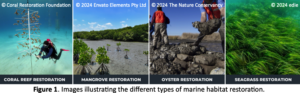
The Ocean, covering 71% of the Earth’s surface, is home to approximately 80% of all life on Earth . Healthy marine ecosystems generate 50% of the oxygen that we breathe and absorb 25% of all CO2 emissions . The Ocean and its marine habitats also play a crucial role in regulation the Earth’s climate by absorbing up to 90% of the additional heat generated from anthropogenic CO2 emissions . Accordingly, marine restoration holds immense importance in safeguarding the health and vitality of our oceans. As human activities continue to take a toll on marine ecosystems, restoration efforts offer a glimmer of hope. A wide range of methods and techniques are employed in marine restoration projects, depending on the specific ecosystem and the restoration goals. By restoring damaged habitats, such as coral reefs, seagrass beds, and mangrove forests, we can create resilient ecosystems that can withstand the impacts of climate change and support a diverse array of marine life . On top of being crucial for marine biodiversity, these restoration efforts can provide shoreline protection, carbon sequestration, and the provision of food and livelihoods for coastal communities. Several marine restoration projects have achieved remarkable success in recent years, showcasing the potential for positive outcomes and significant carbon sequestration potential. In the United States, oyster reef restoration in Chesapeake Bay has improved water quality and biodiversity. These projects highlight the benefits of dedicated restoration efforts, which can act as catalysts for positive change and provide valuable insights for future projects. Through restoring and protecting marine ecosystems, as well as engaging with local communities and stakeholders in marine restoration projects, we can raise awareness about the importance of ocean conservation and foster a sense of stewardship, all ensuring the long-term sustainability of these services, benefitting both the environment and human societies
The Science Based Targets for Nature (SBTN) states that “There is no net zero without meaningful action on Nature”. Marine restoration efforts offer significant opportunities for integrating Marine Net Gain (MNG) and carbon offsetting to effectively address climate change. MNG, a relatively new concept being discussed in the UK , aims to enhance marine habitats through development projects , moving beyond traditional methods of merely minimizing harm to the environment. Under the MNG approach, similarly to biodiversity net gain (BNG), developers would be required to deliver measurable improvements to marine habitats to compensate for any loss to marine habitats that may occur due to their projects. This can be achieved through the restoration or creation of new habitats, as well as the implementation of measures to reduce impact and protect vulnerable species. By prioritizing MNG, marine development projects can contribute to the conservation and restoration of marine ecosystems, even in areas where habitat loss is unavoidable. This approach not only benefits the environment but also ensures the long-term sustainability of development activities by integrating environmental considerations into their planning and implementation. Simultaneously, marine restoration and MNG efforts represent a significant opportunity for carbon offsetting. This being an approach which allows individuals, organizations, or governments to compensate for their carbon emissions by investing in projects that reduce or remove greenhouse gases from the atmosphere. While mostly associated with land-based activities, such as reforestation and land-based renewable energy projects, marine habitats play a major role in carbon sequestration . Healthy marine ecosystems have the capacity to sequester and store vast amounts of carbon. As such, there has been an exponential increase in marine restoration efforts and marine renewable energy projects , both playing a critical role in carbon offsetting. Marine restoration projects can also indirectly contribute to carbon offsetting by reducing the need for destructive practices that release large amounts of carbon, such as bottom trawling or dredging . By restoring and protecting these marine ecosystems, we can enhance their biodiversity and carbon storage potential. Thus, contribute to global efforts to help mitigate the biodiversity loss crisis and carbon emissions, both promoting a more sustainable future.
Exploring the possibilities of restoring marine habitats within Ports
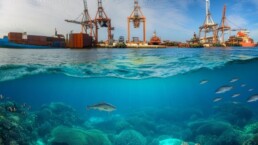
Anthropogenic activities such as fishing and shipping have significantly impacted marine habitats around ports . Direct engagement with these industries offers an opportunity to alleviate environmental pressures and adopt sustainable practices, yielding extensive environmental benefits. As such, we explore the feasibility of restoring and reviving marine habitats within port locations as these subsea habitats hold significant potential for both biodiversity conservation and carbon offsetting. Targeted restoration efforts should be considered due to the typical impact of fishing and shipping activities on marine ecosystems, including habitat degradation and pollution. By revitalizing subsea habitats, such as seagrass meadows (or coral reefs depending on location), we can create essential corridors that support a rich tapestry of marine life. The restored habitats act as natural buffers, enhancing biodiversity by providing shelter, breeding grounds, and feeding areas for a myriad of species . The revitalized ecosystems can also contribute to carbon offsetting, with the potential to sequester substantial amounts of carbon dioxide. It is crucial to integrate a variety of species suited to the specified habitat to maximize biodiversity gains, ecosystem resilience, and carbon offsetting potential. Habitat restoration efforts often go hand in hand with the removal of invasive species and the implementation of stricter regulations to prevent further degradation such as MNG. These measures help create a conducive environment for the success of restoration projects and ensure the long-term sustainability of restored ecosystems. By investing in marine restoration projects that incorporate the concepts of MNG and carbon offsetting at port locations, governments, businesses, and organizations can enhance their social responsibility and demonstrate their commitment to sustainable practices. As ships traverse these rehabilitated areas, they not only will navigate through healthier marine environments, but will also support the creation of marine biodiversity and carbon offsetting credits contributing to global climate goals.
Challenges and limitations of combined MNG and carbon offsetting projects
While the promotion of MNG and carbon offsetting through marine restoration projects within ports holds great promise, it does not come without its challenges. Key hurdles include ensuring long-term sustainability and securing substantial funding necessary for such projects. Similarly to BNG in England and the enforced long-term management plan, the success of marine restoration projects combining MNG and carbon offsetting, would depend on accurate measurement and long-term monitoring of the restored habitats, as well as securing funding from various sources. Success relies on collaborative efforts involving governments, organizations, and individuals. Governments play a crucial role in creating and enforcing regulations that protect marine ecosystems and incentivize restoration efforts. Additionally, they can provide financial support and facilitate partnerships between different stakeholders. Non-governmental organizations (NGOs) and research institutions also play a vital role in advancing the science and practice of marine restoration. By conducting research, raising awareness, and advocating for policy changes, these organizations contribute to the overall success of restoration initiatives. Furthermore, businesses and corporations can make a significant impact by integrating marine restoration, MNG, and carbon offsetting into their strategies. By adopting sustainable practices, investing in restoration projects, and engaging in responsible coastal development, companies can contribute to the preservation of marine ecosystems and help build a more sustainable future.
Conclusion: Harnessing Marine Restoration for a Sustainable Future
Marine restoration holds immense potential for mitigating climate change and addressing the challenges facing our oceans. The urgent need for marine restoration is evident, given the escalating impacts of human activities on marine ecosystems. The examples of successful projects discussed in the article illuminate the tangible benefits of these endeavours, not only for biodiversity but also for climate mitigation and community livelihoods. The potential of integrating marine habitat restoration, MNG, and carbon sequestration in port developments, presents an innovative way to promote port decarbonization as well as minimize our environmental impact and promote sustainable practices. However, the challenges of financing, long-term sustainability, and effective monitoring must be addressed through robust partnerships among governments, NGOs, businesses, and local communities. By fostering a collaborative and inclusive approach we can secure a healthier future for our oceans and our planet.



Related News.
Predicting the Future or Preparing for It? Cyprus Marine Club Explores the Power of Adaptability with Natasa Pilides
In a world where uncertainty has become the new normal, is predicting the future really the best strategy, or is the ability to adapt the greater…

Greece and Egypt in talks to extend EEZ Eastwards towards Cyprus following Libya’s move on Turkish Maritime Pact
Athens and Cairo have agreed to advance bilateral consultations aimed at extending the geographical scope of their 2020 Exclusive Economic Zone (EEZ)…
Seafarers face widening competency gap as digital shipping accelerates, recent research finds
Eighty two per cent of maritime professionals surveyed say current training does not adequately prepare crews for the realities of modern,…

Wärtsilä and WinGD sign new Service Framework Agreement to ensure long-term continuity and support for the global fleet
Technology groups Wärtsilä and WinGD have entered into a new long-term Service Framework Agreement, reaffirming their shared commitment to supporting…
Seatrium and Karpowership sign contract for a series of whale class Powership Conversion and Integration Projects
Seatrium and its strategic partner, floating power leader Karpowership, have strengthened their longstanding collaboration with the award of a…
ClassNK releases Handbook Supporting Consideration of Onboard Carbon Capture “Onboard Carbon Capture Systems Implementation Framework”
Bringing together technical, infrastructure, regulatory and emissions assessment considerations across the OCCS value chain - ClassNK has released a…

HHLA lowers earnings forecast for the 2026 financial year
Based on the business development to date and updated estimates for the fourth quarter of 2026, the Executive Board of Hamburger Hafen und…
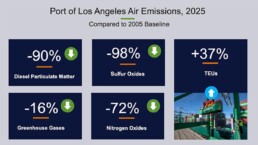
Port of Los Angeles reports lowest emissions per Container on Record
The Port of Los Angeles continued to make clean air gains in 2025, recording its lowest emissions per container on record, according to the Port's…
Drewry World Container Index – 22 Oct
WCI increased for the second consecutive week, the highest in 15 weeks. See detailed commentary below. Drewry World Container Index…
Mammoet, Port of Argentia and Argentia Capital Partner to Advance Floating Dry Dock and Marine Repair Facility
Partnership builds on Mammoet’s established presence at Port of Argentia and shared confidence in the growing market for ship repair and marine…
Subscribe to our newsletter!
if you dont want to swim alone in the ocean of news, sign up for the newsletter, and you will receive daily all the important news of world shipping!
