

Athens and Cairo have agreed to advance bilateral consultations aimed at extending the geographical scope of their 2020 Exclusive Economic Zone (EEZ) agreement further east towards Cyprus. The diplomatic push comes as a direct response to eastern Libya’s parliament ratifying a contested maritime boundary memorandum with Turkey.
During high-level discussions between Greek Foreign Minister George Gerapetritis and Egyptian Foreign Minister Badr Abdelatty, both sides reaffirmed their shared commitment to international law and the United Nations Convention on the Law of the Sea (UNCLOS), while formally rejecting the move by the Libyan legislature.
Shifting Dynamics in Eastern Libya
The latest diplomatic manoeuvres were triggered after Libya’s House of Representatives, based in Benghazi, voted to approve and ratify the controversial 2019 maritime memorandum originally signed between Ankara and Tripoli’s then Government of National Accord (GNA).
The Benghazi-based parliament also repealed earlier resolutions dating back to 2020 that had rejected agreements with Ankara and severed political ties with Turkey. The vote followed a formal briefing by Libya’s Higher National Committee for Land and Maritime Borders, established under Decision No. 40 of 2026.
Greece, Egypt, and Cyprus have consistently maintained that the 2019 Turkish-Libyan agreement infringes upon their sovereign rights and disregards fundamental principles of maritime law, particularly regarding the maritime zones generated by Greek islands such as Crete and Rhodes.
Activating the 2020 Bilateral Framework
In response to the developments in Benghazi, Athens and Cairo are looking to leverage existing legal provisions within their bilateral maritime agreement, signed in Cairo on 6 August 2020 and brought into force on 2 September 2020.
While the 2020 treaty established a partial delimitation between the two nations, it explicitly contains mechanisms allowing the coordinates of its eastern terminal point (Point A) to be adjusted further east through mutual agreement, particularly in conjunction with neighbouring coastal states.
Foreign Minister Gerapetritis confirmed that any expansion of the Greece-Egypt boundary will proceed in strict adherence to UNCLOS, setting a clear legal framework to counter unilateral delimitation claims in the energy-rich waters of the Eastern Mediterranean.
Regional Energy and Maritime Implications
The renewed coordination between Greece and Egypt underscores the delicate balance of power in the Eastern Mediterranean basin, where offshore energy projects, seabed connectivity, and commercial shipping lanes intersect with competing maritime jurisdictional claims.
Egypt, which had previously defined its western maritime boundary with Libya by presidential decree in late 2022, continues to align its regional strategy with Athens and Nicosia to safeguard maritime stability.
While Ankara has sought to improve diplomatic relations with Cairo in recent years, the Libyan parliament’s endorsement of the Turkish pact brings maritime jurisdiction back to the forefront of regional diplomacy. Extending the Greek-Egyptian EEZ eastwards would reinforce legal certainty for offshore exploration, subsea energy infrastructure, and maritime governance across the corridor linking Greece, Egypt, and Cyprus.



Related News.

Predicting the Future or Preparing for It? Cyprus Marine Club Explores the Power of Adaptability with Natasa Pilides
In a world where uncertainty has become the new normal, is predicting the future really the best strategy, or is the ability to adapt the greater…
Seafarers face widening competency gap as digital shipping accelerates, recent research finds
Eighty two per cent of maritime professionals surveyed say current training does not adequately prepare crews for the realities of modern,…

Wärtsilä and WinGD sign new Service Framework Agreement to ensure long-term continuity and support for the global fleet
Technology groups Wärtsilä and WinGD have entered into a new long-term Service Framework Agreement, reaffirming their shared commitment to supporting…
Seatrium and Karpowership sign contract for a series of whale class Powership Conversion and Integration Projects
Seatrium and its strategic partner, floating power leader Karpowership, have strengthened their longstanding collaboration with the award of a…
ClassNK releases Handbook Supporting Consideration of Onboard Carbon Capture “Onboard Carbon Capture Systems Implementation Framework”
Bringing together technical, infrastructure, regulatory and emissions assessment considerations across the OCCS value chain - ClassNK has released a…

HHLA lowers earnings forecast for the 2026 financial year
Based on the business development to date and updated estimates for the fourth quarter of 2026, the Executive Board of Hamburger Hafen und…
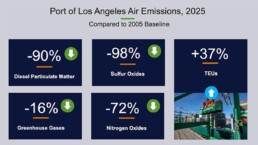
Port of Los Angeles reports lowest emissions per Container on Record
The Port of Los Angeles continued to make clean air gains in 2025, recording its lowest emissions per container on record, according to the Port's…

Drewry World Container Index – 22 Oct
WCI increased for the second consecutive week, the highest in 15 weeks. See detailed commentary below. Drewry World Container Index…
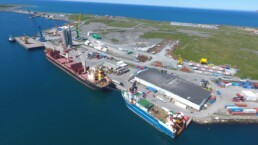
Mammoet, Port of Argentia and Argentia Capital Partner to Advance Floating Dry Dock and Marine Repair Facility
Partnership builds on Mammoet’s established presence at Port of Argentia and shared confidence in the growing market for ship repair and marine…
DORIC WEEKLY INSIGHT 23 OCTOBER 2026
Please find Below the DORIC Market Insight for the week ending 23rd October 2026. Weekly Report 23.10.2026
Subscribe to our newsletter!
if you dont want to swim alone in the ocean of news, sign up for the newsletter, and you will receive daily all the important news of world shipping!
