How Viasat supports life-saving connectivity in times of crisis
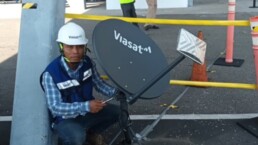

Working with global partners, Viasat is a key contributor to providing critical connectivit
From fires to hurricanes, oil spills and volcano eruptions, floods, tsunamis, hurricanes, and earthquakes, Viasat has provided critical connectivity solutions.
To support disaster response and relief, our committed team of employees consistently step up, dedicating their time and expertise to ensure first responders are connected and supported.
Providing essential connectivity
Satellites play a critical role in disaster relief, and Viasat is uniquely suited to quickly mobilize technology, employee volunteers, and connect with partners to provide internet solutions during global conflicts and natural disasters around the world. With satellite phones and portable broadband terminals, Viasat technology enables first-responders and rescue organizations to connect to our resilient satellite communication infrastructure whenever and wherever it’s needed.

Partnering for good
To quickly mobilize services, Viasat collaborates closely with NGOs, allied governments, non-profit agencies, and other trusted partners across the globe.
Allied governments
Countries from around the world have benefited from Viasat’s ability to quickly deploy the technology needed to access, facilitate, and coordinate disaster relief efforts.
Viasat has a long history of working with governments around the world when disaster strikes. For example, when Mount Mayon in the Philippines started showing signs of an impending eruption, Viasat quickly set up internet service and hotspots to aid with the recovery and restoration. When a 6.6 magnitude earthquake rumbled Turkey, Viasat provided indispensable internet access. Canada was able to use Viasat satellite technology to contain oil spills and Australia has used Viasat technology to scan for wildfires. Additionally, countries like Germany and Indonesia have used Viasat’s network for disaster preparation exercises.
International Telecommunication Union (ITU)
The ITU is a specialized agency of the United Nations that supports information and communication solutions in times of need. The ITU works to connect the world and bridge the digital divide. Within the first 24-48 hours of a disaster, like the volcanic eruption of Mount Bagana in Bougainville, Papua New Guinea, Viasat has provided broadband terminals to the ITU. Through this quickly deployed technology, Viasat has been able to help the ITU restore the vital communication links required for coordination of disaster response activities within the government and humanitarian agencies involved in rescue and relief operations
RE:ACT
RE:ACT is a team of volunteers, mostly military veterans, that can rapidly deploy all over the world in the wake of natural disasters. Because of their training and resilience, RE:ACT volunteers reach some of the most isolated communities to deliver life-saving aid. Among them are a committed group of Viasat skill-based volunteers who help to deliver humanitarian, fundraise, and support training and development
Viasat has provided RE:ACT with Global Xpress and Broadband Global Area Network (BGAN) for reliable connectivity to coordinate relief efforts and handheld satellite phones, not only to keep the teams safe and in touch with base operations, but also to provide a communications lifeline for those affected by disaster.
Red Cross Disaster Services
As one of the most well-known aid organizations in the world, the Red Cross rely on the internet to communicate out in the field.
With Viasat’s portable satellite systems, which can be swiftly deployed, the Red Cross can effectively coordinate in the field. These systems have been instrumental in disaster response efforts, including Hurricane Harvey, Hurricane Irma, and mudslides, providing communication technology to support volunteers and first responders. Viasat’s temporary satellite communications services have played a crucial role in establishing high-speed broadband internet and VoIP communications at distribution centers and in areas where traditional communication networks are unavailable.
Satellite CARES (Community Aid Relief Effort)
The Satellite CARES (Community Aid Relief Effort) program, in partnership with Satellite Broadcasting & Communications Association Foundation and Information Technology Disaster Resource Center (ITDRC), assists communities affected by large scale natural disasters like flooding, wildfires, hurricanes, and tornadoes.
Viasat provides the program with emergency communication resources as well as the technological expertise from Viasat volunteers. Our volunteers provide both assistance and education, to help communities recover from disasters and in making them more resilient against future events.
Télécoms Sans Frontières (TSF)
For over 20 years, Viasat has supported Télécoms Sans Frontières (TSF) mission to provide emergency communications in the wake of natural disasters or conflicts. As the principal communications provider to the United Nations in disaster situations, TSF has partnered with Viasat to enable governments, agencies, and other NGOs to coordinate emergency response, distribute lifesaving supplies and rebuild communities.
Free satellite phone calls and Wi-Fi offered to the victims of natural disasters or human conflict help reconnect families. Working out of regional bases in France, Thailand, Nicaragua, Mexico and the United States, expert teams are ready to be deployed with kit including Global Xpress and BGAN terminals and IsatPhone 2 satellite phones as soon as disaster strikes. Our connectivity is also used for training in high-risk countries so that local teams can use the equipment in future crises; and in programs designed to bridge the digital divide, giving remote communities access to online data and tools that support learning, healthcare, and the local economy
Enabling a safer world
While it’s clear that satellites are essential during natural disasters and conflicts, they are also the backbone of enabling safety across global industries, including maritime, aviation and defense.
Whether its seafarers navigating the vast oceans, airplane passengers traveling worldwide, or warfighters stationed in foreign lands, satellite connectivity is a common thread that supports global safety.



Related News.
Predicting the Future or Preparing for It? Cyprus Marine Club Explores the Power of Adaptability with Natasa Pilides
In a world where uncertainty has become the new normal, is predicting the future really the best strategy, or is the ability to adapt the greater…
Greece and Egypt in talks to extend EEZ Eastwards towards Cyprus following Libya’s move on Turkish Maritime Pact
Athens and Cairo have agreed to advance bilateral consultations aimed at extending the geographical scope of their 2020 Exclusive Economic Zone (EEZ)…
Seafarers face widening competency gap as digital shipping accelerates, recent research finds
Eighty two per cent of maritime professionals surveyed say current training does not adequately prepare crews for the realities of modern,…

Wärtsilä and WinGD sign new Service Framework Agreement to ensure long-term continuity and support for the global fleet
Technology groups Wärtsilä and WinGD have entered into a new long-term Service Framework Agreement, reaffirming their shared commitment to supporting…
Seatrium and Karpowership sign contract for a series of whale class Powership Conversion and Integration Projects
Seatrium and its strategic partner, floating power leader Karpowership, have strengthened their longstanding collaboration with the award of a…
ClassNK releases Handbook Supporting Consideration of Onboard Carbon Capture “Onboard Carbon Capture Systems Implementation Framework”
Bringing together technical, infrastructure, regulatory and emissions assessment considerations across the OCCS value chain - ClassNK has released a…

HHLA lowers earnings forecast for the 2026 financial year
Based on the business development to date and updated estimates for the fourth quarter of 2026, the Executive Board of Hamburger Hafen und…
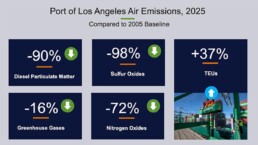
Port of Los Angeles reports lowest emissions per Container on Record
The Port of Los Angeles continued to make clean air gains in 2025, recording its lowest emissions per container on record, according to the Port's…
Drewry World Container Index – 22 Oct
WCI increased for the second consecutive week, the highest in 15 weeks. See detailed commentary below. Drewry World Container Index…
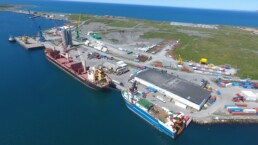
Mammoet, Port of Argentia and Argentia Capital Partner to Advance Floating Dry Dock and Marine Repair Facility
Partnership builds on Mammoet’s established presence at Port of Argentia and shared confidence in the growing market for ship repair and marine…
Subscribe to our newsletter!
if you dont want to swim alone in the ocean of news, sign up for the newsletter, and you will receive daily all the important news of world shipping!
