Nuclear propulsion could transform maritime with more reliable, emissions-free and longer-lived ships
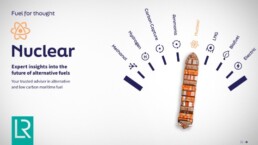

The rise of small modular reactors points to a step change for nuclear applications in shipping if regulatory hurdles can be overcome, says Lloyd’s Register’s Fuel for Thought: Nuclear report.
Nuclear power could transform the maritime industry with emissions-free shipping, whilst extending the life cycle of vessels and removing the uncertainty of fuel and refuelling infrastructure development, but regulation and safety considerations must be addressed for its widespread commercial adoption, reveals Lloyd’s Register’s (LR) Fuel for Thought: Nuclear report.
The report assesses the opportunity presented by nuclear for commercial maritime given its proven track record in naval applications, with the study pointing to the role of new small modular reactors (SMRs) in bringing to market suitable low-maintenance reactors to meet the propulsion and energy requirements of commercial ships.
According to the report, the commercial relationships between shipowners and energy producers will be altered as power is likely to be leased from reactor owners, separating the shipowner from the complexities of licensing and operating nuclear technology. SMRs represent a leap forward in reactor design, emphasising safety, efficiency, and modularity for streamlined production. As SMR technology matures and regulatory clarity increases, ship designs optimised for nuclear propulsion will emerge, ushering in a new era of efficient and environmentally friendly vessels.
The report outlines the vital importance of adopting stringent safety protocols to prioritise the protection of seafarers and the environment. It suggests that for novel designs and nuclear technology in the short-term, LR’s Risk Based Certification (RBC) could provide an approach for first movers to certify their projects by demonstrating an equivalent level of safety to that achieved with conventional oil-fuelled systems.
According to Fuel for Thought: Nuclear, technology readiness for nuclear is improving, as per the most recent update of the LR Maritime Decarbonisation Hub’s Zero Carbon Fuel Monitor with pressurised water reactors (PWR), micro reactors and molten salt reactors (MSR) emerging as some of the most promising technologies for maritime applications. However, community readiness levels (CRL), which are affected by the public’s perception of nuclear power and investment readiness levels (IRL) remain low due to the uncertainties around the wider uptake of nuclear technology in commercial shipping.

Mark Tipping, Power to X director, LR said: “Fuel for Thought: Nuclear represents one of the first easily accessible overviews on the use of nuclear power in shipping, combining information from a wide range of sources into one report tailored for commercial shipping and the wider maritime value chain. Whilst its use in commercial shipping has been limited, by overcoming negative perceptions and a lack of investment levels, nuclear propulsion could provide immense value for the maritime sector in its decarbonisation journey, allowing for emissions free vessels with longer life cycles which require minimal refuelling infrastructure, or in best case scenarios limit the need entirely.”



Related News.

Predicting the Future or Preparing for It? Cyprus Marine Club Explores the Power of Adaptability with Natasa Pilides
In a world where uncertainty has become the new normal, is predicting the future really the best strategy, or is the ability to adapt the greater…

Greece and Egypt in talks to extend EEZ Eastwards towards Cyprus following Libya’s move on Turkish Maritime Pact
Athens and Cairo have agreed to advance bilateral consultations aimed at extending the geographical scope of their 2020 Exclusive Economic Zone (EEZ)…
Seafarers face widening competency gap as digital shipping accelerates, recent research finds
Eighty two per cent of maritime professionals surveyed say current training does not adequately prepare crews for the realities of modern,…
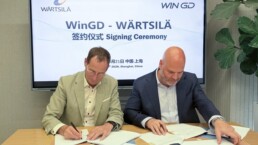
Wärtsilä and WinGD sign new Service Framework Agreement to ensure long-term continuity and support for the global fleet
Technology groups Wärtsilä and WinGD have entered into a new long-term Service Framework Agreement, reaffirming their shared commitment to supporting…
Seatrium and Karpowership sign contract for a series of whale class Powership Conversion and Integration Projects
Seatrium and its strategic partner, floating power leader Karpowership, have strengthened their longstanding collaboration with the award of a…
ClassNK releases Handbook Supporting Consideration of Onboard Carbon Capture “Onboard Carbon Capture Systems Implementation Framework”
Bringing together technical, infrastructure, regulatory and emissions assessment considerations across the OCCS value chain - ClassNK has released a…

HHLA lowers earnings forecast for the 2026 financial year
Based on the business development to date and updated estimates for the fourth quarter of 2026, the Executive Board of Hamburger Hafen und…
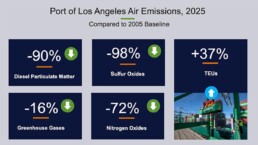
Port of Los Angeles reports lowest emissions per Container on Record
The Port of Los Angeles continued to make clean air gains in 2025, recording its lowest emissions per container on record, according to the Port's…
Drewry World Container Index – 22 Oct
WCI increased for the second consecutive week, the highest in 15 weeks. See detailed commentary below. Drewry World Container Index…
Mammoet, Port of Argentia and Argentia Capital Partner to Advance Floating Dry Dock and Marine Repair Facility
Partnership builds on Mammoet’s established presence at Port of Argentia and shared confidence in the growing market for ship repair and marine…
Subscribe to our newsletter!
if you dont want to swim alone in the ocean of news, sign up for the newsletter, and you will receive daily all the important news of world shipping!
