The coming transformation of oil markets
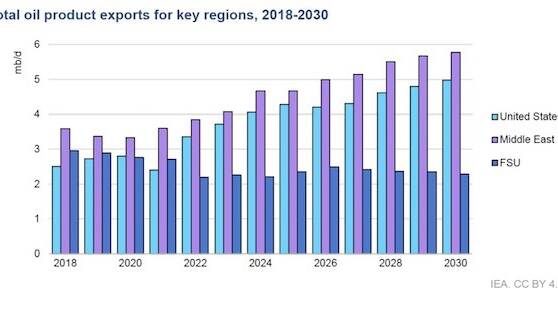

The International Energy Agency’s (IEA) Oil 2024 report outlines a period of significant transformation for the global oil market through to 2030. While oil has historically fuelled economic growth, the report predicts a slowdown in demand growth, particularly in developed economies, as clean energy technologies and electric vehicles (EVs) gain traction. This trend stands in stark contrast to the anticipated surge in oil production, especially from non-OPEC+ countries, potentially leading to a substantial oil surplus by 2030.The report suggests a global peak in oil demand by the end of the forecast period, driven by two opposing regional trends. Emerging economies in Asia, particularly China and India, will experience continued growth in oil demand to support their expanding economies. In contrast, developed economies are expected to witness a steady decline in oil consumption as they transition towards cleaner energy sources and embrace electric vehicles. This geographical disparity will reshape global oil trade flows.
The anticipated rise in oil production capacity, outpacing projected demand, could lead to a significant surplus of oil by 2030. This surplus has the potential to exert downward pressure on oil prices, posing a challenge for major producers, particularly the US shale industry, which is known for its rapid response to changing market conditions.
Eastward shift
The report noted that the centre of gravity for oil demand is migrating eastward, with Asia becoming a major importer of crude oil, natural gas liquids (NGLs), and refined products. “Emerging economies in Asia, particularly China and India, account for all of global demand growth. By contrast, oil demand in advanced economies falls sharply,” said the report. This trend is fuelled by Asia’s burgeoning economic growth and rising energy needs. The Middle East and the Americas are expected to emerge as key suppliers, catering to this growing Asian demand. This eastward shift will necessitate a reconfiguration of global oil trade routes.
Added to this, the rise of NGLs and biofuels will disrupt the traditional landscape of refined products. “A surge in natural gas liquids (NGLs) and condensates will account for 45% of new capacity increases over the forecast period,” the report said. Refineries will be forced to adapt their production processes to accommodate this shift, potentially facing challenges as demand for some products wanes. For example, the report highlights a looming gasoline surplus as a consequence of increasing EV adoption and biofuel use. Conversely, the market for middle distillates like diesel is expected to remain tight, creating a product imbalance that refiners will need to navigate. “Non-refined fuels are set to capture a staggering three-quarters of projected global demand growth over the 2023-2030 period,” the report said.
The report notes a major shift in strategy from Saudi Arabia, which has put on hold its planned crude oil capacity increase and will now focus on expanding natural gas liquids and condensates, which aligns with its efforts to boost domestic gas supply. “It may also reflect an acknowledgment of the rapidly building surplus in global crude oil production capacity,” added the IEA.
As noted, a major challenge for the global oil market will be how the US shale industry reacts to a potential oil glut. This, in turn, could impact global oil supply and prices, creating a domino effect throughout the market. “How the industry will adapt and adjust to the new supply landscape will have wide-ranging consequences for producers and consumers globally through the remainder of the decade and beyond,” the IEA said.
Geopolitical considerations further complicate the picture. The report acknowledges the ongoing influence of sanctions on Russian oil exports, which are pushing trade flows eastward.
Asia’s thirst
The surge in demand from Asia, particularly China and India, is poised to dramatically reshape global product trade balances by 2030. The IEA report forecasts a rise in product exports from the Atlantic Basin, led by the US, to quench Asia’s growing thirst.
The Middle East, meanwhile, is set to solidify its position as the world’s undisputed product export kingpin. This dominance stems from a combination of factors: increased refining activity and a regional decline in fuel oil demand. The surplus created by these trends will be readily absorbed by Asia’s import needs.
Europe’s diesel demand is forecast to take a significant plunge, leading to a subsequent decline in net diesel imports. This creates an opportunity for North America to step in and fill the gap, potentially supplying the majority of Europe’s diesel needs by 2030.
Elsewhere, China is on track to retain its crown as the world’s top refiner. However, the report highlights a potential challenge to China’s product trade balance: its substantial need for petrochemical feedstocks such as LPG, ethane, and naphtha. This dependence is likely to keep China a net product importer. The potential for a gasoline glut may also prompt Chinese refineries to adjust their production yields to better align with domestic demand for petrochemical feedstocks. This could lead to a rise in naphtha and jet fuel yields, potentially at the expense of gasoline and diesel production.
Source: The Baltic Exchange



Related News.

Global Flag State Ranking 2026 who is up, who is down
Lorrendraaier publishes Global Flag State Ranking 2026: 148 flags measured on objective data, Singapore leads, Pakistan falls 35 places, the Dutch…
Will Germany have enough gas this winter?
As of mid-September 2026, Germany had stored just about 141 terawatt-hours of gas, accounting for around 57% of the country’s total storage…

Record diesel prices put US policy options in focus
Record-high diesel prices and tight inventories have put US exports under scrutiny, but keeping more barrels at home may offer only temporary…

IUMI elects Sean M. Dalton as President and says farewell to Frédéric Denèfle
The International Union of Marine Insurance (IUMI) has elected Sean M. Dalton as its new President. The election took place today at a meeting of the…

F/V MISTRESS Shipwreck ‘Lost’ Near Block Island Located After Seven Years
Green Oceans’ Underwater Investigation Reveals a Shipwreck Presumed to be the F/V Mistress found at the Base of Block Island Turbine #1 - Asks…

OCEAN at 50 celebrating a proud past and Maritime Future
OCEAN, the European sub-committee of ISSA, celebrated half a century of service to Europe’s ship supply sector with a landmark anniversary conference…

DORIC MONTHLY BRAZIL BAROMETER SEPTEMBER 2026
Pls find below the DORIC MONTHLY - BRAZIL BAROMETER SEPTEMBER 2026 BRAZIL_BAROMETER_SEPTEMBER_2026

Steel flows face fresh challenges in the final quarter of 2026
Steel flows slip into negative growth in July 2026 Global steel flows fall 1% y/y in July 2026 to reach 22.2 Mt. China’s share of global steel…

Insurance must shift “from repair to prevention”, says IUMI
Marine insurers will need to place greater emphasis on loss prevention as risks become more complex and costly to insure, according to Pascal Dubois,…

BIMCO’s Container Shipping Market Overview & Outlook September 2026 is out
Container Shipping Market Overview & Outlook Supply pressure is mounting "Disruptions and strong growth in head-haul trades continue to support…
Subscribe to our newsletter!
if you dont want to swim alone in the ocean of news, sign up for the newsletter, and you will receive daily all the important news of world shipping!
