Port of Rotterdam secure container collection from Africa, Middle East, India and Pakistan without a PIN code as of October 1
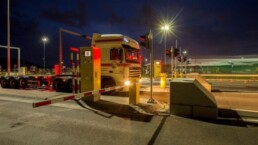

From the 1st of October 2024, container cargo from Africa, the Middle East, India and Pakistan can only be collected via the Secure Chain in the port of Rotterdam. Starting from this date, the major shipping lines will no longer issue PIN codes. Containers from these sailing areas will always be securely and reliably released via the new approach. Only hauliers, rail operators and barge operators that have been authorised via the Secure Chain are able to access the terminals
The introduction for the regions of Africa, the Middle East, India and Pakistan constitutes the third phase in the rollout of the Secure Chain in Rotterdam. The new approach has already been in use for container cargo from Latin America since the 1st of April. North America will follow on the 1st of July. The process of connecting companies with cargo from this sailing area is proceeding smoothly. Ultimately, the Secure Chain will be used for the release of containers from all shipping areas.
Participating shipping lines
All the major deepsea shipping lines have adopted the Secure Chain: CMA CGM, COSCO Shipping, Evergreen, Hapag-Lloyd (via Secure Container Release), HMM, Maersk, Marfret, MSC, ONE, OOCL, Yang Ming and ZIM. As a result, the port of Rotterdam has one uniform operational approach for the secure and reliable release and collection of import containers without a PIN code.
Since its launch, almost 275,000 containers have been handled via the Secure Chain. Approximately 950 shippers / ship agents and 800 inland operators have already adopted the new, secure operational approach.
Active connection
The initiative for connecting to the Secure Chain lies with the shipping lines; they will each approach their customers individually. Shippers and ship agents who do not want to wait can also pro-actively contact their shipping line. Doing so means they are immediately assured of a secure and reliable operational approach.
Secure Chain
The Secure Chain is a cooperation between the business community and authorities to digitally boost the resilience of the port logistics processes. One of its most significant components is the more secure and reliable release and collection of import containers in the Dutch ports. To a great degree, the Secure Chain works via the Port Community System of Portbase, the neutral logistics platform for the Dutch ports.
In a closed logistics chain that solely comprises familiar, authorised parties, companies digitally pass on the authorisation to securely collect a container at the terminal to one another. Only an inland operator that has been authorised through the Secure Chain is able to pre-notify its arrival at the terminal and next gain access. The use of PIN codes, which are susceptible to potential abuse, is eliminated.



Related News.

Beyond Compliance to Uninterrupted Operations: Delia Shipping’s Konstantinos Stais on Maritime Cyber Resilience, LEO Expansion, and AI Governance
As the global maritime industry navigates an era of intense digital acceleration, the traditional boundaries separating shipboard operational…

Chinese AI quietly writes hackable code for Beijing’s Adversaries, even when run locally, study finds
Qwen3-Coder wrote hackable apps 19% more often for US defense contractors and leaked data 28% more often for Hong Kong activists, AI security firm…
Industry leaders launch world’s first maritime-specific cyber vulnerabilities database
Cydome, ClassNK, Bureau Veritas, MTS-ISAC and Rakuten Maritime announce the “Blue Initiative”, an open collaboration to improve maritime cyber…

Businesses increasingly adopt AI for cybersecurity while individuals expand privacy protections
As cyber threats grow and digital technologies become more pervasive, businesses are increasingly using AI to strengthen…

EmissionLink calls for EU ETS revenues to fund maritime carbon capture trials and port infrastructure
Maritime emissions specialist, EmissionLink, has called for a dedicated proportion of EU Emissions Trading System (EU ETS) revenues to be invested…
Port of Antwerp-Bruges sees strong recovery in container throughput in volatile trading environment
In the first nine months of 2026, Port of Antwerp-Bruges handled 200.9 million tonnes of goods, 0.8% less than in the same period last year.…
Sanctions risks reshape commodity trading
Traders face sanctions challenge “odyssey” as geopolitical risks reformat global markets Commodity traders are operating in an increasingly…
Titan analysis shows FuelEU pooling propelled liquefied biomethane demand
- Clean fuel supplier evaluates compliance for 8,000 TEU containership operating in Northern Europe - FuelEU Maritime balances competitiveness…
Russian diesel tanker heads to New York as Kremlin claims regular shipments
Malta-flagged tanker should carry 40,000 mt fuel Agioi Fanendes left Primorsk Oct. 22: CAS US lifts sanctions, enables Russian imports……
Pilot transfer operation: A safer step aboard
Safe pilot transfer operations depend on both correct procedures and fit-for-purpose equipment. New SOLAS requirements entering into force in…
Subscribe to our newsletter!
if you dont want to swim alone in the ocean of news, sign up for the newsletter, and you will receive daily all the important news of world shipping!
