Decarbonising the Pilbara-to-Asia Iron Ore Export Trade Route: Joint Study Demonstrates Pathway to Net-Zero Emissions
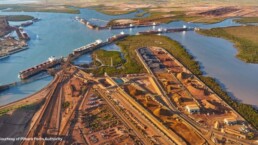

A recent joint study reveals that Well-to-Wake emissions in the Pilbara-to-Asia iron ore export trade route can be reduced by over 90% by 2050 through the use of Liquefied Methane (LNG).
Key developments:
- Pilbara Clean Fuels (PCF) is pursuing the development of an electrified LNG plant in Port Hedland, Western Australia aimed at producing low-carbon LNG marine bunker fuel.
- Oceania Marine Energy (Oceania) is developing a marine fuel bunkering business using purpose-designed LNG re-fuelling vessels to be chartered from Kanfer Shipping, Norway.
- RINA has developed an innovative concept for an LNG-fuelled 209,000 DWT Newcastlemax dry bulk carrier design incorporating pre-combustion carbon removal and hydrogen production to meet IMO 2050 Carbon Intensity Index (CII) requirements over the ship’s operating life.

In November 2023 PCF, Oceania and RINA signed an MoU to collaborate on studies to define the commercial and emissions reduction benefits their combined concepts could deliver to ship owners and charterers for the Pilbara to Asia dry-bulk minerals export trade route. The Joint Study has now been completed.
Study Findings: The findings demonstrate an accessible and achievable pathway to Net-Zero Emissions for LNG, on a Well-to-Wake basis, for international shipping on this trade. The study presents a flexible and commercially attractive IMO compliant marine fuel strategy to ship owners, operators and charterers amidst competing alternative fuel. It proposes a ‘Green Corridor’ marine fuels solution for the Western Australia to China bulk minerals export trade route.
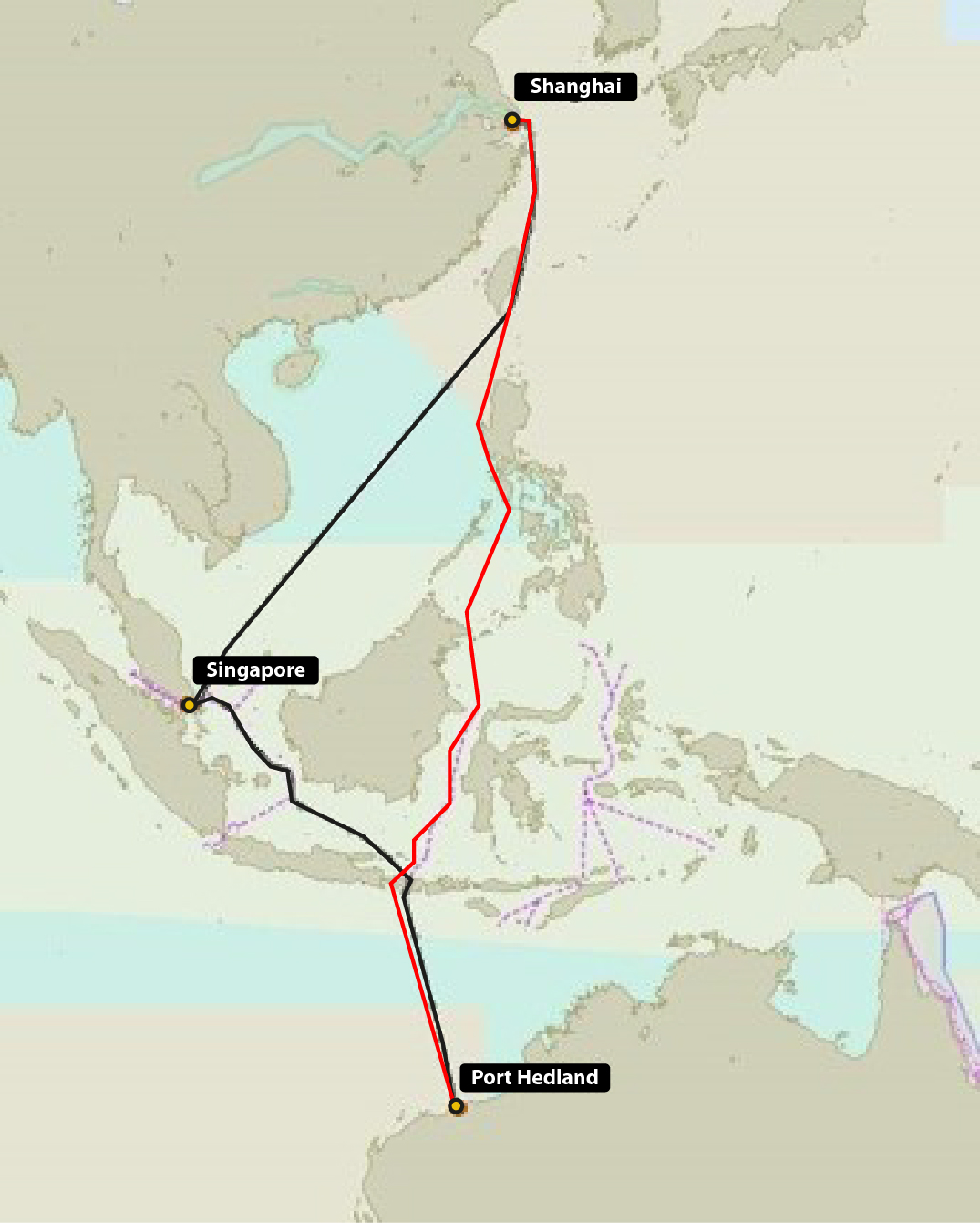
Port Hedland (Australia), 4 June, 2024 – Western Australia is the largest producer of iron ore in the world, with current production of over 850 million tonnes per annum, the majority of which is exported from the Pilbara region of Western Australia. The Joint Study addresses a set of factors which together constitute a pathway to achieving net-zero emissions for this trade route, and for the international shipping industry in general. It concludes that, by implementing a holistic combined systems approach, Well-to-Wake emissions for the Pilbara to Asia export shipping industry can be reduced by more than 90% by 2050, using fuel and technologies already in use today and that can be implemented to optimize vessel fuelling and operations according to regulatory requirements and business drivers.
Achieving Emissions Reduction
The low-carbon LNG plant by Pilbara Clean Fuels has the potential to initially produce LNG with emissions of less than 200kg of GHG per tonne, which can be further reduced to around 50kg/t LNG (and potentially to zero through technology improvements).
LNG bunkering in the Pilbara region offers a substantial voyage optimization by eliminating the need to deviate to other major bunkering hubs in the region, thus significantly reducing emissions. This also reduces by 25% the emissions associated with transporting LNG over long distances, compared to LNG bunkering in other ports and ensures competitive pricing for LNG.
RINA’s bulk-carrier ship concept features a novel propulsion arrangement which achieves a fuel saving of 12% when running on LNG at current market speeds and offers the charterer greater fuel flexibility and enhanced economic benefits by reducing LNG consumption. This can lead to lower fuel running costs, particularly when compared with traditional fuel oil.
It provides redundancy, significantly reducing the risk of black out, and does not suffer from well-known issues like acceleration through engine’s barred speed range. The ship can also harvest the benefits from wind propulsion.
The proposal is flexible in fuel selection and, most importantly, the use of hydrogen produced on board is on demand. This concept, which produces carbon dioxide that is captured and stored onboard, can be delivered price-competitive as it has been designed to retrofit emissions-reduction equipment in stages to suit the owners’ requirements. The design allows charterers to modify the vessels with modular hydrogen production and carbon capture and storage (CCS) equipment to meet GHG compliance as needed.
The bunker vessel design incorporates a hybrid energy system, including an 8MWh battery, allowing for emission free operation in port. This, alongside the onboard CGR-designed process plant for vapour recovery and re-liquefaction, significantly reduces emissions and enhances operational efficiency.
The CO2 generated from onboard pre-combustion hydrogen production can economically be integrated into the large volume CCS hubs currently being developed in the Pilbararegion by various third-party proponents.
The combination of systems and technologies allows LNG-fuelled dry-bulk carriers to significantly reduce emissions today and to comply with the IMO 2023 GHG Reduction Strategy through to 2050.
The study concludes that by implementing this holistic combined systems approach, Well-to-Wake emissions for the Pilbara to Asia export shipping industry can be reduced by more than 90% by 2050. The reduction of GHG emissions is achieved by progressivelydecreasing the LNG fuel share to the engines while proportionately increasing hydrogen usage. This allows for staged upgrades over the vessel’s lifetime to comply with the IMO requirements for continuously reducing GHG emissions. The ship-owner to decide which path to follow to stay ahead of compliance and competition. All necessary technologies for achieving Net Zero Emissions with LNG as a marine fuel already exist and are in use, marking the first time they have been proposed in combination, demonstrating a positive path to Net Zero Emissions for international shipping.
The Joint Study results present a significant opportunity for decarbonising shipping in the Pilbara region and beyond, contributing to global efforts to combat climate change.



Related News.
Register Now for the CSN London Maritime Forum “Shipping: Predicting an Unpredictable Future”, 13 October – Two Weeks Left
“Shipping: Predicting an Unpredictable Future” REGISTER HERE Date: 13 September 2026 Time: 09:00-16:00 Venue: Marriott Hotel Regent's Park Following…
Working visit of the Shipping Deputy Minister of Cyprus to Brussels
The Shipping Deputy Minister to the President, Ms. Marina Hadjimanolis, departed on Monday, 28 September 2026, for Brussels, following an official…
Navigating the S-100 Transition: Real-World Trials and the Future of Digital Navigation
As the maritime industry prepares for the implementation of the S-100 data standard, the shift from traditional Electronic Navigational Charts (S-57)…

Electronic evidence is transforming maritime casualty investigations, says The Nautical Institute
New edition of Guidelines for Collecting Maritime Evidence Volume 2 addresses electronic records, AI, digital reconstruction and the changing…
Xeneta freight rates set to climb in early October
“For the high-flying spot rates from Far East to US East and West Coasts, we may just begin to see the end of that rising trend as we get into the…
A new gateway to Turkey – Stolthaven Terminals and Rönesans Holding on the DAPEK Ceyhan Terminal
Stolthaven Terminals and Rönesans Holding are building a new chemical and industrial terminal at Ceyhan, on Turkey’s Mediterranean coast. The…
KME & KMSM Family Day 2026 held in Singapore
Promoting Business Understanding and Employee Engagement Through Interaction Between Employees and Their Families K LINE MARINE & ENERGY a…
Maritime Coastguard Agency celebrates World Maritime Day 2026
Transport Secretary Heidi Alexander has written to the International Maritime Organization on World Maritime Day. On Thursday 24 September,…
Paracel Carbon Forestry Project verifies first carbon removal credits
Paracel, a large-scale carbon removals project in Paraguay backed by Trafigura, has verified its first carbon removal credits, totalling over 190,000…
When the Levee Breaks
The weakest June for Chinese crude imports in a decade did not cost a single barrel of throughput. Imports fell 41.3% on the year, runs held above…
Subscribe to our newsletter!
if you dont want to swim alone in the ocean of news, sign up for the newsletter, and you will receive daily all the important news of world shipping!
