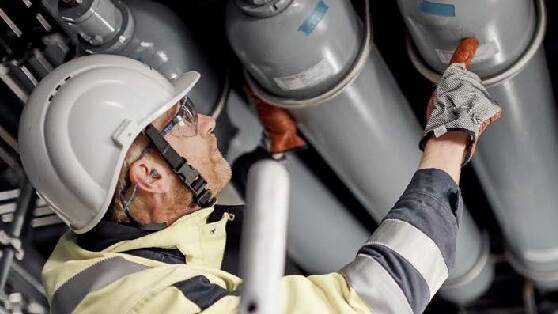

Under certain circumstances – in congested waters, during manoeuvring or in harsh weather – a blackout can lead to loss of life or damage to property, infrastructure and/or the environment. This news highlights some of the most common causes of blackouts and aims to provide ship managers and crews with guidance to help prevent blackouts and mitigate potential consequences.
Ships occasionally experience blackouts, with a temporary loss of propulsion. Fortunately, most incidents do not have any significant consequences, as they usually occur at open sea.
Nevertheless, blackouts should be avoided. Planning, training, and contingency measures are all essential elements to effectively manage the risk of blackouts, and the combined effect of measures will have the greatest impact on safety.
Our recommendations for preventing blackouts are mainly centred round three main topics:
1. Ensure correct maintenance and operation
Correct maintenance and operation are the most important factors to prevent blackouts. The below list provides practical examples of some failure modes that could lead to blackouts and how to avoid these:
Loss of lube oil pressure
- Ensure correct maintenance of lube oil pumps, purifiers and filters.
- Ensure lube oil sump tanks are topped up, particularly when rough weather is expected.
Fuel-oil-related issues (clogged filters, starvation, etc.)
- Ensure correct maintenance of fuel oil pumps, purifiers and filters.
- Ensure frequent draining of water, and sufficient heating.
- Verify free movement of fuel rack and links to the governor actuators.
- Avoid, as far as possible, mixing fuels of different qualities or origin, and do not use fuel until test results are ready and the acceptable fuel quality is confirmed.
- Strictly follow procedures for fuel switchover. The process is usually slow to avoid thermal shock and should be done at low engine load. Failure to follow this procedure may result in seizure of the fuel pumps or other thermal-shock-related issues.
- Avoid, as far as possible, fuel switchover during operations
of increased risk such as manoeuvering or passage in
enclosed waters. - Check fuel pump plunger-barrel clearance, in particular in connection with a change to fuel of lower viscosity.
Control, monitoring and safety system malfunctions
- Ensure correct safety device settings for engines and
alternators. - Conduct periodic testing of safety mechanisms and power
management systems and ensure safety devices are triggered
at the correct settings.
Common maintenance-related failures
- Avoid similar maintenance on several auxiliary engines at the same time to prevent failures due to a common maintenance-related issue.
2. Ensure crew competence through regular blackout testing
The ever-increasing complexity and level of system integration may challenge operators’ ability to understand in-depth how these systems work. This also makes troubleshooting and manual recovery more difficult. Hence, a highly competent and trained crew is more important than ever.
Adequate and extensive blackout testing should be arranged regularly to verify the system responses to different blackout failures and to enhance crew competence on blackout scenarios, such as:
- Identify blackout conditions, observe power system automated actions, and troubleshoot problems if the sequence of blackout recovery fail.
- Learn what manual actions may be required for blackout restoration.
- Verify expected behaviour versus actual behaviour for:
- Power generation start-up
- Power generation connection to main switchboards and synchronization
- Propulsion recovery
- Identify areas for improvement.
- Become more confident with emergency response procedures and checklists.
A proper blackout test involves both the main power system and the emergency generator start-up. This is because a blackout recovery sequence consists of these two parallel processes, which start up independently without any operational delays.
It should be ensured that the blackout test is created by different conditions (i.e. different failures), to verify system response triggered by different circumstances and to prepare the crew for various scenarios. It is important that tests verify the functions of the blackout prevention and recovery measures (i.e. testing a full blackout). The emergency generator should also regularly be tested under realistic loads.
3. Prepare and implement operating procedures for identified high-risk operations
All vessels should have operating procedures, or standing orders, that specify how to prepare for and handle specific situations such as berthing or navigation in heavy weather.
DNV recommends that operators carry out a risk assessment to identify the ship operations for which a blackout would represent a particularly high risk. We further recommend that the vessels’ operating procedures for the identified high-risk ship operations be reviewed to ensure that clear specifications of the required state of machinery and equipment are defined, including:
- Number of generators and propulsion units online and in stand-by
- Configuration of auxiliaries (common or separated) and bus-tie (closed or open)
- Manning level in different departments and stations
Simple but clear operating procedures can raise the crew’s risk awareness and increase the safety level in situations when a blackout could lead to severe consequences.
Recommendations
To prevent blackouts, and to mitigate the consequences when they occur, DNV suggests that operators review and implement relevant recommendations as described in this news.
Implementing robust operating procedures and ensuring crews’ risk awareness, in combination with correct maintenance and operation of essential equipment, as well as regular blackout testing, undoubtedly have a significant positive impact on vessels’ safety and reliability.



Related News.

Cyprus Maritime Innovation takes Centre Stage at SMM Hamburg 2026
Underscoring its expanding role as a premier international hub for cutting-edge maritime technology and sustainable shipping, the Republic of Cyprus…

Trump seeks to refill US oil reserve with Venezuela deal but faces long delay
U.S. President Donald Trump said on the 30th (local time) that he would refill the U.S. Strategic Petroleum Reserve, which has been depleted with…
US Navy Official visits South Korean Shipyards in private
With U.S. President Donald Trump pushing a plan to allow overseas construction of U.S. warships, attention is focusing on whether the building of…
SES and De Boer Marine expand collaboration with FlexMaritime deployment across Global Markets
SES, a leading space solutions company, and De Boer Marine, a leading provider of top-quality marine equipment and maritime connectivity services,…

New ESG guidance to help maritime industry turn sustainability into commercial advantage
New framework helps shipowners and ports align ESG strategy with access to capital, charterer expectations and long-term asset value. Maritime…

Britannia P&I Club analysis finds four in five crew deaths linked to illness rather than accidents
New report highlights cardiovascular disease as leading cause of fatalities and raises concerns over mental health risks among younger seafarers.…

The Swedish Club launches new Loss Prevention podcast, Knot Another Lesson
The Swedish Club has launched Knot Another Lesson, a new podcast exploring the practical lessons, emerging risks and operational challenges shaping…

Lloyd’s Register appoints Jens Grunenberg as Senior Representative for Germany
Lloyd’s Register has appointed Jens Grunenberg as its Senior Representative for Germany, effective 1 September. Based in Hamburg, Grunenberg will…

Indian Register of Shipping sets sights on Hamburg for European Expansion
Indian Register of Shipping, a leading international classification society and full member of the International Association of Classification…
MOL completes Merger of 6 Ship Management Companies
Unifying Management of Over 200 Vessels and Strengthening Safety Mitsui O.S.K. Lines, announced that it has completed the integration of the MOL…
Subscribe to our newsletter!
if you dont want to swim alone in the ocean of news, sign up for the newsletter, and you will receive daily all the important news of world shipping!
