UMAS and Arup research highlights UK’s potential to kick-start shipping’s transition to zero emission fuel
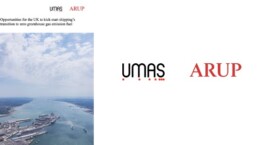

UMAS and Arup have joined forces to explore actionable ways in which the UK can become an early mover in the shipping industry’s decarbonisation, which are outlined in their report titled, ‘Opportunities for the UK to kick-start shipping’s transition to zero emission fuel’.
The collaboration between UMAS and Arup on this research marks a unique partnership that is striving to address the urgent challenges of maritime decarbonisation. Together, these leading consultancies are combining their expertise to unlock actionable insights that not will only benefit the UK’s maritime industry but also set a proven framework and precedent for global sustainability efforts.
Uncertainty over the development of zero GHG emission fuels, regarding its demand, scalability, and cost-effectiveness is contributing to a lack of confidence among stakeholders, which in turn inhibits crucial and much-needed investments. By combining UMAS’s comprehensive shipping insights and data, and Arup’s expertise on energy production and port infrastructure, this joint research sheds light on the crucial factors that influence scalable zero emission fuel supply and demand in the UK.
The urgency of meeting shipping’s decarbonisation targets is underscored by the International Maritime Organization’s (IMO) revised GHG strategy, which sets ambitious goals for zero or near-zero GHG emission energy sources to constitute between 5% and 10% of the energy used by international shipping by 2030. This will require the simultaneous scaling up of production facilities and supply chain infrastructure, including renewable energy creation and green ammonia production facilities.
By investing in this now, the UK’s bunkering fuel ecosystem (ports and fuel producers and sellers) has an opportunity to contribute to these ambitious goals, utilise existing infrastructure and benefit from ongoing government support programs such as the Hydrogen Allocation Rounds.
Leveraging UMAS’s first mover route identification tool, ‘FUSE’, and Arup’s expertise in the evaluation, design, and delivery in zero-emission fuel production, the report demonstrates that while overseas locations may offer lower zero-emission fuel production costs in the long term, the UK has an opportunity to become an early mover in this space while developing critical last-mile infrastructure to help secure its position in the future fuels market.
The research explores the potential impact and infrastructure needed to decarbonise the operations of six large ferries operating regular routes from ports in the North East of England, or seven container vessels operating from ports in the Solent, on the South Coast. The paper demonstrates that the carbon savings that could be made could align shipping in these regions with the most ambitious decarbonisation trajectories for international shipping.
Understanding current shipping energy demand is instrumental in identifying opportunities to concentrate decarbonisation efforts and mitigate investment risks. UMAS has provided key insights into the energy makeup of fleets operating in dynamic port areas such as the North East (including Teesside, the Humber, and the Tyne River) and the Solent strait (Southampton-Portsmouth).
The study found that decarbonising a portion of the energy demand in these regions presents a tangible pathway towards achieving the IMO’s decarbonisation goals. For instance, the estimated demand for heavy fuel oil equivalent in the North East in 2023 amounted to approximately 513 ktonnes, while the Southampton/Portsmouth port area had a demand of around 751 ktonnes. Decarbonising just 10% of this demand using methanol, ammonia, or hydrogen-derived fuels would create substantial progress towards sustainability.
The collaboration between UMAS and Arup on this research also paves the way for further expansion of this model to other regions, across the UK and globally.
By leveraging Arup’s understanding of energy production and port infrastructure alongside UMAS’ unrivalled comprehensive shipping insights and data, this partnership provides a new approach to unlocking decarbonisation opportunities within the maritime sector. This research not only sheds light on crucial factors influencing supply strategy but also demonstrates how such collaborative efforts can identify opportunities and pave the way for actionable solutions.
Chris Thorne, Director of Strategy and Operations, UMAS, commented, “The UK has a real opportunity to become an early mover in shipping’s transition to zero emission fuels. As the research has highlighted, making small, smart changes to our existing fleet will enable the UK to align with the most ambitious international shipping decarbonisation trajectories and showcase the UK as a leader in taking real action in this area.
“We recognise the growing government support directed towards hydrogen-derived fuels. However, further understanding is needed into the specific geographic areas of energy demand for these fuels.
“This collaboration has enabled us to identify actionable opportunities for decarbonisation within the maritime sector for specific areas in the UK. We are well placed to support others in their efforts to navigate the complex landscape of decarbonisation and unlock sustainable pathways for the maritime sector globally.
“Our extensive experience on understanding the make-up of the shipping fleet provides a launch board to identify and prioritise where these specific opportunities lie and to support the shipping industry as a whole in its decarbonisation efforts.”
Sally Prickett, Director, Arup, said, “As the maritime sector shifts to net zero, this research shows the UK’s opportunity to lead global green fuel value chain development. Arup and UMAS have teamed up to tackle technical, commercial, and regulatory hurdles and pinpoint actionable solutions. Our findings pave the way for a transformative shift in global zero-emission shipping. It is an exciting time for the sector, with the UK able to take a leading role in demonstrating how and where investment is required”.
Arup and UMAS urge stakeholders to seize the early mover opportunities presented by the UK’s potential to kick-start the transition towards zero-emission shipping. By leveraging existing assets, supporting energy security, and unlocking economic opportunities, the UK can pave the way for a greener, more sustainable maritime industry.



Related News.
Predicting the Future or Preparing for It? Cyprus Marine Club Explores the Power of Adaptability with Natasa Pilides
In a world where uncertainty has become the new normal, is predicting the future really the best strategy, or is the ability to adapt the greater…

Greece and Egypt in talks to extend EEZ Eastwards towards Cyprus following Libya’s move on Turkish Maritime Pact
Athens and Cairo have agreed to advance bilateral consultations aimed at extending the geographical scope of their 2020 Exclusive Economic Zone (EEZ)…
Seafarers face widening competency gap as digital shipping accelerates, recent research finds
Eighty two per cent of maritime professionals surveyed say current training does not adequately prepare crews for the realities of modern,…

Wärtsilä and WinGD sign new Service Framework Agreement to ensure long-term continuity and support for the global fleet
Technology groups Wärtsilä and WinGD have entered into a new long-term Service Framework Agreement, reaffirming their shared commitment to supporting…
Seatrium and Karpowership sign contract for a series of whale class Powership Conversion and Integration Projects
Seatrium and its strategic partner, floating power leader Karpowership, have strengthened their longstanding collaboration with the award of a…
ClassNK releases Handbook Supporting Consideration of Onboard Carbon Capture “Onboard Carbon Capture Systems Implementation Framework”
Bringing together technical, infrastructure, regulatory and emissions assessment considerations across the OCCS value chain - ClassNK has released a…
HHLA lowers earnings forecast for the 2026 financial year
Based on the business development to date and updated estimates for the fourth quarter of 2026, the Executive Board of Hamburger Hafen und…
Port of Los Angeles reports lowest emissions per Container on Record
The Port of Los Angeles continued to make clean air gains in 2025, recording its lowest emissions per container on record, according to the Port's…
Drewry World Container Index – 22 Oct
WCI increased for the second consecutive week, the highest in 15 weeks. See detailed commentary below. Drewry World Container Index…
Mammoet, Port of Argentia and Argentia Capital Partner to Advance Floating Dry Dock and Marine Repair Facility
Partnership builds on Mammoet’s established presence at Port of Argentia and shared confidence in the growing market for ship repair and marine…
Subscribe to our newsletter!
if you dont want to swim alone in the ocean of news, sign up for the newsletter, and you will receive daily all the important news of world shipping!
