Seven ways ESA has cut its environmental footprint
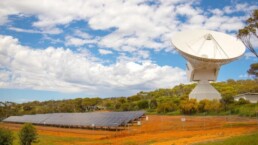

ESA is committed to almost halve its greenhouse gas emissions linked to energy consumption by 2025 compared to 2019 levels. But how can ESA keep accelerating the use of space for the sustainable development of society while reducing its emissions?
With eight establishments across Europe, a spaceport in French Guiana and tracking stations all over the world, ESA has plenty of opportunities. Here are some of its big achievements in greenhouse gas reduction:
A better gas boiler
The European Space Research and Technology Centre (ESTEC) in the Netherlands replaced its old gas-fired boiler, which was responsible for about 75% of the site’s yearly gas consumption, with a state-of-the-art condensing gas boiler. The new system, in use since June 2021, can operate at a lower temperature while producing the heat required for older buildings. It is estimated to save 454,000 cubic meters of gas a year, or almost a 1000 tonnes of CO2 equivalent.
Heat pump upgrades
A high-efficiency heat pump that has been running at ESTEC since May 2023 saves around 450 000 cubic meters of gas per year, which equates to 990 tonnes of CO2 equivalent. The system, which generates cold water while repurposing the extracted heat into a central heating network, reduced ESTEC’s annual gas consumption by 25%. In Spain, the new heat pump at the European Space Astronomy Centre (ESCAC) is the most innovative project in terms of energy efficiency. It has reduced diesel consumption by 95% and offers annual savings of about 295 tonnes of CO2 equivalent.
Embracing Earth energy
The European Space Operations Centre (ESOC) in Germany and the European Centre for Space Applications and Telecommunications (ECSAT) in the United Kingdom both have ground source heat pumps. These efficiently heat and cool the buildings they serve and have eliminated the use of gas for heating.
Data centre heat
The ESA Centre for Earth Observation (ESRIN) in Italy recovers energy generated by its data centre and uses it to heat offices. The project, which has been going since 2013, saves an estimated 55 tonnes of CO2 equivalent a year.
Powered by the Sun
The photovoltaic panels at four major ESA sites – ESRIN, ESTEC, ECSAT and ESAC – save more than 500 tonnes of CO2 equivalent a year. ESA’s deep-space ground station at New Norcia, Western Australia, is also powered in part by sunlight, thanks to a new solar power ‘farm’ of photovoltaic panels that covers about a third of the station’s electricity use.
Making buildings better
The ESA headquarters in Paris, known as HQ Nikis, was recently refurbished with modern materials that reduce its environmental footprint. In its first year of operations, the refurbished HQ Nikis consumed 50% less electricity and heating energy than its previous version did in 2013.
LED lighting
All street lighting and main corridor lighting at ESTEC has been replaced with LEDs. More areas will be converted but, so far, the change saves about 95 tonnes of CO2 equivalent a year.



Related News.
Predicting the Future or Preparing for It? Cyprus Marine Club Explores the Power of Adaptability with Natasa Pilides
In a world where uncertainty has become the new normal, is predicting the future really the best strategy, or is the ability to adapt the greater…

Greece and Egypt in talks to extend EEZ Eastwards towards Cyprus following Libya’s move on Turkish Maritime Pact
Athens and Cairo have agreed to advance bilateral consultations aimed at extending the geographical scope of their 2020 Exclusive Economic Zone (EEZ)…

Seafarers face widening competency gap as digital shipping accelerates, recent research finds
Eighty two per cent of maritime professionals surveyed say current training does not adequately prepare crews for the realities of modern,…
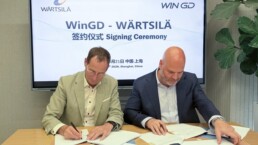
Wärtsilä and WinGD sign new Service Framework Agreement to ensure long-term continuity and support for the global fleet
Technology groups Wärtsilä and WinGD have entered into a new long-term Service Framework Agreement, reaffirming their shared commitment to supporting…
Seatrium and Karpowership sign contract for a series of whale class Powership Conversion and Integration Projects
Seatrium and its strategic partner, floating power leader Karpowership, have strengthened their longstanding collaboration with the award of a…

ClassNK releases Handbook Supporting Consideration of Onboard Carbon Capture “Onboard Carbon Capture Systems Implementation Framework”
Bringing together technical, infrastructure, regulatory and emissions assessment considerations across the OCCS value chain - ClassNK has released a…

HHLA lowers earnings forecast for the 2026 financial year
Based on the business development to date and updated estimates for the fourth quarter of 2026, the Executive Board of Hamburger Hafen und…
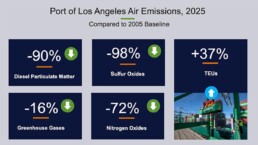
Port of Los Angeles reports lowest emissions per Container on Record
The Port of Los Angeles continued to make clean air gains in 2025, recording its lowest emissions per container on record, according to the Port's…

Drewry World Container Index – 22 Oct
WCI increased for the second consecutive week, the highest in 15 weeks. See detailed commentary below. Drewry World Container Index…
Mammoet, Port of Argentia and Argentia Capital Partner to Advance Floating Dry Dock and Marine Repair Facility
Partnership builds on Mammoet’s established presence at Port of Argentia and shared confidence in the growing market for ship repair and marine…
Subscribe to our newsletter!
if you dont want to swim alone in the ocean of news, sign up for the newsletter, and you will receive daily all the important news of world shipping!
