“We stand at a tipping point” Wärtsilä calls for urgent action to enable more flexible power systems


Technology group Wärtsilä is calling for urgent action to enable more flexibility in power systems around the world, as we reach a crucial renewable energy tipping point.
According to the IEA World Energy Outlook1 the amount of renewables deployed globally is set to double by 2030, with inflexible generation forecast to decline rapidly, including a 20% reduction in coal and 34% reduction in oil generation, equating to over 2,300 TWh in lost generation.
At COP28, the United Nations Framework Convention on Climate Change (UNFCCC) agreed to transition away from fossil fuels and triple renewable power by 2030, which would make this tipping point even more pronounced.
Renewable energy will become the world’s largest electricity source by 20252, and it is vital that flexible technologies are deployed at scale and pace to support that transition to avoid widespread curtailment, increased prices, greater fluctuations, and higher emissions.
Anders Lindberg, President, Wärtsilä Energy, said: “We stand at a tipping point, with unprecedented levels of renewables being added globally over the next decade and huge volumes of traditional inflexible assets on the cusp of retirement.
“Over the past decade we have transitioned from renewables requiring financial support, to a position where inflexible assets, such as oil, coal and CCGTs (combined-cycle gas turbines) and nuclear are no longer viable without political support.
“This presents us with a unique opportunity: to add more renewable energy than ever before on to our grids, build the right level and right type of flexibility into our power systems and phase out inflexible assets while converting to sustainable fuels. Ultimately this will ensure a transition that fully phases out fossil fuels and is affordable, low carbon and resilient.
“The decisions that we make today in designing our power systems will echo for generations, as we aim to tackle climate change and embed the right technologies to accelerate the deployment of renewables.”
To ensure we address this tipping point, Wärtsilä is calling on policy and decision makers around the world to:
- Choose the right technologies to accompany renewables, including grid balancing engines and energy storage to enable and accelerate the energy transition.
- Enable and encourage flexibility through regulations and policies that incentivise investments in flexible generation assets.
- Introduce shorter timeframes for power trading markets: Instead of trading in hourly periods, power trading markets should be operating in 15-minute, or even 5-minute, time resolutions.
Choosing the right technology
According to IEA World Energy Outlook report, gas generation will increase 1% by 2030 and decrease 5% by 2050 (TWh)3, however global utilisation and the emissions from the sector will drop significantly, as we reach an additional energy tipping point. Gas will increasingly shift from providing baseload power to providing flexible and firm capacity for real-time and seasonal renewable balancing.
However, not all flexible generating assets are created equal. Inherently wind and solar power is intermittent, so flexible assets are required to manage minute-level, daily and seasonal variations in renewable generation, to ensure the lowest carbon and most cost-effective power systems.
Engines are the optimal flexible power generation technology choice over aeroderivative turbines in a five-minute market, as they:
- Can outperform gas turbines when dispatched in real-time markets (i.e. 15- and 5-minute power trading intervals). One study found that an engine power plant can capture 60% more value than an equivalent aeroderivative gas turbine plant over 20 years4.
- Have 10% lower greenhouse gas emissions than aeroderivative gas turbines5.
- Can run on sustainable fuels once they are available for the energy sector, and can switch seamlessly between different fuels.
- Can ramp up in two minutes to support or balance intermittent renewables.
- Have no minimum uptime or downtime and can start / stop as many times as needed with no additional cost or impact on maintenance.
- Have high full load efficiency and can maintain it across a wide range of outputs – outperforming aeroderivative turbines under both normal and extreme conditions.
- Can operate at loads as low as 10%, making them ideal for providing spinning reserve.
- Can reduce curtailment.
Anders Lindberg continued: “Grid balancing engines will play a vital role in bridging to higher renewable systems, as they are the most efficient power generation technology to support intermittent wind and solar. In the future they can run on sustainable fuels to create 100% renewable power so there is no chance of stranded assets. Fuel flexibility is vital for ensuring a dependable source of electricity.
“We have all the technologies required to achieve net zero. It is essential that the correct incentives and policies are put in place today, to enable the deployment of flexible technologies and keep costs and emissions low, while shaping the power systems of tomorrow.”



Related News.

Predicting the Future or Preparing for It? Cyprus Marine Club Explores the Power of Adaptability with Natasa Pilides
In a world where uncertainty has become the new normal, is predicting the future really the best strategy, or is the ability to adapt the greater…

Greece and Egypt in talks to extend EEZ Eastwards towards Cyprus following Libya’s move on Turkish Maritime Pact
Athens and Cairo have agreed to advance bilateral consultations aimed at extending the geographical scope of their 2020 Exclusive Economic Zone (EEZ)…
Seafarers face widening competency gap as digital shipping accelerates, recent research finds
Eighty two per cent of maritime professionals surveyed say current training does not adequately prepare crews for the realities of modern,…
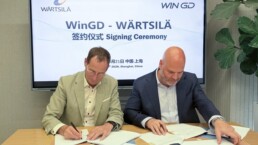
Wärtsilä and WinGD sign new Service Framework Agreement to ensure long-term continuity and support for the global fleet
Technology groups Wärtsilä and WinGD have entered into a new long-term Service Framework Agreement, reaffirming their shared commitment to supporting…
Seatrium and Karpowership sign contract for a series of whale class Powership Conversion and Integration Projects
Seatrium and its strategic partner, floating power leader Karpowership, have strengthened their longstanding collaboration with the award of a…
ClassNK releases Handbook Supporting Consideration of Onboard Carbon Capture “Onboard Carbon Capture Systems Implementation Framework”
Bringing together technical, infrastructure, regulatory and emissions assessment considerations across the OCCS value chain - ClassNK has released a…

HHLA lowers earnings forecast for the 2026 financial year
Based on the business development to date and updated estimates for the fourth quarter of 2026, the Executive Board of Hamburger Hafen und…
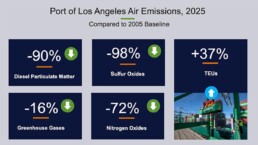
Port of Los Angeles reports lowest emissions per Container on Record
The Port of Los Angeles continued to make clean air gains in 2025, recording its lowest emissions per container on record, according to the Port's…

Drewry World Container Index – 22 Oct
WCI increased for the second consecutive week, the highest in 15 weeks. See detailed commentary below. Drewry World Container Index…
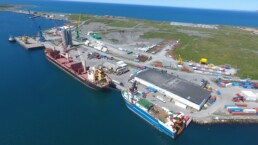
Mammoet, Port of Argentia and Argentia Capital Partner to Advance Floating Dry Dock and Marine Repair Facility
Partnership builds on Mammoet’s established presence at Port of Argentia and shared confidence in the growing market for ship repair and marine…
Subscribe to our newsletter!
if you dont want to swim alone in the ocean of news, sign up for the newsletter, and you will receive daily all the important news of world shipping!
