LCA development in ship design

Shqipe Buzuku has been with Deltamarin for 18 months in the role of Data Analyst/LCA, bringing to bear her academic background as a postdoc researcher at Åbo Akademi University in Turku, Doctor of Science from Lappeenranta University of Technology and MSc in Chemistry and Chemical Engineering from the University of Pristina, to address a topic that is set to become increasingly visible in the global shipping and shipbuilding industry. Here she explains what LCA means in practice and its importance for Deltamarin.
First, may I say what a fantastic opportunity I’ve been given here at Deltamarin to make a concrete contribution to the sustainability of the maritime industry. Essentially, my task is to help the company calculate the LCA and environmental impact (including carbon footprint assessment) of ship designs from cradle to grave. As the industry increases its commitment to reduce emissions from both ship operation and shipbuilding, like all forward-leaning organisations we are adapting to this changing environment. I am happy to be able to play an important role in that transition.
Maritime decarbonization
Climate change is one of the greatest challenges of our time. Achieving the goal of zero emissions by 2050 requires radical innovations in energy efficiency and reduction of greenhouse gas (GHG) emissions across the board. All industries are heavily invested in advancing their innovation capabilities based on life-cycle thinking and sustainability criteria, including circularity. In the maritime sphere, IMO regulations and standards are the main driving force underpinning the shift towards decarbonization, with the main focus right now on developing alternative fuels and associated technologies.
Getting to net zero is a huge challenge and must involve all parties from academia and industry experts to shipowners and shipyards. As a design house and first actor in the ship lifecycle, Deltamarin has a key part to play and, consequently, in 2022 we set out to develop the capabilities and knowledge base to implement LCA at the design stage. This is important, firstly, to provide customers and other value-chain stakeholders with environmentally responsible vessel options, both in terms of fuels and construction, and, secondly, to identify hotspots for further improvements.
Leading a new field
As part of our efforts to promote sustainable practices in shipping, we want to be the first international design house to offer LCA for all ship types and fuels as part of our offering. Environmentally friendly choices can also be, in a lot of cases, better for business and economically sustainable – for example by enabling lower port charges.
Although LCA is not yet obligatory in vessel projects, this is highly likely to change in future as LCAs may become a requirement from, for example, cargo owners who need the data to evaluate the footprint of their own products, cruise lines who want to include LCA data in their marketing, or indeed a condition of newbuilding financing institutions (many of which are already espousing the Poseidon Principles).
Systematic methodology
Just to elaborate briefly, LCA is a systematic, comprehensive and holistic methodology for evaluating the environmental impacts of a commercial product, service, process or system throughout its entire lifecycle, from raw materials extraction to production, use and disposal. As a valuable sustainability tool, it is already widely used in fields such as environmental science, engineering and product design. For Deltamarin’s purposes, the product system embraces a ship from the initial design phase through shipbuilding and operational life to ship recycling.
Fuel consumption, emissions, energy efficiency, construction materials, and end-of-life considerations are the most common variables in ship LCAs. The most significant is energy use, with LCA taking into account the environmental impact of all stages of energy acquisition, transportation, storage and usage. In terms of materials, LCAs can identify where shipbuilders can lower environment impact by switching steel grades, for example. LCA can also be performed on specific vessel components. For example, material choices for propellers can be assessed separately for the manufacturing, usage, and recycling phases.
Where do we get the data?
As a designer we produce our own key primary data, including vessel dimensions and weight calculations. We also calculate energy consumption per year through simulation modelling by our energy team, as well as cost estimation of equipment, etc. Through our parent company, China Merchants Group, we also have direct access to shipyard data covering all the different processes during construction.
We combine these data in the concept phase using the using SimaPro software, which features numerous assessment models and extensive databases. We can also change individual assessment parameters as we go along, allowing us to update our models as new data becomes available. We also have in-house access to the Ecoinvent Life Cycle Inventory (LCI) database, which contains thousands of datasets modelling human activities or processes, measuring natural resources withdrawn from the environment, emissions to water, soil and air and the products, co-products and wastes produced as a result of such activities. Our LCA methodology complies with the ISO Standards 14040 and 14044.
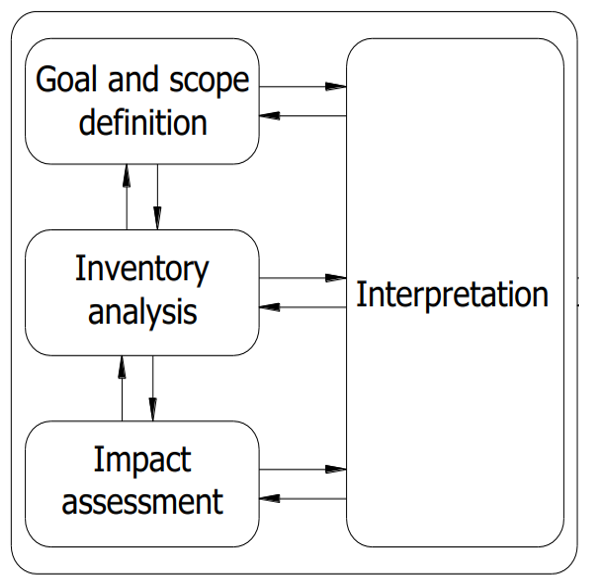
Life cycle assessment framework (ISO 14040, 2006).
Enabling new fuels
Using SimaPro we can model the overall well-to-wake (WTW) impact of each fuel in the vessel’s operational phase (reflecting the intended trading profile), providing the basis for customers’ final decisions. This includes estimates of emissions of carbon dioxide (CO2), nitrous oxide (N2O), methane (CH4) and black carbon – the main shipping emissions contributors to climate change – as well as many other pollutants including nitrogen oxides (NOx), sulphur oxides (SOx), particulate matter (PM), non-methane volatile organic compounds (NMVOCs) and sulphur hexafluoride (SF6).
Projects in the works
Currently we have three key LCA projects ongoing. Firstly, as part of the EU-financed CHEK joint industry project, whose aim is to accelerate decarbonisation through fundamental changes in the way ships are designed and operated, we are working in close collaboration with World Maritime University in Malmö to deliver comprehensive LCAs of both a bulk carrier and cruise ship concept that model and examine emissions in a life-cycle perspective.
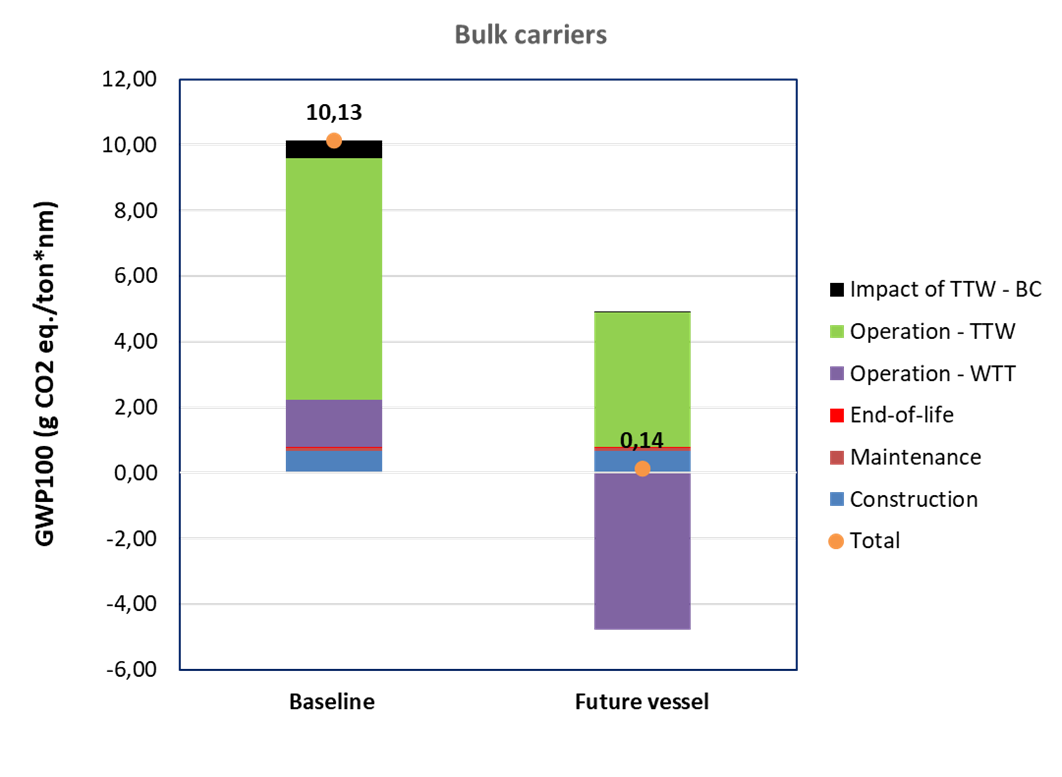
GWP100 per functional unit of baseline and future vessels.
At the same time, our team is performing a carbon footprint assessment of a trans-shipment vessel (TSV) (operational phase only) and an LCA for a ‘green design’ LNG tanker. The latter vessel is expected to be also powered by LNG and as part of the LCA we will measure both the 100-year Global Warming Potential (GWP) and 20-year GWP of LNG as a fuel.
In summary, as an LCA expert it’s my job to provide accurate information and support decision-making for sustainable development of ships that are ready for the future.
In addition to having to master LCA principles, best practices, methods and industry standards, we are responsible for the accuracy of the data and deciding what should and should not be included in analyses. But what I find most meaningful is that I can start to influence clients to move in a greener direction based on robust and trustworthy data.
Let’s keep pushing the boundaries of innovation energy-saving technology and sustainability for a sustainable future in maritime industry!
If you’d like to exchange more thoughts around this topic, feel free to reach out to me!



Related News.
Predicting the Future or Preparing for It? Cyprus Marine Club Explores the Power of Adaptability with Natasa Pilides
In a world where uncertainty has become the new normal, is predicting the future really the best strategy, or is the ability to adapt the greater…

Greece and Egypt in talks to extend EEZ Eastwards towards Cyprus following Libya’s move on Turkish Maritime Pact
Athens and Cairo have agreed to advance bilateral consultations aimed at extending the geographical scope of their 2020 Exclusive Economic Zone (EEZ)…
Seafarers face widening competency gap as digital shipping accelerates, recent research finds
Eighty two per cent of maritime professionals surveyed say current training does not adequately prepare crews for the realities of modern,…
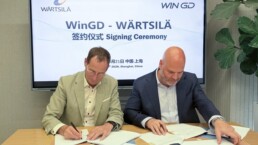
Wärtsilä and WinGD sign new Service Framework Agreement to ensure long-term continuity and support for the global fleet
Technology groups Wärtsilä and WinGD have entered into a new long-term Service Framework Agreement, reaffirming their shared commitment to supporting…
Seatrium and Karpowership sign contract for a series of whale class Powership Conversion and Integration Projects
Seatrium and its strategic partner, floating power leader Karpowership, have strengthened their longstanding collaboration with the award of a…
ClassNK releases Handbook Supporting Consideration of Onboard Carbon Capture “Onboard Carbon Capture Systems Implementation Framework”
Bringing together technical, infrastructure, regulatory and emissions assessment considerations across the OCCS value chain - ClassNK has released a…
HHLA lowers earnings forecast for the 2026 financial year
Based on the business development to date and updated estimates for the fourth quarter of 2026, the Executive Board of Hamburger Hafen und…
Port of Los Angeles reports lowest emissions per Container on Record
The Port of Los Angeles continued to make clean air gains in 2025, recording its lowest emissions per container on record, according to the Port's…
Drewry World Container Index – 22 Oct
WCI increased for the second consecutive week, the highest in 15 weeks. See detailed commentary below. Drewry World Container Index…
Mammoet, Port of Argentia and Argentia Capital Partner to Advance Floating Dry Dock and Marine Repair Facility
Partnership builds on Mammoet’s established presence at Port of Argentia and shared confidence in the growing market for ship repair and marine…
Subscribe to our newsletter!
if you dont want to swim alone in the ocean of news, sign up for the newsletter, and you will receive daily all the important news of world shipping!
