DRIFT research offers the port of Rotterdam guidelines for the raw material transition
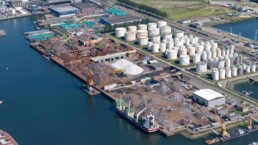

Different product processes, non-fossil raw materials and rare materials are crucial for a CO2-neutral, circular society. What role can the port of Rotterdam play in the raw material transition and which choices have to be made to achieve that? Those are the central questions in recent DRIFT research, commissioned by the Port of Rotterdam Authority. The result of this collaboration is The raw material transition for the Port of Rotterdam report
The report advocates a radical change in the import flows and industry in the port. The raw material transition is a precondition for the success of the energy transition worldwide and for the future of the port of Rotterdam. At the same time, it forms the precursor to a circular economy that is now very much in development, but which is essential if the earth’s resources are not to be further exhausted. Not only that, but making and recycling products contributes in this context to Europe’s strategic autonomy. One conclusion of the research is that the circular economy needs more physical space for the collection and separation of all residual and waste flows for processing into new products. According to the research, this means that it is necessary to look beyond the current port area.
Prof. Jan Rotmans MA MSc., founder of DRIFT: ‘The raw material transition is crucial to the energy transition, for the world, for Europe, for the Netherlands and for the port of Rotterdam. As yet, the circular economy forms only 7% of the real economy worldwide. If the port of Rotterdam wants to become circular, more space is needed for the processing of all the residual and waste flows. That will mean judicious decision-making for the future.’
Boudewijn Siemons, CEO of Port of Rotterdam Authority: ‘The energy transition is beginning to take shape and the next step is to consolidate the raw material transition. There are already very promising activities in recycling and the port of Rotterdam has the largest cluster of biofuels in Europe. At present, extra biorefineries are being built in Rotterdam that produce on the basis of organic materials and residual products. We need to further expand this and scale it up. For that reason, we are developing a raw material strategy this year, for which this research offers valuable guidelines.’
Import of raw materials
The research focuses on three major product chains: critical raw materials, chemicals and building materials. Critical raw materials are those currently often imported and used in small quantities in Europe but that are essential for all sorts of technologies. Multiple quantities are needed for the energy transition. The European Critical Raw Materials Act sets goals for 2030 for the percentage of raw materials that must come from Europe itself (10%), the processing capacity (40%) and recycling (15%). Many materials must be imported from other parts of the world which now mainly supply to other countries, in particular China. The report recommends that Rotterdam take a leading role in raw material diplomacy, aimed at bilateral collaboration. And it is important that more businesses which recycle and process those critical raw materials are established in or around the port.
New value chains
Scaling up industry which processes that waste (also plastic) into new products is essential. The raw materials in the chemicals industry are now often based on crude oil and other fossil sources. That has to change. It requires a fundamental change to the system and new value chains of other raw materials. Other advice in the report is to build a network and infrastructure in the current “hinterland” of North West Europe, to recover materials. That will mean new input, such as pyrolysis oil from used plastic.
From fossils to bio-based
Constructing with concrete and steel requires a lot of energy and leads to high emissions of CO2. Constructing with bio-based materials such as wood is a good alternative. Fundamental changes in the raw materials chain are needed, from countries of production to the processing industry. Rotterdam can play a role in the import of wood as a building material.
Setting up new value chains of raw and other materials requires making choices; which activities should scale up, which will disappear and what does all that mean for the existing value chains? How should the scarce space be distributed? This research gives guidelines for the raw materials strategy that the Port of Rotterdam Authority is in the process of developing. The strategy is scheduled to be completed this year.



Related News.
Columbia Group calls for greater focus on retaining women at sea as second She Beyond Conference takes place
Columbia Group has called on the maritime industry to create a future where women can thrive, progress and lead at sea, as it celebrated the second…
Neptune Group Welcomes “NIKOS TRAVLOS”
The new vessel proudly bears the name of Neptune's founder, who laid the foundation for the creation and enduring evolution of the Group. Her…

Wildcat Defense enters into exclusive agreement to acquire Fraser Shipyards
American family firm takes the next step in its strategy to rebuild U.S. shipbuilding and repair capacity, following its offer for Austal USA.…
Kawasaki signs strategic partnership MOU with Romania’s Transgaz for Onshore Hydrogen Gas Transport
Establishing a model for large-scale hydrogen supply and transport via pipelines Kawasaki Heavy Industries, announced at the Romania–Japan…

UK P&I Club and TT Club secure regulatory approval for Thomas Miller acquisition
The UK P&I Club and TT Club announce the successful completion of their joint acquisition of the Thomas Miller Holdings group, marking a major…
Valenciaport presents its Sandbox at PEIC’26 as a tool to bridge the gap between innovation and implementation
The opening session featured a discussion between Valenciaport President Mar Chao and Valenciaport Foundation Director Antonio Torregrosa. The…

Major investments strengthen Gothenburg RoRo Terminal
Expanded terminal areas, new rail connections and modernised quays are among the investments that have strengthened Gothenburg RoRo Terminal in…

ABP appoints key roles in the Humber
Associated British Ports has made two key appointments at its container terminals strengthening its unitised operations at the ports of Immingham…
Xinhua Silk Road 2026 North Bund Forum unveils 20 shipping-related achievements
The 2026 North Bund Forum opened in Shanghai on October 20 with 20 key shipping-related achievements spanning international cooperation, green…

Ports encouraged to prepare now for advanced nuclear in maritime and clean energy
New joint Lloyd’s Register and British Ports Association paper sets out a practical readiness pathway for ports considering nuclear-powered vessels,…
Subscribe to our newsletter!
if you dont want to swim alone in the ocean of news, sign up for the newsletter, and you will receive daily all the important news of world shipping!
