Gasum plans to purchase up to 800 GWh e-methane per year from Nordic Ren-Gas’s next two Power-to-Gas plants
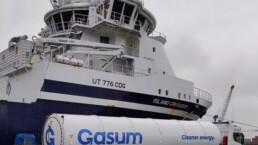

Gasum and Nordic-Ren Gas continue their co-operation to develop the e-methane market by negotiating a gas offtake agreement on the next two Power-to-Gas plants Nordic Ren-Gas is developing. These two plants will be connected to the existing gas grid infrastructure. The e-methane is made with renewable electricity and biogenic carbon dioxide and can substantially reduce emissions in transport and industry.
Nordic energy company Gasum and the leading Nordic Power-to-Gas developer Nordic Ren-Gas have signed a Letter of Intent whereby the parties will negotiate on an offtake agreement for the entire anticipated production of Nordic Ren-Gas’s e-methane plant projects in the Finnish cities of Lahti and Kotka. If an agreement is reached, Gasum would purchase all e-methane produced at the plants and distribute it to its customers.
The e-methane produced in Lahti and Kotka will be injected to the gas grid with the potential to be exported to Europe or liquefied for use as e-LNG in, for example, maritime transport. Nordic Ren-Gas has developed a unique operational and technical design for its Power-to-Gas plants to meet all the requirements of the EU Renewable Energy Directive on renewable liquid and gaseous fuels of non-biological origin (RFNBO) for its e-methane.
In January, Gasum and Nordic Ren-Gas reported signing the first offtake agreement on an e-methane plant in Tampere that will initially produce 160 gigawatt hours (GWh) of e-methane per year starting 2026. The Lahti and Kotka plants will be constructed based on the model developed in the Tampere project.
Final volumes decided based on demand
The initial plan is that the Lahti and Kotka plants combined will produce 800 GWh of renewable e-methane per year. Gasum and Nordic Ren-gas will determine the realized offtake volumes together based on projected demand from end users. The Lahti and Kotka plants are both planned to be up and running by 2027.
The plants will produce the renewable e-methane using Finnish onshore wind power. Both projects are being developed in close collaboration with the local energy utilities when it comes to the capture of carbon dioxide and district heating integration to utilize surplus heat from the Power-to-Gas process.
“Gasum is pleased to continue developing our co-operation with Nordic Ren-Gas, as the potential of e-methane for emission reductions in industry and transport is so substantial. Gasum has the infrastructure in place for effective distribution of e-methane to our customers in land and maritime transport as well as industry and we believe Finland is a competitive location for producing e-methane to the European market. The volumes produced at the Lahti and Kotka plants can be a significant addition to Gasum’s renewable energy offering”, says Mika Wiljanen, CEO of Gasum Group.
“Excitingly, our collaboration with Gasum has now reached almost one terawatt hour (TWh) of annual e-methane volumes. Building on the success of our joint efforts in the Tampere project, we are thrilled to share progress in the Lahti and Kotka projects. Ren-Gas’s efficient project development model, combined with Gasum’s valuable expertise in the renewable gas market, accelerates the entire development of the renewable e-methane market and facilitates cost-efficient emission reductions in Europe,” says Saara Kujala, CEO of Ren-Gas.
Fully interchangeable with natural gas and biogas
In the Power-to-Gas process, hydrogen is first produced using renewable electricity and water. The hydrogen is then further processed into e-methane by combining the hydrogen with biogenic carbon dioxide. E-methane produced in this way is fully renewable, and will replace fossil fuel usage in the transportation, maritime and industrial sectors.
E-methane is fully interchangeable with natural gas and biogas. When it is liquefied it is likewise fully interchangeable with liquefied natural gas (LNG) and liquified biogas (LBG, bio-LNG). This means that it can be transported through already existing infrastructure – trucks, ships, pipelines – and directly used in assets currently running on natural gas or biogas. There is no need for any additional investments in new equipment or modifications for companies who already own gas-run vehicles or ships.
Unlike alternative fuels such as ammonia or methanol which are still in the development stage both in terms of production and infrastructure, e-methane is an already existing plausible pathway to decarbonizing maritime as well as heavy road transportation in just a few years.
Gasum’s strategic goal is to bring yearly seven terawatt hours (7 TWh) of renewable gas, including biogas and e-methane, to market by 2027. Achieving this goal would mean a combined carbon dioxide reduction of 1.8 million tons per year for Gasum’s customers.



Related News.
Columbia Group calls for greater focus on retaining women at sea as second She Beyond Conference takes place
Columbia Group has called on the maritime industry to create a future where women can thrive, progress and lead at sea, as it celebrated the second…
Neptune Group Welcomes “NIKOS TRAVLOS”
The new vessel proudly bears the name of Neptune's founder, who laid the foundation for the creation and enduring evolution of the Group. Her…
Wildcat Defense enters into exclusive agreement to acquire Fraser Shipyards
American family firm takes the next step in its strategy to rebuild U.S. shipbuilding and repair capacity, following its offer for Austal USA.…
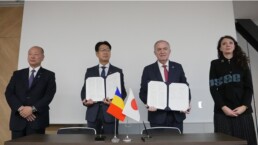
Kawasaki signs strategic partnership MOU with Romania’s Transgaz for Onshore Hydrogen Gas Transport
Establishing a model for large-scale hydrogen supply and transport via pipelines Kawasaki Heavy Industries, announced at the Romania–Japan…

UK P&I Club and TT Club secure regulatory approval for Thomas Miller acquisition
The UK P&I Club and TT Club announce the successful completion of their joint acquisition of the Thomas Miller Holdings group, marking a major…
Valenciaport presents its Sandbox at PEIC’26 as a tool to bridge the gap between innovation and implementation
The opening session featured a discussion between Valenciaport President Mar Chao and Valenciaport Foundation Director Antonio Torregrosa. The…
Major investments strengthen Gothenburg RoRo Terminal
Expanded terminal areas, new rail connections and modernised quays are among the investments that have strengthened Gothenburg RoRo Terminal in…
ABP appoints key roles in the Humber
Associated British Ports has made two key appointments at its container terminals strengthening its unitised operations at the ports of Immingham…
Xinhua Silk Road 2026 North Bund Forum unveils 20 shipping-related achievements
The 2026 North Bund Forum opened in Shanghai on October 20 with 20 key shipping-related achievements spanning international cooperation, green…
Ports encouraged to prepare now for advanced nuclear in maritime and clean energy
New joint Lloyd’s Register and British Ports Association paper sets out a practical readiness pathway for ports considering nuclear-powered vessels,…
Subscribe to our newsletter!
if you dont want to swim alone in the ocean of news, sign up for the newsletter, and you will receive daily all the important news of world shipping!
