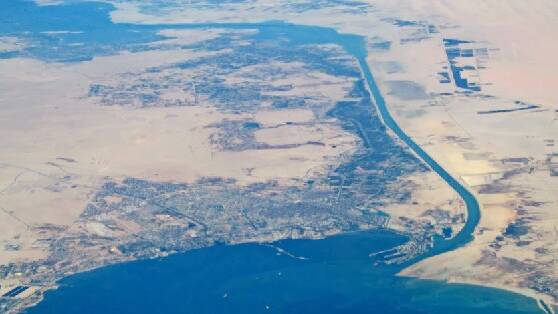

Energy prices for Europe are expected to increase as more petroleum products and crude tankers are diverting away from the Rea Sea and Suez Canal. Longer trips for the Middle-Eastern barrels that replaced Russian flows to Europe introduce supply issues, and this is leading to a “sea change” in commodity purchases by Europe, and a boost for Atlantic Basin crude suppliers including the U.S. and Brazil.
According to global trade intelligence company Kpler, at least six crude tankers are currently taking the much longer route around Africa’s Cape of Good Hope rather than the Suez Canal, a diversion caused by the Houthi rebel attacks and which can add up to 45 days to the voyage.
Europe is at the center of the diversions because its tanker supplies are at high risk of attack.
“The decision for these diversions is by the owners of the oil, which is European,” said Viktor Katona, lead crude analyst at Kpler. “European countries are seen as complicit in the Israel-Hamas war. They would rather go around the Cape of Good Hope versus taking a chance through the Red Sea.”
The resulting delays to the delivery of products — which include crude, diesel, and LNG products — vary based on the commodity being carried. LNG vessels travel faster than oil tankers because they are lighter and they can sail up to 21 knots versus the 12-13 knots for crude tankers.
Before the Red Sea disruptions, a tanker from Jamnagar, India to Rotterdam, Netherlands would have taken 24 days. Sailing through the Cape of Good Hope, the duration of the same voyage has risen to 42 days. From Basrah, Iraq, to Milazzo, Sicily, a voyage that would have taken 17 days will now take 42 days.
The longer transits can put a squeeze on the availability of tankers, with their return journey to be loaded up with product longer.
“It’s not just the arrival that is delayed, the tankers have a longer route home to be filled back up,” Katona said. “You are looking at 90 days for one delivery. That is a huge amount of time. The market is underestimating the impact of the transit duration.”
He said to expect tankers on the spot market see an increase in freight rates, and noted that in the past few days tankers carrying “clean products” such as diesel and gasoline have been going up.
“Ironically, the tensions in the area are benefitting tanker owners with longer voyages, increasing tanker utilization and ultimately higher freight rates,” said Andy Lipow, president of Lipow Oil Associates.
Katona warned that the diversions are going to be a prolonged, painful event, but a boost for both the U.S. and Brazilian energy industry. “We are seeing Europeans remodeling their purchasing patterns from companies in the Atlantic basin with no logistics constraints,” he said.
The U.S. is the largest supplier to the European market of diesel, with diesel rates recently hitting their highest level in seven years.
According to Clarksons Securities, product tanker rates soared towards the end of last week, following a drop in Red Sea activity. A long range 2 (LR2) tanker vessel that is typically capable of carrying around 75,000 metric tons of the hydrocarbon naphtha, saw an increase in earnings of 33% week over week to $74,200/day, as of Monday. Medium range (MR) tankers which typically can carry between 30,000-40,000 metric tons of gasoline or gas oil, saw earnings rise 34% week over week to $42,500/day.
“It’s more expensive, but Europeans will receive it [the diesel] faster,” Katona said.
Europe has strategic petroleum reserves with 90 days supply, so there are no worries about Europe running out of oil, but he added, “The new reality is Europe will get their oil but with an insane freight cost attached to it.”
‘Looming upside risk’ in march of diverted tankers
The ENI’s Faithful Warrior was the first tanker to start the trend when it diverted on January 11. The tanker is currently in the South African territorial waters. Since then, Kpler has tracked a subsequent array of tankers that have diverted away on route to ports: Agitos to Rotterdam, Nissos Sikinos to Fos in France, Kimolos to Aliaga, Turkey, Odessa to Pachi Megara, Greece, and the tanker Kinyras, which still hasn’t flagged its final destination, according to Katona.
“Iraqi tankers carrying crude to Europe have started to sail almost uniformly towards the Cape of Good Hope,” Katona said. “Interesting, there’s just one tanker carrying Iraqi crude and going through the Bab el Mandeb Strait, incidentally taking the cargo to Turkey, to the same Tupras [refinery operator] that saw its previous cargo seized by Iran’s IRGC off the Omani coast. So they haven’t stopped trusting the route.”
Torm, Hafnia, Stena Bulk, Hafnia, BP, Frontline, Equinor, Euronav and Shell are among the tanker operators and energy companies choosing to avoid the area following recent warnings.
Kevin Book, managing director of Clearview Energy Partners, said this parade of tankers is part of the “looming upside risk” it has been relaying to clients.
“Longer trips for the Middle-Eastern barrels that replaced Russian flows to Europe introduce supply latency, which can be bullish in its own right. And if it looks too risky to ship from Iraq through the Suez to Europe, then cargoes from other regional producers could soon follow suit,” Book said.
Source: CNBC



Related News.

Cyprus Maritime Innovation takes Centre Stage at SMM Hamburg 2026
Underscoring its expanding role as a premier international hub for cutting-edge maritime technology and sustainable shipping, the Republic of Cyprus…

Trump seeks to refill US oil reserve with Venezuela deal but faces long delay
U.S. President Donald Trump said on the 30th (local time) that he would refill the U.S. Strategic Petroleum Reserve, which has been depleted with…
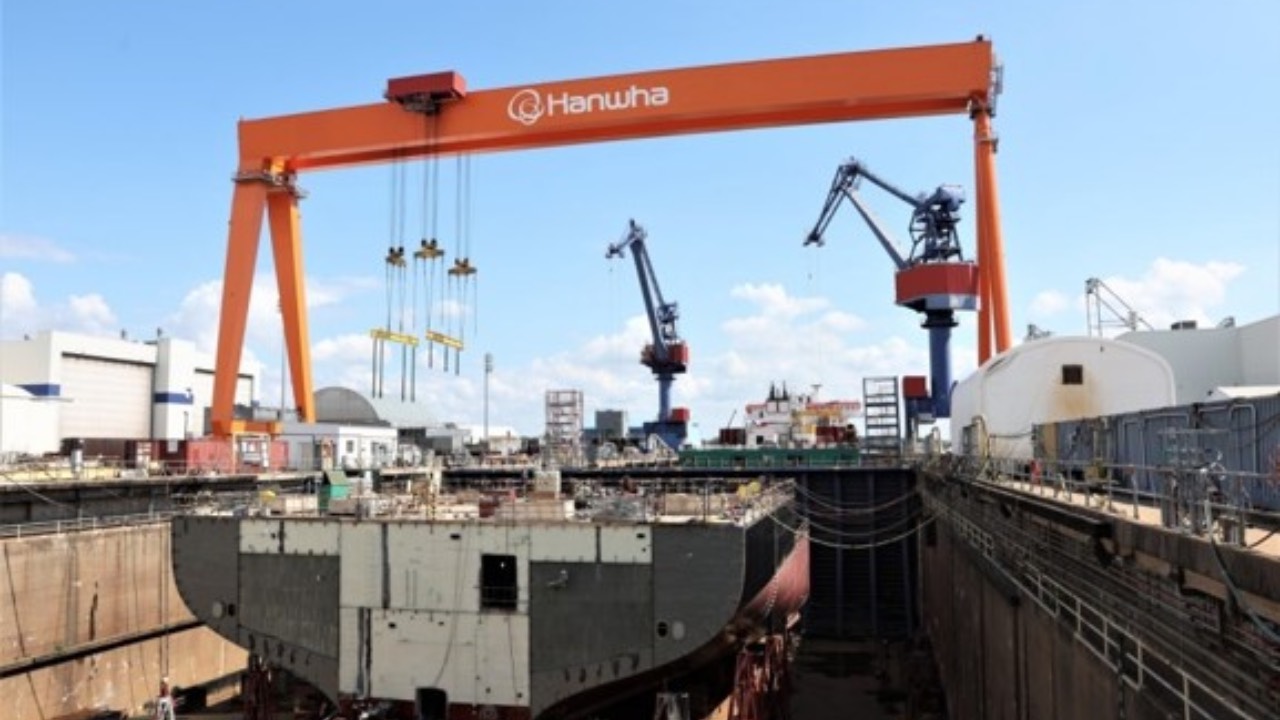
US Navy Official visits South Korean Shipyards in private
With U.S. President Donald Trump pushing a plan to allow overseas construction of U.S. warships, attention is focusing on whether the building of…
SES and De Boer Marine expand collaboration with FlexMaritime deployment across Global Markets
SES, a leading space solutions company, and De Boer Marine, a leading provider of top-quality marine equipment and maritime connectivity services,…

New ESG guidance to help maritime industry turn sustainability into commercial advantage
New framework helps shipowners and ports align ESG strategy with access to capital, charterer expectations and long-term asset value. Maritime…

Britannia P&I Club analysis finds four in five crew deaths linked to illness rather than accidents
New report highlights cardiovascular disease as leading cause of fatalities and raises concerns over mental health risks among younger seafarers.…

The Swedish Club launches new Loss Prevention podcast, Knot Another Lesson
The Swedish Club has launched Knot Another Lesson, a new podcast exploring the practical lessons, emerging risks and operational challenges shaping…

Lloyd’s Register appoints Jens Grunenberg as Senior Representative for Germany
Lloyd’s Register has appointed Jens Grunenberg as its Senior Representative for Germany, effective 1 September. Based in Hamburg, Grunenberg will…

Indian Register of Shipping sets sights on Hamburg for European Expansion
Indian Register of Shipping, a leading international classification society and full member of the International Association of Classification…
MOL completes Merger of 6 Ship Management Companies
Unifying Management of Over 200 Vessels and Strengthening Safety Mitsui O.S.K. Lines, announced that it has completed the integration of the MOL…
Subscribe to our newsletter!
if you dont want to swim alone in the ocean of news, sign up for the newsletter, and you will receive daily all the important news of world shipping!
