Lithium surge raises stability concern
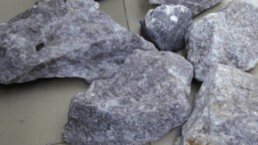

Attention should be given to the potential liquefaction risk and structural stress issues arising from extraordinary growth in spodumene shipments, say John Southam, Loss Prevention Senior Executive, NorthStandard (Greece) and Lee Stenhouse, Managing Director, Roxburgh.
The global demand for lithium for use in batteries has led to an increase in shipments of spodumene, a cargo which possess shifting and / or liquefaction risks.

What is spodumene?
Spodumene is a lithium aluminium silicate and is the world’s most abundant commercially viable lithium mineral. Rapid global increase in lithium demand due to the advent of the electric vehicle battery industry has led to the mineral sources of lithium being increasingly developed and exploited, with spodumene being the most important.
The IMSBC Code includes a schedule for SPODUMENE (UPGRADED) where it is described as an odourless and tasteless off-white to beige sand, containing a mixture of naturally occurring silicates and quartz. It is categorised as a Group A cargo, which means that this cargo may liquefy if shipped at a moisture content in excess of its transportable moisture limit.
Alternative names declared by shippers include ‘Lithium Mineral Concentrate’, ‘Lithium Alumina Silicate’, ‘Spodumene Concentrate SC6.0’ and ‘Alpha Spodumene’.
Trade routes
There are significant deposits in Australia (which currently has the highest existing annual production), South America and Canada. There is also a growing African export sector (Zimbabwe, Namibia, Democratic Republic of Congo and Mali), which is anticipated to be increasingly important due to its large reserves.
Currently, the destination of spodumene concentrates is almost exclusively to China, typically discharging in ports within the Sichuan and Jiangsu provinces.
Coarse product shipments
The source rock (spodumene pegmatite) is typically upgraded to a spodumene concentrate for shipping purposes. But it can also be shipped in its natural coarse state, which can consist of large cobbles or even boulders, sometimes in palletised form, and is similar in appearance to an aggregate material.
The large particle size and relatively low friction means that, if improperly loaded in the ship’s hold, there is risk that the cargo as a whole (or individual rocks) could shift, creating stability issues, causing damage to vessel or stress being applied to the structure of the vessel.
Coarse material shipments have up until recently been considered uneconomic; as such it has no individual schedule in the IMSBC Code 2022 edition. However, the increase in lithium prices has made coarse product shipments a moreviable economic option, especially from mining operations that are remote or trying to develop early revenue streams before their concentrate processing facilities become operational.
Fines and concentrates
In some regions, especially in Southern African countries such as Namibia and Zimbabwe, there is a focus to control the natural resources. They aim to control the export of raw materials by promoting value-added local concentrate processing. In some cases, full or partial bans have been put on the export of unprocessed (coarse) spodumene pegmatite.
It is anticipated by mining and material experts Roxburgh that a pragmatic approach will be adopted and there will be a mix of ore and concentrates shipped out of these regions as the industry demand increases.
It is expected that the spodumene (upgraded) concentrate processing facilities that are currently under construction near mines and quarries will become operational in the near future. This process will involve spodumene pegmatites(raw coarse state) undergoing initial concentration via crushing and grinding to a fine particle size before the valuable minerals are separated and a waste product is produced, which may present shipping issues such as liquefaction, dynamic separation or cargo shift.
The upgraded lithium concentrate (also known as SC6) is then processed further to produce a sand containing naturally occurring quartz and silicates as well as the valuable spodumene.
Carriage risks
As with other mineral concentrates, the potential risk of material failure during shipping, such as liquefaction, will be controlled by the cargo’s particle size distribution, mineralogy, and moisture content.
Therefore, before commencing loading, the shipper must provide the ship’s master with accurate information on the specific properties of the cargo to allow for safe stowage and shipment.
The shipper should provide evidence that a proper technical assessment for the potential Group A properties of the cargo has been undertaken. Also, the subsequent procedures for sampling, testing and moisture management of the cargo are to be reviewed and approved by the competent authority at the port of loading.
In some of the developing regions exporting this cargo, there are concerns that procedures for sampling and testing may not have had proper consideration or oversight.
Shippers are recommended to ensure they are provided with the relevant documentation well in advance of loading to allow for a proper review.



Related News.

Columbia Group calls for greater focus on retaining women at sea as second She Beyond Conference takes place
Columbia Group has called on the maritime industry to create a future where women can thrive, progress and lead at sea, as it celebrated the second…
Neptune Group Welcomes “NIKOS TRAVLOS”
The new vessel proudly bears the name of Neptune's founder, who laid the foundation for the creation and enduring evolution of the Group. Her…

Wildcat Defense enters into exclusive agreement to acquire Fraser Shipyards
American family firm takes the next step in its strategy to rebuild U.S. shipbuilding and repair capacity, following its offer for Austal USA.…

Kawasaki signs strategic partnership MOU with Romania’s Transgaz for Onshore Hydrogen Gas Transport
Establishing a model for large-scale hydrogen supply and transport via pipelines Kawasaki Heavy Industries, announced at the Romania–Japan…

UK P&I Club and TT Club secure regulatory approval for Thomas Miller acquisition
The UK P&I Club and TT Club announce the successful completion of their joint acquisition of the Thomas Miller Holdings group, marking a major…

Valenciaport presents its Sandbox at PEIC’26 as a tool to bridge the gap between innovation and implementation
The opening session featured a discussion between Valenciaport President Mar Chao and Valenciaport Foundation Director Antonio Torregrosa. The…

Major investments strengthen Gothenburg RoRo Terminal
Expanded terminal areas, new rail connections and modernised quays are among the investments that have strengthened Gothenburg RoRo Terminal in…

ABP appoints key roles in the Humber
Associated British Ports has made two key appointments at its container terminals strengthening its unitised operations at the ports of Immingham…
Xinhua Silk Road 2026 North Bund Forum unveils 20 shipping-related achievements
The 2026 North Bund Forum opened in Shanghai on October 20 with 20 key shipping-related achievements spanning international cooperation, green…
Ports encouraged to prepare now for advanced nuclear in maritime and clean energy
New joint Lloyd’s Register and British Ports Association paper sets out a practical readiness pathway for ports considering nuclear-powered vessels,…
Subscribe to our newsletter!
if you dont want to swim alone in the ocean of news, sign up for the newsletter, and you will receive daily all the important news of world shipping!
