WRC-23 Satellite is key for the future of radiocommunications
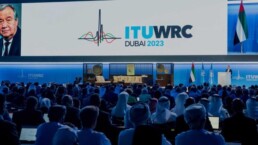

- Decisions made at WRC-23 create even greater opportunities to use spectrum and associated orbital resources more intensively
- In SES’s view, Agenda Items adopted for future conferences reflect an even stronger satellite focus ahead
As we start a new study cycle for the next World Radiocommunication Conference (WRC) in 2027, it is important to look back and reflect on the four years of intense preparation and the regulatory decisions adopted just a few weeks ago by WRC-23 in Dubai, UAE. The outcomes of WRC-23 affirm – without doubt – satellites’ essential role in global radiocommunications, for ensuring connectivity everywhere as well as for supporting other space services like earth observation.
Spectrum and the associated orbital resources are a scarce natural resource. We need to use it wisely, and the decisions made at WRC-23 create even greater opportunities to use this resource more intensively for satellite operations via enhanced satellite regulations.
In that respect, fixed-satellite systems can now access an additional 400 MHz of spectrum in the Americas thanks to WRC-23’s decision to expand spectrum access in the Ka-band for these systems.
Advancing space science services
WRC-23 was of particular importance not only to SES but to the satellite industry. One particular point of interest for SES that will benefit multiple industry stakeholders was the adoption of a regulatory framework for satellite-to-satellite links in Ka-band.
Using satellites in higher orbits as data relay links offer space stations, earth observation and small satellite systems in lower orbits an alternative path to download data to the ground. The outcome of these discussions during WRC-23 now enables us to serve customers in low Earth orbit using both our geostationary (GSO) and medium Earth orbit (MEO) assets in Ka-band, which in return permits massive data collections to be offloaded in real time for scientific uses or disaster relief efforts benefiting the public at large.
Enabling communications on-the-move everywhere
Additionally, WRC-23 adopted regulatory decisions for earth stations in motion (ESIM) communicating with non-geostationary (NGSO) satellite systems in the Ka-band as well as with GSO in parts of the Ku-band, helping make ubiquitous connectivity via satellite a global norm whether on vessels or aircraft. We’re very pleased with this outcome as these regulatory decisions ensure that SES, as the operator of a multi-orbit satellite system, can deliver globally harmonized connectivity on the move.
What to expect in preparation for future conferences?
Several of the Agenda Items under consideration for the new study cycles – whether directly or indirectly related to satellite-enabled applications – highlight the intersection between well-established uses of spectrum and emerging services in the satellite sector. These results very clearly establish that satellite is key for the future of radiocommunications.
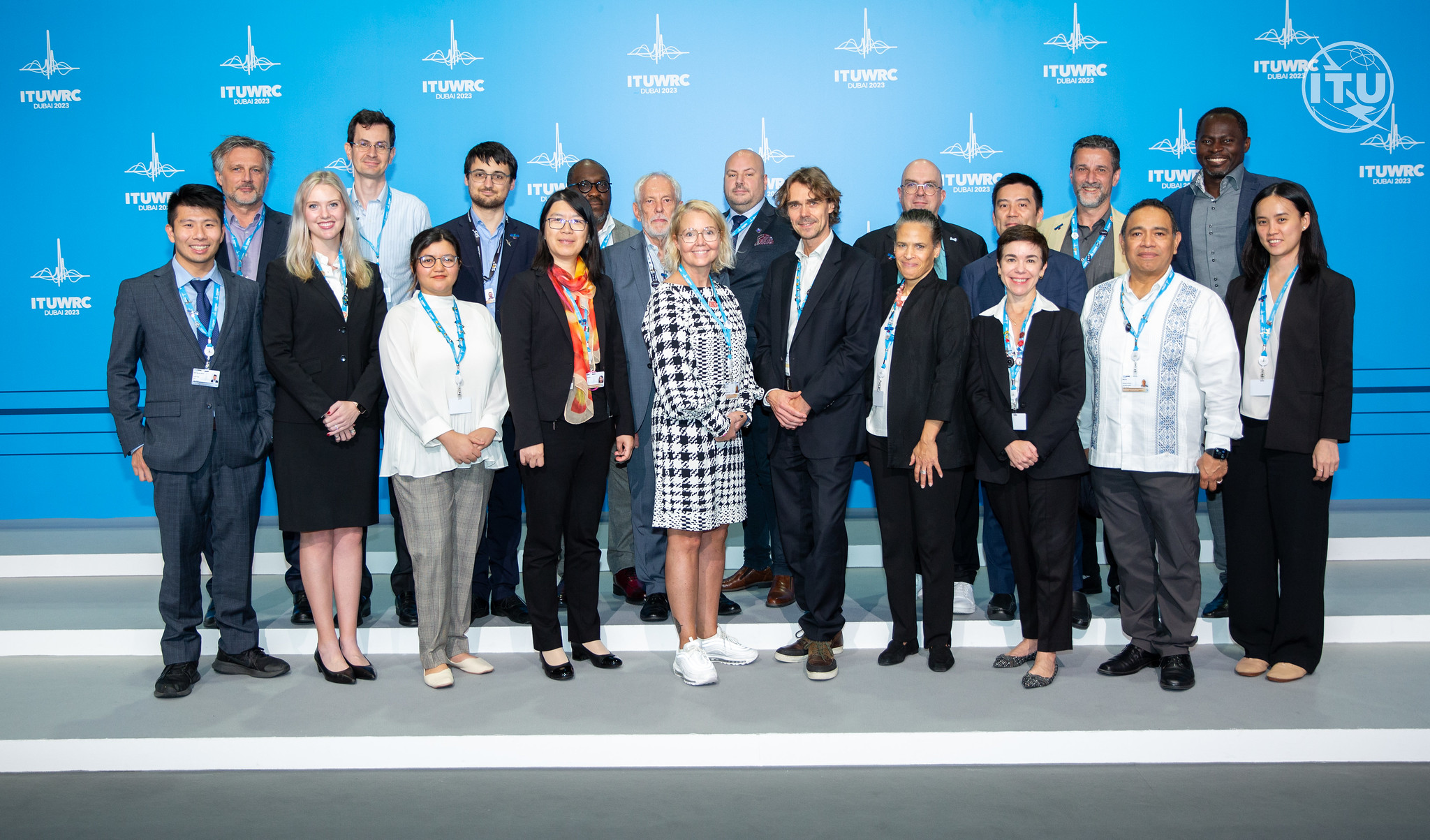
In SES’s view, Agenda Items adopted for future conferences reflect an even stronger satellite focus ahead. For example, WRC-27 is set to consider spectrum allocations for NGSO satellite feeder links as well as additional ESIM regulations in the higher Q/V bands. Additionally, there were extremely challenging discussions regarding bands to be considered for International Mobile Telecommunications (IMT) for WRC-27, and we are pleased that no Ku- satellite bands will be part of those studies. Overall, it is very hard to find any new mid-band spectrum for IMT, which is why SES generally encourages administrations and industry stakeholders to make better use of the existing bands already identified for IMT use.
During the period between WRC-19 and WRC-23, commercial NGSO systems have proliferated, which led to discussions on the potential need to have a WRC-27 agenda item to review the ITU Radio Regulations Article 22 EPFD (Equivalent Power Flux Density) limits. These discussions were intense, but we believe a satisfactory solution has been reached. WRC-23 has invited the ITU Radiocommunication Sector (ITU-R) to study the EPFD limits and submit the results at WRC-27 for further consideration without regulatory consequences at WRC-27 itself. SES will actively participate in these technical studies.
The work carried out during the last four years by numerous participants from governments and industries around the world is the foundation that led to the adoption of these new regulations. As the world’s first operator of a hybrid GSO and NGSO fleet, SES sees great value in these collaborative efforts as NGSO and GSO systems navigate an evolving space environment.
By agreeing on a solid basis for harmonized GSO and NGSO operations, the regulatory decisions adopted at this conference, and for future study cycles, contribute to foster a thriving and sustainable space environment that benefits all stakeholders while stimulating innovation for diverse applications.



Related News.
Columbia Group calls for greater focus on retaining women at sea as second She Beyond Conference takes place
Columbia Group has called on the maritime industry to create a future where women can thrive, progress and lead at sea, as it celebrated the second…
Neptune Group Welcomes “NIKOS TRAVLOS”
The new vessel proudly bears the name of Neptune's founder, who laid the foundation for the creation and enduring evolution of the Group. Her…
Wildcat Defense enters into exclusive agreement to acquire Fraser Shipyards
American family firm takes the next step in its strategy to rebuild U.S. shipbuilding and repair capacity, following its offer for Austal USA.…
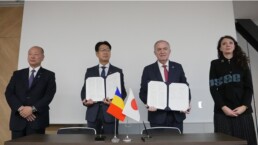
Kawasaki signs strategic partnership MOU with Romania’s Transgaz for Onshore Hydrogen Gas Transport
Establishing a model for large-scale hydrogen supply and transport via pipelines Kawasaki Heavy Industries, announced at the Romania–Japan…

UK P&I Club and TT Club secure regulatory approval for Thomas Miller acquisition
The UK P&I Club and TT Club announce the successful completion of their joint acquisition of the Thomas Miller Holdings group, marking a major…

Valenciaport presents its Sandbox at PEIC’26 as a tool to bridge the gap between innovation and implementation
The opening session featured a discussion between Valenciaport President Mar Chao and Valenciaport Foundation Director Antonio Torregrosa. The…

Major investments strengthen Gothenburg RoRo Terminal
Expanded terminal areas, new rail connections and modernised quays are among the investments that have strengthened Gothenburg RoRo Terminal in…
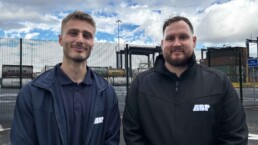
ABP appoints key roles in the Humber
Associated British Ports has made two key appointments at its container terminals strengthening its unitised operations at the ports of Immingham…
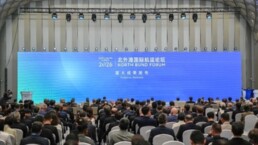
Xinhua Silk Road 2026 North Bund Forum unveils 20 shipping-related achievements
The 2026 North Bund Forum opened in Shanghai on October 20 with 20 key shipping-related achievements spanning international cooperation, green…
Ports encouraged to prepare now for advanced nuclear in maritime and clean energy
New joint Lloyd’s Register and British Ports Association paper sets out a practical readiness pathway for ports considering nuclear-powered vessels,…
Subscribe to our newsletter!
if you dont want to swim alone in the ocean of news, sign up for the newsletter, and you will receive daily all the important news of world shipping!
