Maersk’s Red Sea shipping pause highlights challenges for U.S.-led efforts to protect trade
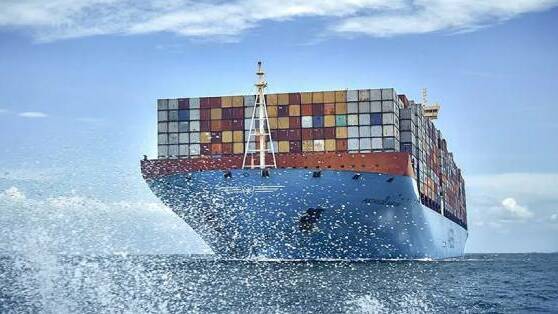

The threat to global trade in the Red Sea remains high, even with efforts to protect commercial vessels from attacks by Iranian-backed Houthi militants based in Yemen.
Danish shipping giant Maersk’s decision on Tuesday to pause Red Sea and Gulf of Aden transits until further notice underscores the difficulty for the U.S.-led initiative, called Operation Prosperity Guardian. U.S. Navy helicopters, returning fire, sank three of the four Houthi boats that attacked the Maersk Hanzghou over the weekend, the U.S. military said.
Due to the threat, more commercial ships are moving away from the Red Sea and instead going around the Cape of Good Hope on the southern tip of Africa, analytics provider MarineTraffic told CNBC. That’s triggered an increase in container rates from Shanghai.
So far, the situation has affected $225 billion in trade, according to calculations. Overall, freight carrier Kuehne+Nagel said, it’s impacted 330 vessels. The total capacity is estimated at 4.5 million containers, or 20-foot equivalent units (TEUs). The value of a container bound for the Suez is $50,000, according to freight consultancy MDS Transmodal.
Global trade data provider Kpler said the number of ships doing that jumped to 124 this week from 55 last week, and from 18 a month ago. To be sure, though, there’s been a modest increase in container ships in the Red Sea, with 21 on Tuesday, up from 16 on Dec. 26.
“Simultaneously, our analysis of traffic through the Bab al-Mandeb Strait for all vessels combined reveals a consistent downward trend in crossings for both northbound and southbound vessels,” said Jean-Charles Gordon, ship tracking director at Kpler. (The strait connects the Red Sea to the Gulf of Aden, which opens into the Arabian Sea in the Indian Ocean.)
That raises the stakes for Operation Prosperity Guardian. To achieve results, the task force will need a great deal of naval coordination, according to U.S. Navy Rear Admiral (Ret.) Mark Montgomery, a senior fellow at the nonpartisan Foundation for Defense of Democracies who served as policy director for the Senate Armed Services Committee under Sen. John McCain.
“You will need to group them in loose convoys, naval coordination of shipping, and you have to be out forward with helicopters to prevent the small vessels from coming at the chokepoints,” said Montgomery, who noted the outsized expense of shooting numerous missiles that cost millions of dollars each.
The coalition needs to use “deterrence by denial,” which is a strategy that aims to thwart an action by making it unlikely to succeed. An example would be missiles shooting down Houthi missiles or drones, he said. The operation also requires “deterrence by punishment,” Montgomery added. The U.S. helicopters’ actions over the weekend are an example.
He acknowledged the Biden administration’s concern about escalation, “but a failure to deter could also lead to escalation by the adversary,” Montgomery said.
“The United States has been the sole guarantor of free and open trade and has always done something about it,” he said.
The U.S. leadership has led to some tension, however. Ami Daniel, CEO of data firm Windward and a former officer in Israel’s navy, told CNBC that the branding of the U.S.-led coalition led France to only want to protect companies that are headquartered in their country. CMA CGM, a French ocean carrier, is being escorted by that country’s navy.
“Countries are protecting their interests. What I see is a lack of understanding of how shipping works and how global trade works,” Daniel said. “Trade is more than a flag a vessel is associated with. 130 vessels are owned and operated by US-domiciled companies but not U.S.-flagged. When you expand the flag association, there are nuances.”
But Montgomery pushed back on this notion, saying the U.S. has been branding coalition task forces like this for 30 years.
“This is an excuse, not a legitimate gripe,” Montgomery said.
Still, operators are making decisions case-by-case about whether to go through the Red Sea and Egypt’s Suez Canal, which can lead to equipment imbalances and possible shortages in Asia as transit times increase, according to Goetz Alebrand, head of ocean freight at DHL Global Forwarding.
“In light of current challenges in the Suez Canal, many carriers are opting for the longer route around the Cape of Good Hope to ensure the safety of crews and cargo,” he said.
Source: CNBC



Related News.

Cyprus Maritime Innovation takes Centre Stage at SMM Hamburg 2026
Underscoring its expanding role as a premier international hub for cutting-edge maritime technology and sustainable shipping, the Republic of Cyprus…
Trump seeks to refill US oil reserve with Venezuela deal but faces long delay
U.S. President Donald Trump said on the 30th (local time) that he would refill the U.S. Strategic Petroleum Reserve, which has been depleted with…
US Navy Official visits South Korean Shipyards in private
With U.S. President Donald Trump pushing a plan to allow overseas construction of U.S. warships, attention is focusing on whether the building of…
SES and De Boer Marine expand collaboration with FlexMaritime deployment across Global Markets
SES, a leading space solutions company, and De Boer Marine, a leading provider of top-quality marine equipment and maritime connectivity services,…

New ESG guidance to help maritime industry turn sustainability into commercial advantage
New framework helps shipowners and ports align ESG strategy with access to capital, charterer expectations and long-term asset value. Maritime…

Britannia P&I Club analysis finds four in five crew deaths linked to illness rather than accidents
New report highlights cardiovascular disease as leading cause of fatalities and raises concerns over mental health risks among younger seafarers.…
The Swedish Club launches new Loss Prevention podcast, Knot Another Lesson
The Swedish Club has launched Knot Another Lesson, a new podcast exploring the practical lessons, emerging risks and operational challenges shaping…

Lloyd’s Register appoints Jens Grunenberg as Senior Representative for Germany
Lloyd’s Register has appointed Jens Grunenberg as its Senior Representative for Germany, effective 1 September. Based in Hamburg, Grunenberg will…
Indian Register of Shipping sets sights on Hamburg for European Expansion
Indian Register of Shipping, a leading international classification society and full member of the International Association of Classification…
MOL completes Merger of 6 Ship Management Companies
Unifying Management of Over 200 Vessels and Strengthening Safety Mitsui O.S.K. Lines, announced that it has completed the integration of the MOL…
Subscribe to our newsletter!
if you dont want to swim alone in the ocean of news, sign up for the newsletter, and you will receive daily all the important news of world shipping!
