Measuring how space creates jobs and prosperity on Earth


Space is becoming ever more important to life on Earth – from managing climate change to responding to emergencies to digitalising the economy. To help policymakers and businesses take informed decisions about investing in space, ESA has today published plans to create robust and reliable data on the space economy, in collaboration with international partners.
The increasing importance of space means that demand for reliable and timely statistics on the space economy has grown. To meet this demand, ESA has worked with the Organisation for Economic Cooperation and Development, the European Commission’s Eurostat and Joint Research Centre, and the US Department of Commerce and its Bureau of Economic Analysis.
ESA Director General Josef Aschbacher said, “For too long, the increasing contribution that space makes to economic growth has been obscured in the official statistics. Creating statistical codes to flag space-related elements will reveal the full extent of the space economy and enable economists and policymakers to identify exactly how space creates prosperity on Earth.”
The space economy goes well beyond launchers, spacecraft and satellites – it includes space-derived products and services, such as the satellite communications and navigation on which many economies, people and devices rely.
Both direct contributions – such as mining the metal used to build a satellite – and indirect contributions – such as the value added by keeping people connected while in remote regions – are included, as well as people who work in the space industry spending their wages. The space economy can extend to unexpected places – space innovations pop up in medicine, health, environmental monitoring, farming, transport and manufacturing.
The tables of codes will enable economists to identify, for example, the value added by the creation of an electronic chip that uses Europe’s Galileo satellite navigation system and is later inserted into a person’s mobile phone or car, without considering the overall value of the mobile phone or the car in the space data.
The codes cover areas including: manufactured goods; information and communication services; professional, scientific and technical services; construction; public administrative and defence services; education; transport and storage; financial and insurance services; and arts, entertainment and recreational services.
The tables build on work started by the US Bureau of Economic Analysis, which published the first attempt to create a set of accounts for the American space economy in 2020, and on a two-year cooperation project between ESA, Eurostat and the Joint Research Centre.
The work consists of three strands: defining the space economy for statistical purposes that is internationally consistent; developing the methodology for the construction of the European space economy thematic account at the national and aggregated European levels; and combining the results obtained while fine-tuning and testing them, which is still ongoing and will be published in due course.



Related News.

Columbia Group calls for greater focus on retaining women at sea as second She Beyond Conference takes place
Columbia Group has called on the maritime industry to create a future where women can thrive, progress and lead at sea, as it celebrated the second…

Neptune Group Welcomes “NIKOS TRAVLOS”
The new vessel proudly bears the name of Neptune's founder, who laid the foundation for the creation and enduring evolution of the Group. Her…

Wildcat Defense enters into exclusive agreement to acquire Fraser Shipyards
American family firm takes the next step in its strategy to rebuild U.S. shipbuilding and repair capacity, following its offer for Austal USA.…

Kawasaki signs strategic partnership MOU with Romania’s Transgaz for Onshore Hydrogen Gas Transport
Establishing a model for large-scale hydrogen supply and transport via pipelines Kawasaki Heavy Industries, announced at the Romania–Japan…

UK P&I Club and TT Club secure regulatory approval for Thomas Miller acquisition
The UK P&I Club and TT Club announce the successful completion of their joint acquisition of the Thomas Miller Holdings group, marking a major…

Valenciaport presents its Sandbox at PEIC’26 as a tool to bridge the gap between innovation and implementation
The opening session featured a discussion between Valenciaport President Mar Chao and Valenciaport Foundation Director Antonio Torregrosa. The…

Major investments strengthen Gothenburg RoRo Terminal
Expanded terminal areas, new rail connections and modernised quays are among the investments that have strengthened Gothenburg RoRo Terminal in…

ABP appoints key roles in the Humber
Associated British Ports has made two key appointments at its container terminals strengthening its unitised operations at the ports of Immingham…
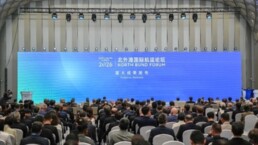
Xinhua Silk Road 2026 North Bund Forum unveils 20 shipping-related achievements
The 2026 North Bund Forum opened in Shanghai on October 20 with 20 key shipping-related achievements spanning international cooperation, green…

Ports encouraged to prepare now for advanced nuclear in maritime and clean energy
New joint Lloyd’s Register and British Ports Association paper sets out a practical readiness pathway for ports considering nuclear-powered vessels,…
Subscribe to our newsletter!
if you dont want to swim alone in the ocean of news, sign up for the newsletter, and you will receive daily all the important news of world shipping!
