Updated threats to shipping in the Red Sea
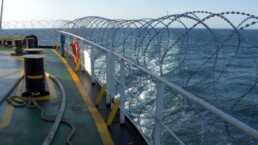

Yemen’s Houthi movement said that it will target all ships heading to Israel, regardless of their nationality and warned all international shipping companies against dealing with Israeli ports.
In recent weeks, the Houthis have attacked and seized several Israeli-linked ships in the Red Sea and its Bab al-Mandab Strait, a sea lane through which much of the world’s oil is shipped.
It is expected that such attacks will continue, subject to any deterrent response from the US, whose warships might also have been targeted with drones, and pressure applied on the Houthis behind the scenes, either through Saudi Arabia or other intermediaries, or a deal involving Iran.
Interim transit advice for the southern Red Sea and Gulf of Aden was published by BIMCO, ICS and other bodies in November 2023 and remains in place. The advice notes the following:
- Threats from “airborne activities are probably greater during daylight hours where targets are more easily identified and attacked/boarded, but the challenge of visually detecting and classifying small contacts at night such as a water-borne improvised explosive devices (WBIED) remain” – hence, the exposure to the threat is greater in daylight hours however, an attack during the hours of darkness cannot be excluded.
- Ships planning a passage through the Southern Red Sea and the Gulf of Aden should conduct a thorough ship and voyage specific threat and risk assessment, considering any additional advice from their flag state.
- Houthi forces have laid mines to protect port entries for ports under their control, and on rare occasion, such mines have become detached from their tether and have drifted into the traffic lanes.
There is also some potential for collateral damage due to vessels being in proximity to a missile/drone attack against another target or due to mistaken targeting.
Risk Intelligence released a client briefing report on 8 December addressing the viable threats to shipping, which reads as follows:
The seizure by the Houthis has achieved significant attention and highlights their opposition to Israeli actions in Gaza. The possibility of future vessel seizures hinges on several factors:
- Whether the Houthis obtain any concessions through negotiations, potentially involving relevant parties from the Middle Eastern region.
- The Houthis’ ability to effectively manage the seized vessel, including the well-being and repatriation of the crew, as well as ensuring its security in Hudaydah.
- Potential responses from Israel or an increase in the presence of naval forces in the area.
- Behind-the-scenes pressure exerted on the Houthis through intermediaries or potential agreements with certain Middle East states.
It is therefore difficult to predict how this situation will play out. Based on our current assessment of the situation, Risk Intelligence sees the following threat levels.
| Vessel type | Threat type | Threat level |
| Vessels specifically linked to Israel through ownership | Seizure and detention; limited kinetic attack such as a drone strike |  HIGH HIGH |
| Vessels engaged in trading directly with Israeli ports | Seizure and detention; protests and harassment |  ELEVATED ELEVATED |
| Vessels in transit without any involvement in Israeli trading | Potential proximity to the above threats |  MODERATE MODERATE |
Given the ongoing volatility in Israel, it is advisable for shipowners, operators, and Masters engaged in trade with Israeli ports to thoroughly evaluate the risks associated with each port call on an individual basis. Additionally, the following measures are recommended:
- Regularly consult local sources for up-to-date information from vessel agents, local authorities and Skuld’s correspondent, to obtain the most current and reliable security information available.
- Abide by the guidance provided by the flag administrations and port authorities regarding the relevant ISPS security levels.
- Review and implement pertinent security and contingency plans as appropriate – enhance Best Management Practices.
- Ensure that crewmembers aboard vessels heading towards Israel and transiting the Red Sea are well-briefed and trained about any imminent security threats in the region.
- Ships with Private Maritime Security Teams onboard are advised not to escalate Rules for the Use of Force (RUF).
Israel is included in the Joint War Committee’s (JWC) Listed Areas for Hull War, Piracy, Terrorism and Related Perils. As such it is also recommend confer with the vessel’s war insurer in advance of arrival at any Israeli port or transit within the Red Sea.
Reference can be made to the Attacks on shipping in the Red Sea article published on 6 December, which answers some of the trade-related and contractual questions shipowners might have during this turbulent time.
Source: Skuld



Related News.

Columbia Group calls for greater focus on retaining women at sea as second She Beyond Conference takes place
Columbia Group has called on the maritime industry to create a future where women can thrive, progress and lead at sea, as it celebrated the second…
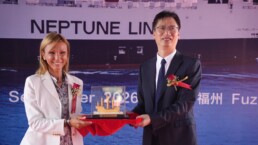
Neptune Group Welcomes “NIKOS TRAVLOS”
The new vessel proudly bears the name of Neptune's founder, who laid the foundation for the creation and enduring evolution of the Group. Her…
Wildcat Defense enters into exclusive agreement to acquire Fraser Shipyards
American family firm takes the next step in its strategy to rebuild U.S. shipbuilding and repair capacity, following its offer for Austal USA.…

Kawasaki signs strategic partnership MOU with Romania’s Transgaz for Onshore Hydrogen Gas Transport
Establishing a model for large-scale hydrogen supply and transport via pipelines Kawasaki Heavy Industries, announced at the Romania–Japan…

UK P&I Club and TT Club secure regulatory approval for Thomas Miller acquisition
The UK P&I Club and TT Club announce the successful completion of their joint acquisition of the Thomas Miller Holdings group, marking a major…

Valenciaport presents its Sandbox at PEIC’26 as a tool to bridge the gap between innovation and implementation
The opening session featured a discussion between Valenciaport President Mar Chao and Valenciaport Foundation Director Antonio Torregrosa. The…

Major investments strengthen Gothenburg RoRo Terminal
Expanded terminal areas, new rail connections and modernised quays are among the investments that have strengthened Gothenburg RoRo Terminal in…

ABP appoints key roles in the Humber
Associated British Ports has made two key appointments at its container terminals strengthening its unitised operations at the ports of Immingham…

Xinhua Silk Road 2026 North Bund Forum unveils 20 shipping-related achievements
The 2026 North Bund Forum opened in Shanghai on October 20 with 20 key shipping-related achievements spanning international cooperation, green…
Ports encouraged to prepare now for advanced nuclear in maritime and clean energy
New joint Lloyd’s Register and British Ports Association paper sets out a practical readiness pathway for ports considering nuclear-powered vessels,…
Subscribe to our newsletter!
if you dont want to swim alone in the ocean of news, sign up for the newsletter, and you will receive daily all the important news of world shipping!
