Wärtsilä to accelerate decarbonisation in Indonesia following inauguration of new workshop and Land and Sea Academy
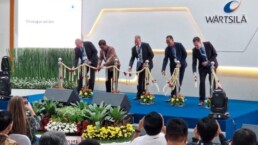

Technology group Wärtsilä has inaugurated its new workshop and Land & Sea Academy training facilities in Jakarta, Indonesia. The facilities will support and optimise the company’s energy and marine industry customers’ operations and accelerate their decarbonisation journey.
With an urgent need to triple renewable deployment globally to meet climate targets[1], Indonesia’s energy system is rapidly changing to support more flexible and renewable power generation. Wärtsilä’s new workshop and training facilities will enable the company to provide high-quality, local services and expert support to its customers and partners on this journey.
“The renewal of the workshop and training facilities is a concrete proof-point of our strong, long-term commitment to support our customers in Indonesia. The workshop is equipped with modern tools and machinery operated by skilled personnel which enable all types of maintenance and repair work, as well as remanufacturing and upgrades,” said Erwin Vanderkerff, Managing Director and President, Wärtsilä Indonesia.
“The Wärtsilä Land & Sea Academy provides high-quality training solutions covering all aspects of managing and operating installations, including maintenance, safety, reliability and performance, and will help customers to master sophisticated Wärtsilä technologies and equipment. With this investment, we will further develop our local capabilities to provide the best services to our energy and marine customers and partners both in Indonesia and elsewhere in Southeast Asia,” Vanderkerff continued.
Indonesia is one of the fastest growing economies in the world. Wärtsilä is committed to supporting the economic growth in the country through investing in the development of local expertise and power generation to ensure availability of reliable and sustainable power supply through the entire Indonesian archipelago.
“Wärtsilä is a global leader in innovative technologies and lifecycle solutions for the marine and energy customers. We are proud to closely collaborate with our stakeholders in Indonesia to ensure availability of local expertise and knowledge. Through our commitment and investments, we can help provide reliable and affordable power generation to support economic growth and accelerate decarbonisation in Indonesia,” said Frederic Carron, Vice President, Middle East & Asia, Wärtsilä Energy.
As Indonesia continues on its economic growth journey, the country has set out bold targets to decarbonise its energy system. A future energy system powered by more renewable energy will require greater flexibility. Flexibility can be achieved by choosing the right, future-proof technologies and designing flexible energy markets. All the technologies needed to achieve net zero already exist, and we must act quickly to deliver this transition.
Every Second Counts: Sustainability and Flexibility
Wärtsilä believes that to achieve climate targets, carbon emissions need to peak by 2025 and halve by the end of the decade. The urgency of the situation is unequivocal, and the solution is equally clear: we need to triple renewable energy and require a seismic change in the level of investment – up to USD 5.7 trillion per year by 2030 to put us on course for the 1.5C Paris Agreement scenario.
“The final quarter of this year, as we build up to COP28, the UN Climate Change Conference, is the critical moment to shift our focus from targets to implementation at pace. However, introducing more renewables is not enough to deliver the change we need. To enable wind and solar to thrive, we need to build reliable, affordable, and flexible energy systems, and we cannot delay any longer,“ says Anders Lindberg, President, Wärtsilä Energy.
Wärtsilä has studied and modelled over 190 energy systems worldwide, using energy market simulation software and has found that anywhere in the world, the most cost-effective approach to reach 100% renewable energy is to combine renewable power with grid flexibility.
Flexibility is not an optional addition to our power systems with an increasing amount of renewables – it is an essential part of our future power grids. If we fail to deliver flexibility at scale, it will threaten our ability to provide affordable and reliable power to industry, homes and businesses – and this will have an impact on reaching our decarbonisation targets. A lack of flexibility will inhibit our ability to deliver reliable renewable power, which could have a significant impact on lives and livelihoods.
“We emphasise innovation in sustainable technology and services to help our customers continuously improve their environmental and economic performance. Our window to reduce emissions and keep our planet habitable is closing. We have the technologies and expertise available now to create a greener future, and there is no time to waste: every second counts,” Lindberg concludes.
[1] International Renewable Energy Agency: Investment Needs of USD 35 trillion by 2030 for Successful Energy Transition



Related News.
Columbia Group calls for greater focus on retaining women at sea as second She Beyond Conference takes place
Columbia Group has called on the maritime industry to create a future where women can thrive, progress and lead at sea, as it celebrated the second…
Neptune Group Welcomes “NIKOS TRAVLOS”
The new vessel proudly bears the name of Neptune's founder, who laid the foundation for the creation and enduring evolution of the Group. Her…

Wildcat Defense enters into exclusive agreement to acquire Fraser Shipyards
American family firm takes the next step in its strategy to rebuild U.S. shipbuilding and repair capacity, following its offer for Austal USA.…
Kawasaki signs strategic partnership MOU with Romania’s Transgaz for Onshore Hydrogen Gas Transport
Establishing a model for large-scale hydrogen supply and transport via pipelines Kawasaki Heavy Industries, announced at the Romania–Japan…

UK P&I Club and TT Club secure regulatory approval for Thomas Miller acquisition
The UK P&I Club and TT Club announce the successful completion of their joint acquisition of the Thomas Miller Holdings group, marking a major…

Valenciaport presents its Sandbox at PEIC’26 as a tool to bridge the gap between innovation and implementation
The opening session featured a discussion between Valenciaport President Mar Chao and Valenciaport Foundation Director Antonio Torregrosa. The…

Major investments strengthen Gothenburg RoRo Terminal
Expanded terminal areas, new rail connections and modernised quays are among the investments that have strengthened Gothenburg RoRo Terminal in…

ABP appoints key roles in the Humber
Associated British Ports has made two key appointments at its container terminals strengthening its unitised operations at the ports of Immingham…
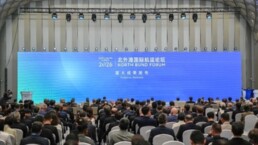
Xinhua Silk Road 2026 North Bund Forum unveils 20 shipping-related achievements
The 2026 North Bund Forum opened in Shanghai on October 20 with 20 key shipping-related achievements spanning international cooperation, green…

Ports encouraged to prepare now for advanced nuclear in maritime and clean energy
New joint Lloyd’s Register and British Ports Association paper sets out a practical readiness pathway for ports considering nuclear-powered vessels,…
Subscribe to our newsletter!
if you dont want to swim alone in the ocean of news, sign up for the newsletter, and you will receive daily all the important news of world shipping!
