DNV launches new recommended practices for safe application of industrial AI


DNV, the risk management and assurance company, has published a suite of recommended practices that will enable companies operating critical devices, assets, and infrastructure to safely apply artificial intelligence.
High-quality AI systems require strong building blocks, that is, data, sensors, algorithms, and digital twins. The nine new or updated RPs cover each of these digital building blocks. DNV’s strong sector knowledge of the maritime, energy, and healthcare sector, among others, enables it to understand not just how AI works, but how it interacts with other systems in complex infrastructure and assets.
The advent of AI requires a new approach to risk. Whereas conventional mechanical or electric systems degrade over years, AI-enabled systems change within milliseconds. Consequently, a conventional certificate provided by DNV, which normally has a three- to five-year validity, could be invalidated with each collected data point. This necessitates a different assurance methodology and a thorough understanding of the intricate interplay between system and AI, allowing for a proper assessment of failure modes as well as potential for real-world performance enhancement.
“Many of our customers are investing significant amounts in AI and AI readiness, but often struggle to demonstrate trustworthiness of the emerging solutions to key stakeholders. This is the trust gap that DNV seeks to close with the launch of these recommended practices and which we are publishing ahead of the imminent European Union Artificial Intelligence Act,” says Remi Eriksen, DNV Group President and CEO.
The European Union Artificial Intelligence Act will be the world’s first AI law. The law defines AI very broadly, covering essentially any data-driven system that is deployed in the EU, irrespective of where it is developed or sources its data. These recommended practices can be used as a basis for companies to ensure they meet relevant requirements.
The RPs bridge the gap between the generically written law and affected stakeholders, providing a practical interpretation of the EU AI Act. They do so through a claims-and-evidence-based approach addressing four key challenges:
- They take a systems approach to capture emergent properties and behaviours arising from how AI components interact with other components, humans, and the environment.
- To account for the dynamic nature of AI-enabled systems and their environments, the assurance happens continuously or at least with the same frequency as the system changes.
- The assurance process includes the mapping of stakeholders and their wide-ranging concerns, to identify competing interests and facilitate compromises.
- To promote collaboration between actors responsible for different parts, the RPs use modular assurance claims allowing each actor to assure their own parts, thus enabling assurance of an entire system based on the assurance modules and their interdependencies.

I believe DNV, with our long tradition of helping our customers to assure the quality, safety, and reliability of complex systems and value chains, is uniquely positioned to add value to customers on their AI journeys
- DNV Group President and CEO



Related News.

Columbia Group calls for greater focus on retaining women at sea as second She Beyond Conference takes place
Columbia Group has called on the maritime industry to create a future where women can thrive, progress and lead at sea, as it celebrated the second…
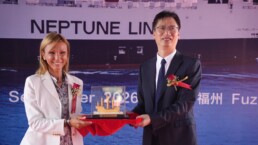
Neptune Group Welcomes “NIKOS TRAVLOS”
The new vessel proudly bears the name of Neptune's founder, who laid the foundation for the creation and enduring evolution of the Group. Her…

Wildcat Defense enters into exclusive agreement to acquire Fraser Shipyards
American family firm takes the next step in its strategy to rebuild U.S. shipbuilding and repair capacity, following its offer for Austal USA.…
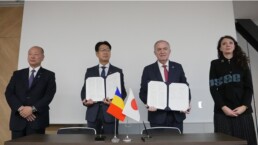
Kawasaki signs strategic partnership MOU with Romania’s Transgaz for Onshore Hydrogen Gas Transport
Establishing a model for large-scale hydrogen supply and transport via pipelines Kawasaki Heavy Industries, announced at the Romania–Japan…

UK P&I Club and TT Club secure regulatory approval for Thomas Miller acquisition
The UK P&I Club and TT Club announce the successful completion of their joint acquisition of the Thomas Miller Holdings group, marking a major…

Valenciaport presents its Sandbox at PEIC’26 as a tool to bridge the gap between innovation and implementation
The opening session featured a discussion between Valenciaport President Mar Chao and Valenciaport Foundation Director Antonio Torregrosa. The…

Major investments strengthen Gothenburg RoRo Terminal
Expanded terminal areas, new rail connections and modernised quays are among the investments that have strengthened Gothenburg RoRo Terminal in…
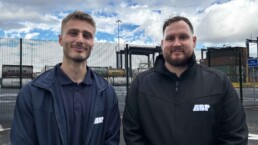
ABP appoints key roles in the Humber
Associated British Ports has made two key appointments at its container terminals strengthening its unitised operations at the ports of Immingham…
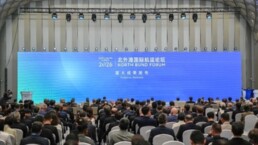
Xinhua Silk Road 2026 North Bund Forum unveils 20 shipping-related achievements
The 2026 North Bund Forum opened in Shanghai on October 20 with 20 key shipping-related achievements spanning international cooperation, green…
Ports encouraged to prepare now for advanced nuclear in maritime and clean energy
New joint Lloyd’s Register and British Ports Association paper sets out a practical readiness pathway for ports considering nuclear-powered vessels,…
Subscribe to our newsletter!
if you dont want to swim alone in the ocean of news, sign up for the newsletter, and you will receive daily all the important news of world shipping!
