Earth overshoot day 2023 – Reversing the clock for a sustainable future


Today is Earth Overshoot Day 2023, a stark reminder that we have already used up all the resources on our planet for the current year. According to National Footprints and Biodiversity Accounts, this year’s alarming milestone falls five days later than last year. However, this delay is nothing to cheer about. Only one of the five days accounts for genuine advancements. The remaining four days are due to integrating improved data sets into the accounts’ latest edition.
As leaders, it is our responsibility to drive change and create a positive impact. We can help create a more harmonious relationship between humanity and our planet by embracing sustainability, fostering innovation and collaboration, and advocating for policy change.
I’ve heard Global Footprint Network CEO Steven Tebbe’s warning loud and clear: he states that persistent overshoot leads to more prominent symptoms, including unusual heat waves, forest fires, droughts, and floods. This, in turn, increases the risk of compromising food production. His conclusion: it is in the interest of cities, countries, and business entities to foster their own resource security if they want to prosper – to the benefit of the Earth as well.
It’s encouraging to see how organizations across the globe collaborate for a sustainable future that will help us #MoveTheDate. According to the Science Based Target initiative, 5,500 companies are taking actions to reduce emissions. More than 2,100 companies out of those have made net-zero commitments. Businesses have realized that it is important to incorporate sustainability in their business strategies to mitigate the evolving investor pressure, consumer demand, and regulatory constraints. As the 2023 IPCC AR6 report rightly pointed out, more rapid and far-reaching transitions across all sectors and systems are necessary to achieve deep and sustained emissions reductions and secure a livable and sustainable future for all.
But how can we make this happen? Actually, there are several levers that might significantly move Earth Overshoot Day closer to year’s end – and companies like SAP can contribute to them.
Reducing the carbon component of humanity’s ecological footprint by 50% would move Earth Overshoot Day by 93 days, or more than three months.*
The change with the biggest impact as identified by the Global Footprint Network is carbon reduction. SAP has continuously expanded its portfolio of carbon reduction measures since 2009. It became the first German company to work with science-based emissions reduction targets in 2017. Two years later, SAP was one of the first seven global companies to have 1.5°C-aligned reduction targets for 2050. We accelerated this timeline last year by committing to becoming a net-zero emissions enterprise by 2030, 20 years earlier than the original target.
While walking the talk is key, providing digital solutions and services to help every business run as an intelligent and sustainable enterprise is how we can scale these efforts. We can support thousands of customers in managing their carbon footprint, reducing material waste, and becoming socially responsible businesses. For example, SAP Green Token helps businesses gain material sourcing transparency and environmental, social, and governance (ESG) data across their supply chains. This includes the material input scope 3 carbon footprint as it moves from supplier to supplier. SAP’s new green ledger initiative helps companies track their carbon accounting with more precision and control by using actual data across their business operations and supply chains instead of estimates.
Increasing global, low-carbon electricity sources from 39% to 75% would move the date by 26 days.*
At SAP, we have been using 100% renewable energy to power all our data centers and offices since 2014. It enables us to offer customers carbon-neutral cloud software solutions that help them reduce their overall carbon emissions.
In alignment with our commitment to the RE100 initiative, we use two strategic levers. Firstly, we invest in high-quality, EKOenergy-certified EACs to foster renewable energy generation. Secondly, we produce renewable electricity at selected SAP locations. One example is the SAP Labs India location in Bengaluru. It runs on the power generated from the on-site solar power grid along with Power over Ethernet (PoE) lighting systems. To innovate and scale businesses in support of the clean energy transition, we work with energy customers such as GreenSkies, Canada Solar, and Vestas Wind Systems.
Reducing the footprint from driving by 50% around the world and replacing one-third of car miles by public transportation and the rest by biking and walking would move the date by 13 days.*
According to IEA’s Net Zero by 2050 report, 20% of the world’s carbon emissions are from transportation. To help reduce this, we track our impact in the global SAP commuting survey. According to the survey, average CO2e emissions per employee per day dropped by 70% from 4.38kg in 2018 to 1.30kg in 2022 due to working from home and emission-free commuting.
SAP also stated that from 2025, all new company cars will be emission-free in operation. In support of this transition, we are enhancing the charging infrastructure at our facilities and intend to leverage SAP E-Mobility, a standardized, cloud-based solution. It can provide a complete package that enables charge point operators to run their business efficiently and profitably.
These are just three examples that would move Earth Overshoot Day closer to New Year’s Eve – the day when human consumption and Earth’s regenerative capacity would be in balance. But we are not there yet. Today, Earth Overshoot Day serves as a poignant reminder that despite the strides made, our efforts are not yet enough to mitigate the growing ecological crisis. We have witnessed positive shifts in attitudes and actions towards sustainability, but the urgency of the moment demands that we intensify our commitments and actions.
It is time to rethink, recalibrate, and redesign our way of living and doing business in alignment with the planetary boundaries. The responsibility to protect and nurture our planet does not rest solely on the shoulders of policymakers or industry leaders; it rests on each of us. Let us collaborate towards a more balanced relationship with our planet and a sustainable future that safeguards Earth’s resources.



Related News.

Connected Fleets under Siege: Navigating Geopolitical Cyber Threats and Modern Maritime IT
An exclusive CSN interview between Adonis Violaris and Dr Matthew Maheras As commercial shipping becomes ever more digitally integrated, the industry…
InterManager warns enclosed space deaths demand urgent industry action
InterManager has called for urgent industry action on enclosed space safety after its latest research highlighted persistent failures in procedures,…

ATPI Greece marks 50 years at the heart of global crew changes
Five decades supporting the Greek and global shipping community 35% of ATPI’s marine business now managed from Greece More than 130 professionals…

Euroseas announces a new time charter contract for its 2001-built 2,556 teu Feeder Containership, M/V EM Corfu, and the sale of its sister vessel, M/V Evridiki G
Euroseas an owner and operator of container carrier vessels and provider of seaborne transportation for containerized cargoes, announced a new…
Possible further delay to road transport’s inclusion in EU ETS causes serious concern
Interferry, the global trade association representing the ferry shipping industry, is raising serious concerns over the current state of EU Emissions…

ABP appoints new head of commercial for Humber
Associated British Ports, the UK’s largest port operator, has appointed Sandrine Lagrost as its new Head of Commercial for the Humber, joining the…
Commodity Radar | Spotlight: Bauxite – Week 43.2026
The final quarter of 2026 is expected to see softer bauxite flows Chinese front-loading is expected to have run its course, pointing to softer…
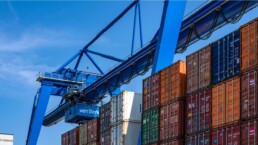
Japan IMO attempt to weaken the IMO Net-Zero Framework
Japan has put forward a proposal to the International Maritime Organization to remove the Net-Zero Fund and put shipping companies in control of…

xclusiv S&P Report 19th October 2026
Pls find below the [xclusiv] S&P Report 19th October 2026 [xclusiv] 2026_10_19
Glencore achieves land access for the Coroccohuayco project at Antapaccay
Antapaccay, a Peruvian entity controlled by Glencore, has completed the access agreements required for the last blocks of land to unlock the…
Subscribe to our newsletter!
if you dont want to swim alone in the ocean of news, sign up for the newsletter, and you will receive daily all the important news of world shipping!
