Successful sea trial on a domestic LNG fuelled Vessel for use of Liquefied Biomethane as Marine Fuel

Achieving Net Zero Emissions in Ocean Transpor
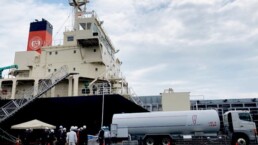
A group of seven companies today announced the completion of a successful the trial using liquefied bio-methane derived from cattle manure as marine fuel on the domestic LNG fueled vessel Ise Mirai in Ise Bay. This marks Japan’s first use of carbon-neutral LBM derived from biomass.
Teaming up on the project were Mitsui O.S.K. Lines, Ltd. (MOL; President & CEO: Takeshi Hashimoto; Headquarters: Minato-ku, Tokyo), Air Water Inc. (Air Water; Chairman & CEO: Kikuo Toyoda; Headquarters: Chuo-ku, Osaka), Techno Chubu Company, Ltd. (Techno Chubu; President: Shunichiro Ide; Headquarters: Nagoya-shi, Aichi Prefecture), Kyoudou Kaiun Co., Ltd. (Kyoudou Kaiun; President: Joji Nishimura; Headquarters: Yokkaichi-shi, Mie Prefecture), MOL Coastal Shipping, Ltd. (MOL Coastal Shipping; President & CEO: Hiroshi Kobayashi: Headquarters: Minato-ku, Tokyo), Cenergy Co., LTD (Cenergy; President: Minoru Yasui; Headquarters: Nagoya-shi, Aichi Prefecture), and IHI Power Systems Co., Ltd. (IHI Power Systems; President: Takashi Murasumi; Headquarters: Chiyoda-ku, Tokyo).
The trial was conducted based on a memorandum of understanding (MoU) signed between MOL and Air Water in February 2023, with the cooperation of other parties involved, as follows:
- Shipper: JERA Co., Inc.
- Carrier: Techno Chubu
- Operator/Shipowner: Kyoudou Kaiun (Joint shipowner: Techno Chubu, MOL Coastal Shipping)
- Truck transport: Cenergy
- Bunkering operator: Cenergy, Kyoudou Kaiun
- Engine manufacturer: IHI Power Systems
In the trial, Air Water supplied LBM produced from cattle manure in the Tokachi region of Hokkaido as part of a technology development and demonstration project adopted by Japan’s Ministry of the Environment. All the parties involved confirmed the following through ocean transport of JERA’s cargo.
- LBM can be transported through the existing domestic LNG supply chain.
- Truck-to-ship bunkering of LBM can be completed using existing LNG tank trucks.
- LBM can be used by existing vessel (Ise Mirai) as marine fuel.
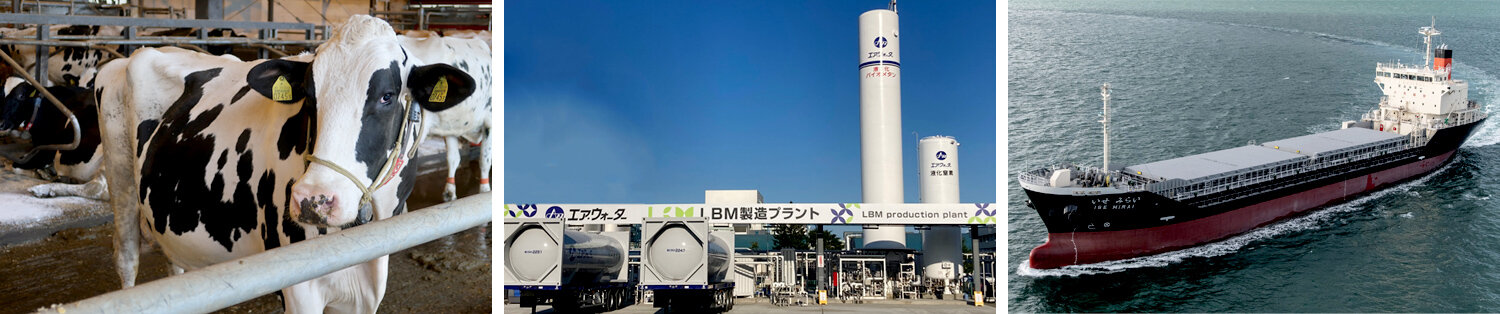
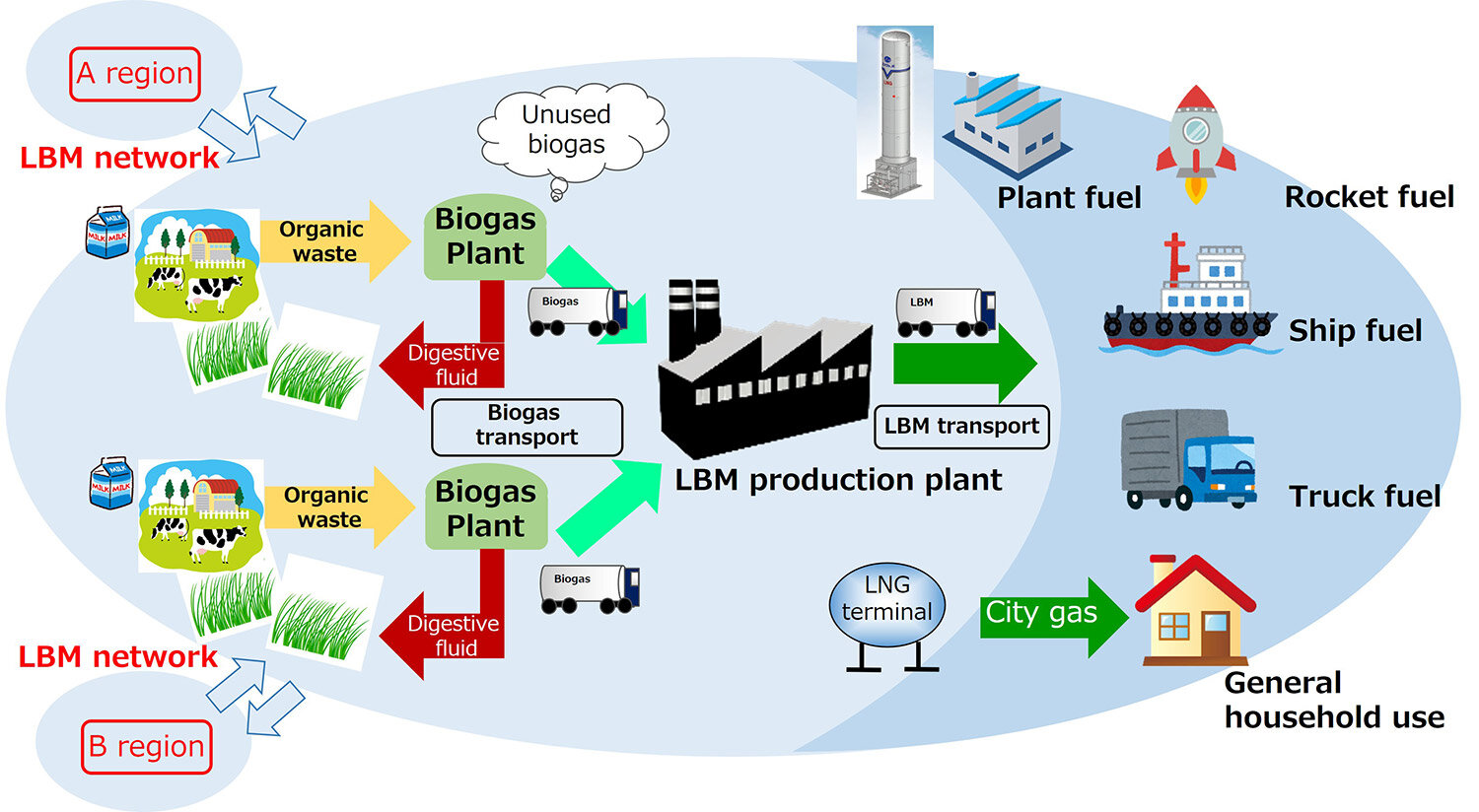
LNG fuel is expected to reduce carbon dioxide (CO2) emissions by about 25% compared to conventional fuel oil, but further reduction of CO2 emissions can be expected through the partial use of LBM, a carbon-neutral energy source. In addition, because the main component of both LBM and LNG is methane, the existing LNG supply chains can be used, so LBM can be an effective solution to achieve low-carbon and decarbonized ship operations.MOL and Air Water will continually contribute to the development of low-carbon and decarbonized ocean transport by leveraging each other’s knowledge and experience in the use of LBM as marine fuel.



Related News.

Connected Fleets under Siege: Navigating Geopolitical Cyber Threats and Modern Maritime IT
An exclusive CSN interview between Adonis Violaris and Dr Matthew Maheras As commercial shipping becomes ever more digitally integrated, the industry…
InterManager warns enclosed space deaths demand urgent industry action
InterManager has called for urgent industry action on enclosed space safety after its latest research highlighted persistent failures in procedures,…
ATPI Greece marks 50 years at the heart of global crew changes
Five decades supporting the Greek and global shipping community 35% of ATPI’s marine business now managed from Greece More than 130 professionals…
Euroseas announces a new time charter contract for its 2001-built 2,556 teu Feeder Containership, M/V EM Corfu, and the sale of its sister vessel, M/V Evridiki G
Euroseas an owner and operator of container carrier vessels and provider of seaborne transportation for containerized cargoes, announced a new…
Possible further delay to road transport’s inclusion in EU ETS causes serious concern
Interferry, the global trade association representing the ferry shipping industry, is raising serious concerns over the current state of EU Emissions…

ABP appoints new head of commercial for Humber
Associated British Ports, the UK’s largest port operator, has appointed Sandrine Lagrost as its new Head of Commercial for the Humber, joining the…
Commodity Radar | Spotlight: Bauxite – Week 43.2026
The final quarter of 2026 is expected to see softer bauxite flows Chinese front-loading is expected to have run its course, pointing to softer…
Japan IMO attempt to weaken the IMO Net-Zero Framework
Japan has put forward a proposal to the International Maritime Organization to remove the Net-Zero Fund and put shipping companies in control of…

xclusiv S&P Report 19th October 2026
Pls find below the [xclusiv] S&P Report 19th October 2026 [xclusiv] 2026_10_19
Glencore achieves land access for the Coroccohuayco project at Antapaccay
Antapaccay, a Peruvian entity controlled by Glencore, has completed the access agreements required for the last blocks of land to unlock the…
Subscribe to our newsletter!
if you dont want to swim alone in the ocean of news, sign up for the newsletter, and you will receive daily all the important news of world shipping!
