In 2022, the course was set for Viking Line’s sustainability far into the future
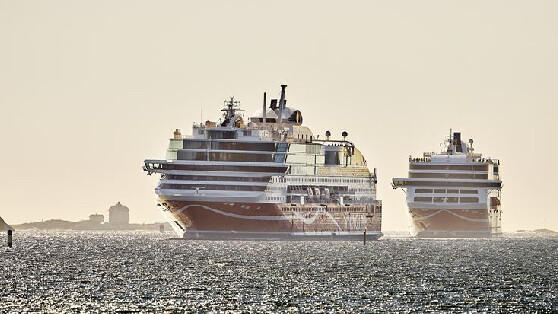

The placing in service of the new climate-smart Viking Glory and the sale of two old vessels were milestones in Viking Line’s sustainability work last year. EU regulations for vessel emissions are being tightened, and the company is showing the way to lower-emissions maritime transport for the entire sector. Viking Line’s sustainability measures in 2022 and views on the future of maritime transport have been compiled in a newly released sustainability report.
In 2022, changes were made in Viking Line’s vessel fleet that will have a long-term impact on the company’s total emissions. The new climate-smart Viking Glory was added to the fleet in early March, and the company’s two oldest vessels, M/S Amorella and M/S Rosella, were sold.
Viking Line’s colours are now carried by five vessels, with both Viking Glory and Viking Grace using liquefied natural gas (LNG) as fuel. These two climate-smart vessels are equipped to switch to renewable or synthetically produced fuel when that is available in sufficient quantities and at an economically sustainable price.
“Emissions per nautical mile from our vessels have been reduced by nearly one third over the past 15 years. Given that we have rejuvenated our vessel fleet and invested in technology that is even more climate-smart, emissions will also continue to decrease in the years ahead,” says Viking Line’s Sustainability Manager, Dani Lindberg.
“In the Decatrip project, we have our sights set farthest out in the future. We are exploring the possibilities of creating a so-called green corridor between Turku and Stockholm, along which goods and passengers would be transported net-zero. Our partners in the project are Rauma Marine Constructions, Åbo Akademi University and Kempower.”
Emissions restrictions on maritime transport will be made much more stringent. Shipping companies that operate in European waters will be affected in the years ahead by the Fit for 55 programme, which is part of the EU’s Green Deal for a green transition; by the emissions trading system; and by the International Maritime Organization (IMO)’s strategy to reduce greenhouse gas emissions.
“With more stringent EU environmental requirements, continuing maritime transport operations will be economically unsustainable using the same old model. Shipping companies must be able to reduce their emissions substantially, and this will not happen without switching to more emissions-efficient and ultimately non-fossil fuels. We here at Viking Line are working proactively for this change and are already a role model in climate-smart solutions,” says Dani Lindberg.
Maritime transport on the Baltic Sea plays an important role throughout the trans-European transport network and in goods traffic. In 2022, three of Viking Line’s vessels sailed under a Finnish flag, and in March 2023, Viking XPRS was also transferred to the Finnish Register of Ships. Last year, the company transported 1.5 million tonnes of goods and served nearly five million passengers.
“Especially with the global situation today, it is important in terms of preparedness that Finland has a competitive domestic shipping sector. In a broader perspective, about 90 per cent of global trade is by sea, and the value chain of almost every industry involves maritime transport. So being one of the first to develop and introduce new solutions is really important and something that has a great impact.”
A few highlights from Viking Line’s sustainability report 2022
- The launch of Viking Glory in March further reduced Viking Line’s environmental impact on the Turku–Mariehamn–Stockholm route. The vessel’s cargo capacity is 66 per cent larger compared to its predecessor M/S Amorella, but its carbon dioxide emissions are expected to be more than one quarter less compared to Amorella.
- Amorella, which was built in1988, and M/S Rosella, which was built in 1980, were both sold.
- Viking Line employed 2,428 people, 1,927 of whom resided in Finland. More than 100 million euros was paid in salaries and wages.
- On Viking XPRS, Viking Grace and Viking Glory, 1,300 tonnes of food waste was recovered, which generated 99,000 cubic metres of biogas. That is equivalent to 112,000 litres of petrol.
- A total of 286 tonnes of glass was collected on board the vessels. 20% less energy is used in the production of recycled glass than in glass production with sand, sodium and lime.
- At the Finnish Travel Gala, Viking Line was named Sustainable Business of the Year as well as Transport Company of the Year. A major factor in both awards was the company’s long-term investments in environmentally-friendly technology and in innovations to renew the passenger experience.
- According to a survey carried out by the EPSI Rating Group, Viking Line has the most satisfied and most faithful customers among all passenger transport operators in Finland. The company also tops the sustainability index for passenger transport in the survey.
Here you can find the sustainability report



Related News.
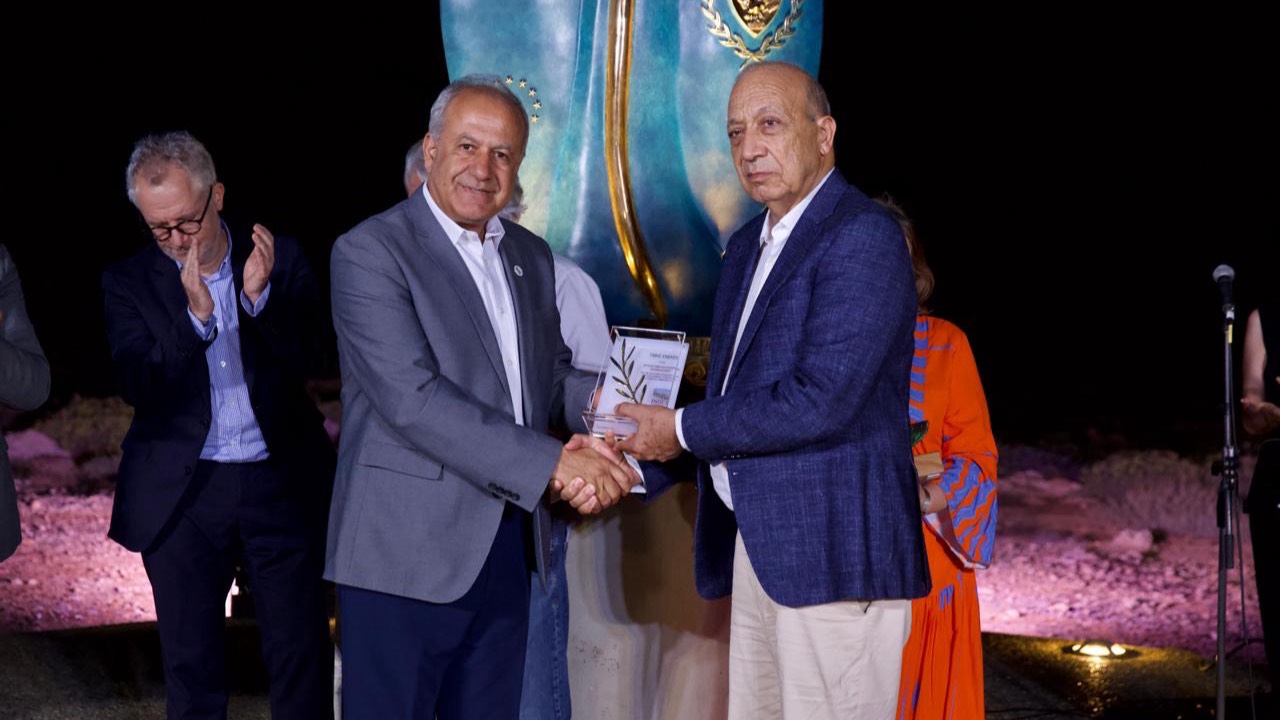
ISLAND OIL: Unveiling of the Sculpture “Cyprus’s Journey Through the Ages” in Protaras – A Tribute and Landmark to Cyprus’s Historical Memory and Cultural Heritage
In a modest ceremony marked by a moving atmosphere, the sculpture “Cyprus’s Journey Through the Ages”, created by acclaimed Cypriot sculptor…
World Maritime Day 2026 from Policy to Practice – powering Maritime Excellence
Global regulations will deliver safer, more resilient shipping when they are implemented worldwide. The international maritime community marks…

Diana Shipping announces Time Charter Contract for m/v DSI Polaris with Dai An Ocean Shipping
Diana Shipping , a global shipping company specializing in the ownership and bareboat charter-in of dry bulk vessels, announced that, through a…

Chief Economists Expect Global Economy to Stabilize, but Fiscal Constraints, Rising Living Costs and AI Investment Uncertainty Threaten Growth
The global economy is stabilizing, but the fiscal support that cushioned successive shocks since 2020 is unlikely to play the same role in the year…
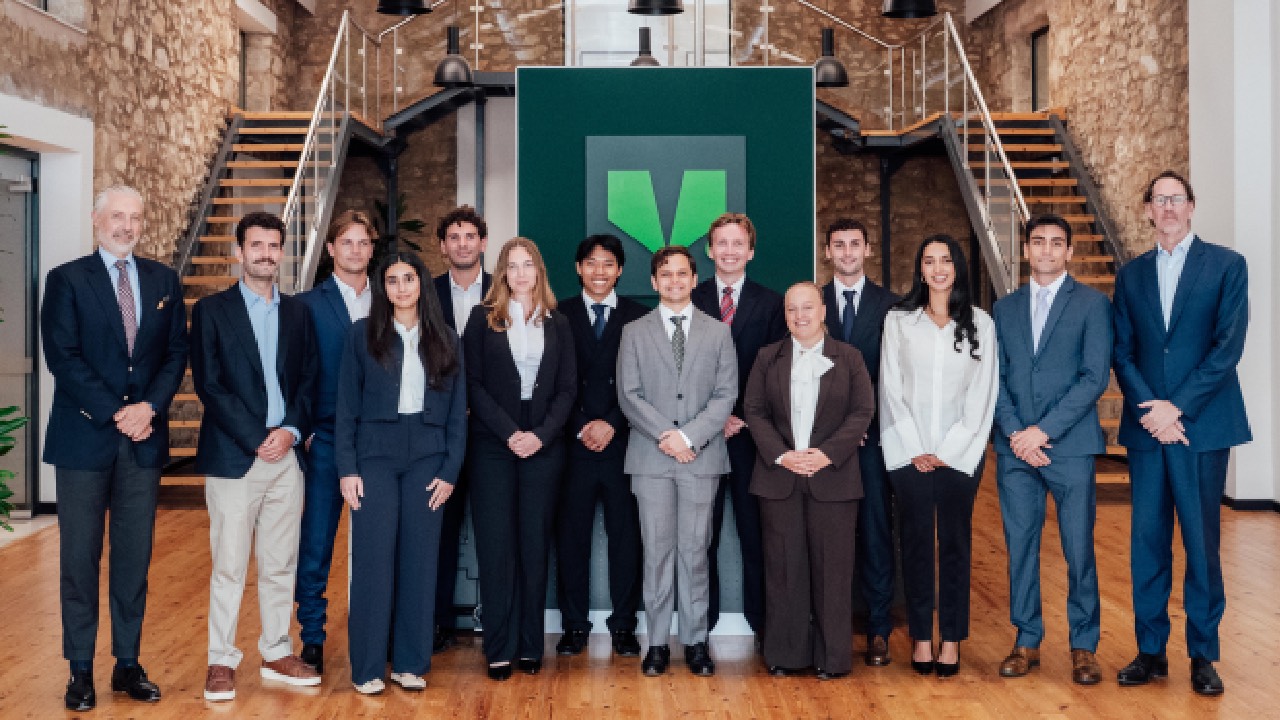
V. welcomes its new graduate cohort as programme expands across the group
Twelve graduates from nine nationalities join 11th year of V.’s expanded international management programme. V., the global ship manager and marine…

From Policy to Practice: Why Seafarers Are the Key to Maritime Excellence
The shipping industry is no stranger to regulation. Seafarers and ship operators work within a vast framework of international conventions, national…

Intermodal Report – Week 38 2026
Please find below the Intermodal market report for week 38 2026. Intermodal Report Week 38 2026 Market Insight By Nikos Tagoulis, Head of…

Allied – Weekly Market Review – Week 38
Please find below the Allied Weekly Report for Week 38 | 2026 ALLIED - Weekly Market Report- Week 38

Record year on the Northeast Passage but Arctic shipping remains very limited
In 2025, a record 103 transit voyages were made via the Northeast Passage. However, this is still equivalent to only around a day and a half of…

[xclusiv] S&P Report 21th September 2026
Please find below the [xclusiv] latest Weekly S&P Report [xclusiv] 2026_09_21 Market Commentary: VLCCs: Freight Boom Reprices the Fleet The VLCC…
Subscribe to our newsletter!
if you dont want to swim alone in the ocean of news, sign up for the newsletter, and you will receive daily all the important news of world shipping!
