Carisbrooke Shipping significantly reduced CO2 emissions with Wärtsilä’s fleet optimisation solution
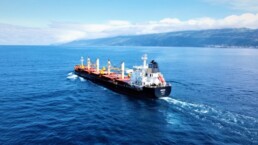

The technology group Wärtsilä announced that its customer Carisbrooke Shipping has reported a saving of over 600 tons of CO2 emissions since the beginning of the year with the help of Wärtsilä’s Fleet Optimisation Solution (FOS). Since implementing FOS across 31 vessels in 2019, Carisbrooke Shipping has been using the platform to gather insights that have supported the UK-based dry bulk and general cargo ship operator in its objectives around reducing carbon emissions and ensuring fleet performance, which is core to the company’s current strategy.
Carisbrooke’s Fleet Operations Centre is responsible for monitoring vessel position, passage plans and routes, advising on maximising cargo intake, and monitoring vessel safety and performance. Around 25 vessels are reviewed daily and an average of 20 voyages are optimised per month. Having insight into the efficiency of a vessel at any given time enables the company to take action to optimise fuel consumption across its vessels. Already, Carisbrooke Shipping has reported fuel savings of 5-7% since the roll-out of FOS, meaning it can continue to reduce its carbon footprint as part of its wider decarbonisation goals.
“As ambitions to decarbonise international shipping continue to grow, maritime stakeholders are under increasing pressure to prove they are taking significant steps to optimise their operations and cut emissions from ocean-going transport. Data-driven decision making is critical here, ensuring that organisations like Carisbrooke Shipping can make fast, well-informed decisions on how to improve efficiency and reduce emissions,” said Jason Banfield, Area Sales Manager, UK & Benelux at Wärtsilä Voyage.
Jason continued: “It is exactly for this reason that it is very positive to see that, with our FOS platform, Carisbrooke Shipping has been able to make better informed data-driven decisions about its fleet. We look forward to collaborating with them more in the future for greener, safer and more efficient operations.”
With FOS, Carisbrooke’s Fleet Operations Centre staff have a deeper understanding of how the company’s globally-sailing fleet is performing. The solution also allows them to compare performance metrics between sister vessels and monitor the impact of new hull coatings and new clean technologies, all of which have an effect on fuel consumption and CO2 emissions.
“With Wärtsilä we are better positioned to balance and prioritise measures with vessel safety, voyage optimisation and fuel use,” said Natalia Walker, Fleet Operation Centre analyst at Carisbrooke Shipping. “Together with the high-frequency data received from the onboard sensors and expert advice from our Marine and Operations team, Wärtsilä’s fleet optimisation platform provides the visibility we need to reach our emission-reduction goals. It brings into focus all the data we need to do that in detail.”
With the highly anticipated Carbon Intensity Indicator (CII) regulation coming into effect within the next few months, ensuring compliance will be another key driver for maritime organisations like Carisbrooke Shipping to harness technology for greener shipping. Owners and operators will need ways to make informed decisions on how to improve their CII ratings quickly and cost-effectively in the short term, whilst also keeping a long-term view in mind ahead of the 2025 revision to the scale.
“In the future, we plan to build and grow on our success by more closely monitoring CII metrics and taking operational decisions that further minimise our carbon impact,” continued Natalia.
FOS is a holistic platform comprising a range of solutions that support users’ digitalisation goals and enable their decarbonisation trajectories, creating optimisations today that can underpin future efficiency decisions. It does this by enabling greater transparency and accountability to counterparties by providing standardised and clear reporting that ensure data discussions are consistent across the scope of a ship’s operations, both at sea and on shore. By doing this, the shipping industry’s considerable wealth of data can be used effectively, maximising efficiency, underpinning safety, ensuring compliance and enabling decarbonisation.
“In today’s evolving maritime landscape, decarbonisation is set to redefine how the industry remains competitive,” said Kay Dausendschoen, Head of Product Fleet Operations & Optimisation at Wärtsilä Voyage. “At Wärtsilä, we believe that decarbonisation cannot be achieved without digitalisation. Adopting technology that effectively leverages data onshore and onboard vessels will boost competitiveness, increase asset value and make ships more attractive to a new generation of seafarers.”



Related News.

Navigating the Multi-Orbit Era: In Conversation with Intellian’s Jon Harrison at SMM 2026
At SMM 2026 in Hamburg, the rapid evolution of maritime satellite communications took centre stage. Across the exhibition halls, discussions among…
Cyprus ports need joint energy and investment strategy, shipping agents chief says
Cyprus needs a coordinated strategy for shipping, energy and environmental protection to support port investment and modernisation, Cyprus shipping…

MASO Public Affairs introduces MASO Regulatory Intelligence
A new subscription service helping businesses understand what is changing and what it means for them MASO Public Affairs introduces MASO Regulatory…
Anglo-Eastern helps turn CMBTECH’s ammonia ambition into an operational reality
From early feasibility study and risk-based design to newbuilding supervision, crew readiness and technical management, Anglo-Eastern drew on its…

Escalation of attacks threatens to derail recovery in Middle East oil exports
World oil demand is forecast to fall by 2.5 mb/d y-o-y in 4Q26 and 2.6 mb/d on average in 2026. As the Iran war manifests itself through restricted…
New study finds shipping pays twice its share to EU ETS earmarked revenues should triple to help build market for sustainable fuels and technologies
Shipping is responsible for around 10% of EU ETS emissions but pays almost 20% of the ETS bill. Unlike other sectors, it has never received free…

MSARC strengthens maritime mass rescue readiness through training and national live exercise off Dakar, Senegal
Joint MSARC–FHAS programme combines three days of SAR training with a national multi-agency live exercise The Maritime Search and Rescue Council ,…

Sogese report deliveries are still being delayed as container freight rates fluctuate
FOR IMPORTERS Spot rates into the Mediterranean are back at January levels, Far East to Europe reliability sits at pandemic lows, and nearly…

Glencore begins trading on Australian Securities Exchange
Glencore has begun trading on the Australian Securities Exchange under the ASX code GLC. Gary Nagle, Glencore’s CEO, said it was an exciting day for…
BIMCO Shipping Number of the Week
Suez Canal container ship transits exceed 50% of pre-disruption levels "During the first two weeks of October, weekly container ship capacity…
Subscribe to our newsletter!
if you dont want to swim alone in the ocean of news, sign up for the newsletter, and you will receive daily all the important news of world shipping!
