
advance for 1 November
Rules on ship carbon intensity and rating system enter into force
IMO regulations to introduce carbon intensity measures enter into force on 1 November 2022.
Amendments to the International Convention for the Prevention of Pollution from Ships Annex VI enter into force on 1 November 2022. Developed under the framework of the Initial IMO Strategy on Reduction of GHG Emissions from Ships agreed in 2018, these technical and operational amendments require ships to improve their energy efficiency in the short term and thereby reduce their greenhouse gas emissions.
From 1 January 2023 it will be mandatory for all ships to calculate their attained Energy Efficiency Existing Ship Index (EEXI) to measure their energy efficiency and to initiate the collection of data for the reporting of their annual operational carbon intensity indicator (CII) and CII rating.
The short-term GHG reduction measures, adopted in 2021, form a comprehensive set of amendments to MARPOL Annex VI, which provide important building blocks for IMO’s future mid-term greenhouse gas reduction measures.”
The latest amendments build on IMO energy-efficiency measures which were first adopted in 2011 and strengthened since – the CII and EEXI measures represent the next stage in IMO’s work to meet the targets set in the Initial IMO GHG Strategy.
The amendments to MARPOL Annex VI are in force from 1 November 2022. The requirements for EEXI and CII certification come into effect on 1 January 2023. This means that the first annual reporting will be completed in 2023, with initial CII ratings given in 2024.
Frequently Asked Questions about the CII and EEXI measures
- What are the new mandatory measures?
As a stimulus to reduce carbon intensity of all ships by 40% by 2030 compared to 2008 baseline, ships will be required to calculate two ratings: their attained Energy Efficiency Existing Ship Index (EEXI) to determine their energy efficiency, and their annual operational Carbon Intensity Indicator (CII) and associated CII rating. Carbon intensity links the GHG emissions to the amount of cargo carried over distance travelled.
- When do the measures come into force?
The amendments to MARPOL Annex VI are in force from 1 November 2022. The requirements for EEXI and CII certification come into effect on 1 January 2023. This means that the first annual reporting will be completed in 2023, with initial ratings given in 2024.
The measures are part of IMO’s commitment under its 2018 Initial Strategy on Reduction of GHG Emissions from Ships to reduce carbon intensity from all ships by 40% by 2030 compared to 2008.
- What is an Energy Efficiency Existing Ship Index (EEXI)?
A ship’s attained EEXI indicates its energy efficiency compared to a baseline. Ships attained EEXI will then be compared to a required Energy Efficiency Existing Ship Index based on an applicable reduction factor expressed as a percentage relative to the Energy Efficiency Design Index (EEDI) baseline. It must be calculated for ships of 400 gt and above, in accordance with the different values set for ship types and size categories. The calculated attained EEXI value for each individual ship must be below the required EEXI, to ensure the ship meets a minimum energy efficiency standard.
- What is a Carbon Intensity Indicator rating?
The CII determines the annual reduction factor needed to ensure continuous improvement of a ship’s operational carbon intensity within a specific rating level. The actual annual operational CII achieved must be documented and verified against the required annual operational CII. This enables the operational carbon intensity rating to be determined.
- How will the new ratings work?
Based on a ship’s CII, its carbon intensity will be rated A, B, C, D or E (where A is the best). The rating indicates a major superior, minor superior, moderate, minor inferior, or inferior performance level. The performance level will be recorded in a “Statement of Compliance” to be further elaborated in the ship’s Ship Energy Efficiency Management Plan (SEEMP).
A ship rated D or E for three consecutive years, will have to submit a corrective action plan to show how the required index of C or above will be achieved. Administrations, port authorities and other stakeholders as appropriate, are encouraged to provide incentives to ships rated as A or B.
A ship can run on a low-carbon fuel clearly to get a higher rating than one running on fossil fuel, but there are many things a ship can do to improve its rating, for instance through measures, such as:
- hull cleaning to reduce drag;
- speed and routeing optimization;
- installation of low energy light bulbs; and
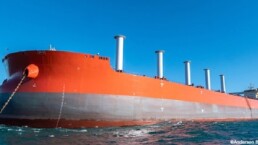
- installation of solar/wind auxiliary power for accommodation services.
- How do the measures fit into IMO’s decarbonization strategy?
The introduction of mandatory EEXI and CII comes under the framework of the Initial IMO Strategy for Reduction of GHG Emissions from Ships, adopted in 2018. The Initial Strategy sets out candidate short- mid- and long-term measures.
The introduction of EEXI and CII measures falls under the Strategy’s short-term measures which commit IMO to a target of reducing carbon intensity of international shipping by 40% by 2030, compared to 2008.
- How will the impact of the new regulations be assessed?
IMO’s Marine Environment Protection Committee (MEPC) is to review the effectiveness of the implementation of the CII and EEXI requirements by 1 January 2026 at the latest and develop and adopt further amendments as required.
In adopting the measure, MEPC also considered the outcomes of a comprehensive impact assessment of the measure which examined potential negative impacts on States, and agreed to keep the impacts on States of the measure under review so that any necessary adjustments can be made. MEPC also agreed that disproportionately negative impacts of the measure should be assessed and addressed, as appropriate.
- What about support for developing States in particular small island developing States (SIDS) and least developed countries (LDCs).?
IMO has a comprehensive programme of support for developing States to implement IMO regulations. In addition to IMO’s Integrated Technical Cooperation Programme (ITCP), the dedicated IMO GHG TC Trust Fund support developing countries with the implementation of the Initial IMO GHG Strategy, There are also a number of global projects specifically targeting GHG reduction measures, including: GreenVoyage2050; GHG SMART; NEXTGEN; IMO CARES; the Global MTCC Network; Innovation Forum. Read more: https://www.imo.org/en/OurWork/PartnershipsProjects/Pages/default.aspx
- What is the next stage for IMO’s GHG Strategy?
Member States are working on the revision of the Initial Strategy. The Revised Strategy is set to be adopted in mid-2023 at the Marine Environment Protection Committee (MEPC 80) session in July 2023.
- What about mid- and long-Term IMO GHG reduction Measures ?
IMO Member States have already initiated discussions on various proposals for IMO’s next set of GHG reduction measures, such as a maximum carbon-content for marine fuels as well as on economic measures, such as a GHG levy, emissions trading scheme (ETS), feebate or an incentive scheme for zero emission vessels.
The work plan for looking at the development of these measures envisages:
Phase I: Collation and initial consideration of proposals for measures (spring 2021 to spring 2022) – completed;
Phase II: Assessment and selection of measure(s) to further develop (spring 2022 to spring 2023);
Phase III: Development of (a) measure(s) to be finalized within (an) agreed target date(s).
- What about new and alternative fuels for ships?
New fuels will be crucial for decarbonizing the shipping sector. IMO held the Second IMO Symposium on low- and zero-carbon fuels for shipping: “Ensuring a just and inclusive transition towards low-carbon shipping” on 21 October 2022 to look at the challenges and opportunities that renewable fuel production represents in the context of shipping decarbonization, particularly for developing countries, SIDS and LDCs, while also assessing what other elements could constitute a just and equitable transition. Download presentations here: https://www.imo.org/en/About/Events/Pages/IMO-Symposium-on-alternative-low–and-zero-carbon-fuels-for-shipping-2022.aspx
- Where can I download the regulations and guidelines?
Please download the revised MARPOL Annex VI (2021 Revised MARPOL Annex VI) and related guidelines via this page: https://www.imo.org/en/OurWork/Environment/Pages/Index-of-MEPC-Resolutions-and-Guidelines-related-to-MARPOL-Annex-VI.aspx
Guidelines
The following comprehensive set of guidelines, adopted by MEPC 76, support the new requirements:
- Resolution MEPC.350(78) – 2022 Guidelines on the method of calculation of the Attained Energy Efficiency Existing Ship Index (EEXI);
- Resolution MEPC.351(78) – 2022 Guidelines on survey and certification of the Attained Energy Efficiency Existing Ship Index (EEXI);
- Resolution MEPC.335(76) – 2021 Guidelines on the shaft/engine power limitation system to comply with the EEXI requirements and use of a power reserve;
- Resolution MEPC.352(78) – 2022 Guidelines on operational carbon intensity indicators and the calculation methods (CII Guidelines, G1);
- Resolution MEPC.353(78) – 2022 Guidelines on the reference lines for use with Operational Carbon Intensity Indicators (CII Reference Lines Guidelines, G2);
- Resolution MEPC.338(76) – 2021 Guidelines on the operational carbon intensity reduction factors relative to reference lines (CII Reduction Factor Guidelines, G3);
- Resolution MEPC.354(78) – 2022 Guidelines on the operational carbon intensity rating of ships (CII Rating Guidelines, G4);
- Resolution MEPC.355(78) – 2022 interim Guidelines on correction factors and voyage adjustments for CII calculations (CII Guidelines, G5).
- How many countries are party to these regulations?
The CII and EEXI regulations are in the Annex VI of the International Convention for the Prevention of Pollution by Ships (MARPOL). Annex VI was adopted through a Protocol adopted in 1997. Amendments since then have been adopted under the “tacit acceptance” process, meaning they come into force on a set date (unless a specified number of Parties object). Currently, as of 1 November 2022, MARPOL Annex VI has 105 Parties, representing between them 96.81% of world merchant shipping by tonnage.



Related News.

Crewing After 2026: How AI Will Take Over the Routine in 2027
The crewing market of late 2026 is not the market of 2025. Artificial intelligence has moved from presentations into daily crewing work, while the…

Dualog launches secure maritime AI service amid surge in seafarer AI use
The new service, Sparks lets crew and shore teams search company emails, documents and conversations without exposing sensitive fleet information to…

Time Ticking: Two weeks for Governments to Green-Light Framework for Cutting Shipping Emissions
As a crucial fortnight of meetings opens at the International Maritime Organization opens in London, the Clean Shipping Coalition calls on member…

“K” LINE signs contract for construction of two LPG dual-fuel VLGCs
Kawasaki Kisen Kaisha, announces today that it has signed agreements with South Korea-based HD Hyundai Samho regarding the construction of two LPG…

Equinor and VNG sign 18-year gas sales agreement for supplies to Germany
Equinor will supply natural gas to the German energy company VNG until the end of 2044. The 18-year agreement is the longest gas sales agreement…

Open letter to MEPs to reject the motion for a resolution and support the inclusion of Indian ship recycling yards on the European List
Dear Members of the European Parliament, Ahead of this week’s plenary vote, European Shipowners | ECSA, BIMCO, the Cruise Lines International…

ShipVet appoints James Stairmand as Chief Executive Officer
Founder Captain Fintan Cullen moves to a non-executive role as the company builds on investment in its vetting team and technology. ShipVet, the…

USD ≈7bn lost per year the hidden cost of how shipping trades
New Torvald Klaveness study quantifies around USD 7bn a year in potentially avoidable costs in dry bulk and product tanker shipping, with a possible…

APM Terminals Maasvlakte II and Port of Rotterdam Authority take next step in terminal development
APM Terminals Maasvlakte II and the Port of Rotterdam Authority are moving forward in terminal’s development with preparations for a new phase of…

ABP inspiring the next generation
ABP host 500 young people to explore maritime and transport careers More than 500 young people from across Hampshire and the Solent explored career…
Subscribe to our newsletter!
if you dont want to swim alone in the ocean of news, sign up for the newsletter, and you will receive daily all the important news of world shipping!
