Cruise Industry demonstrates commitment to pursuing net-zero carbon cruising globally by 2050

Despite advancements, report highlights need for development and deployment of sustainable marine fuels
Cruise Lines International Association (CLIA), the leading voice of the global cruise industry, today released the results of its 2022 Global Cruise Industry Environmental Technologies and Practices Report, showing progress towards achieving the industry’s vision of net-zero carbon cruising globally by 2050.
The 2022 report reinforces the cruise industry’s credentials as an innovator and early adopter of environmental technologies. Examples cited include the increasing number of vessels launching over the new few years that will be able to incorporate zero-emissions propulsion when available as well as the growing investment to equip ships to plug in to shoreside electricity where available. In fact, more than 15% of the vessels to be launched in the next five years will be equipped to incorporate fuel cells or batteries, and 85% of CLIA-member ships coming online between now and 2028 will be able to plug in to shoreside electricity, allowing engines to switch off at berth for significant emissions reduction.
President, and CEO, CLIA, Kelly Craighead said: “Innovation and engineering are at the heart of the industry’s vision for net zero carbon cruising. The cruise industry continues to lead the way by investing billions to incorporate new technologies, accelerate development of sustainable marine fuels—in particular, engines capable of using sustainable marine fuels—and enable shoreside electricity connectivity on existing and new ships. These are the fundamental building blocks for the decarbonisation of global shipping, and we are acting now for the future.”
Despite progress made, the report makes clear that a transition to sustainable marine fuels remains essential to achieving the maritime industry’s decarbonization goals and underscores the urgent need for governments to support research efforts to accelerate development of these fuels so that they are safe, viable and available for use at scale. To that end, CLIA is a supporting organization to the Getting to Zero Coalition’s Call to Action for Decarbonization of Shipping. This support is in addition to the leadership of its individual cruise line members and their partnerships with a number of other coalitions and organizations that are working to find critical decarbonisation solutions.
“The cruise industry has always been and will continue to be at the cutting edge of innovation when it comes to environmental and maritime technologies,” said Chairman of CLIA Global, Pierfrancesco Vago. “For this next phase of our journey to net-zero as an industry, we now need clear support from governments and policy-makers to ensure that the right infrastructure is developed also on land and to encourage the investment and innovation that will be required for the development of sustainable marine fuels at scale.”
The report notes that CLIA ocean-going cruise lines continue to progress reductions in emissions:
-
- Shore-side Power Capability – cruise lines continue to make significant investments for cruise ships to connect to shoreside electricity, allowing engines to be switched off in port.
40% of global capacity (up 20% year over year) are fitted to operate on shore-side electricity in the 29 ports worldwide (less than 2% of the world’s ports) where that capability is provided in at least one berth in the port.
98% of new build capacity on order book (between now and 2028) is either committed to be fitted with shore-side electricity systems or will be configured to add shore-side power in the future.
- Liquefied Natural Gas (LNG) Fuel – The 2022 report found 61% of new-build capacity will rely on LNG fuel for primary propulsion. The use of LNG results in 95% to 100% fewer particulate matter (PM) emissions, virtually zero sulphur emissions, and an 85% reduction in nitrogen emissions. As a transitional fuel, LNG provides real benefits now, but also allows LNG-ready ships to adapt to a future generation of sustainable marine fuels. *
- Exhaust Gas Cleaning Systems (EGCS) – More than 79% of global capacity utilizes EGCS to meet or exceed air emissions requirements, representing an increase in capacity of 7% compared to 2021. Additionally, 88% of capacity of non-LNG new builds will have EGCS installed, in line with already high historical level of investments.
- Advanced Wastewater Treatment Systems – 100% of new ships on order are specified to have advanced wastewater treatment systems and currently 78% of the CLIA ocean-going cruise line fleet capacity is served by advanced wastewater treatment systems (a 9% increase compared to 2021).
- Shore-side Power Capability – cruise lines continue to make significant investments for cruise ships to connect to shoreside electricity, allowing engines to be switched off in port.
The industry’s commitment to pursue net-zero carbon cruising by 2050, announced earlier this year, is consistent with the target set by the Paris Agreement, and is supported by the industry’s intermediary objective to reduce the rate of carbon by 40% across the global fleet by 2030, compared to 2008, which is consistent with the International Maritime Organization’s (IMO) Initial Strategy for GHG reduction.



Related News.

ISLAND OIL: Unveiling of the Sculpture “Cyprus’s Journey Through the Ages” in Protaras – A Tribute and Landmark to Cyprus’s Historical Memory and Cultural Heritage
In a modest ceremony marked by a moving atmosphere, the sculpture “Cyprus’s Journey Through the Ages”, created by acclaimed Cypriot sculptor…
World Maritime Day 2026 from Policy to Practice – powering Maritime Excellence
Global regulations will deliver safer, more resilient shipping when they are implemented worldwide. The international maritime community marks…

Diana Shipping announces Time Charter Contract for m/v DSI Polaris with Dai An Ocean Shipping
Diana Shipping , a global shipping company specializing in the ownership and bareboat charter-in of dry bulk vessels, announced that, through a…

Chief Economists Expect Global Economy to Stabilize, but Fiscal Constraints, Rising Living Costs and AI Investment Uncertainty Threaten Growth
The global economy is stabilizing, but the fiscal support that cushioned successive shocks since 2020 is unlikely to play the same role in the year…
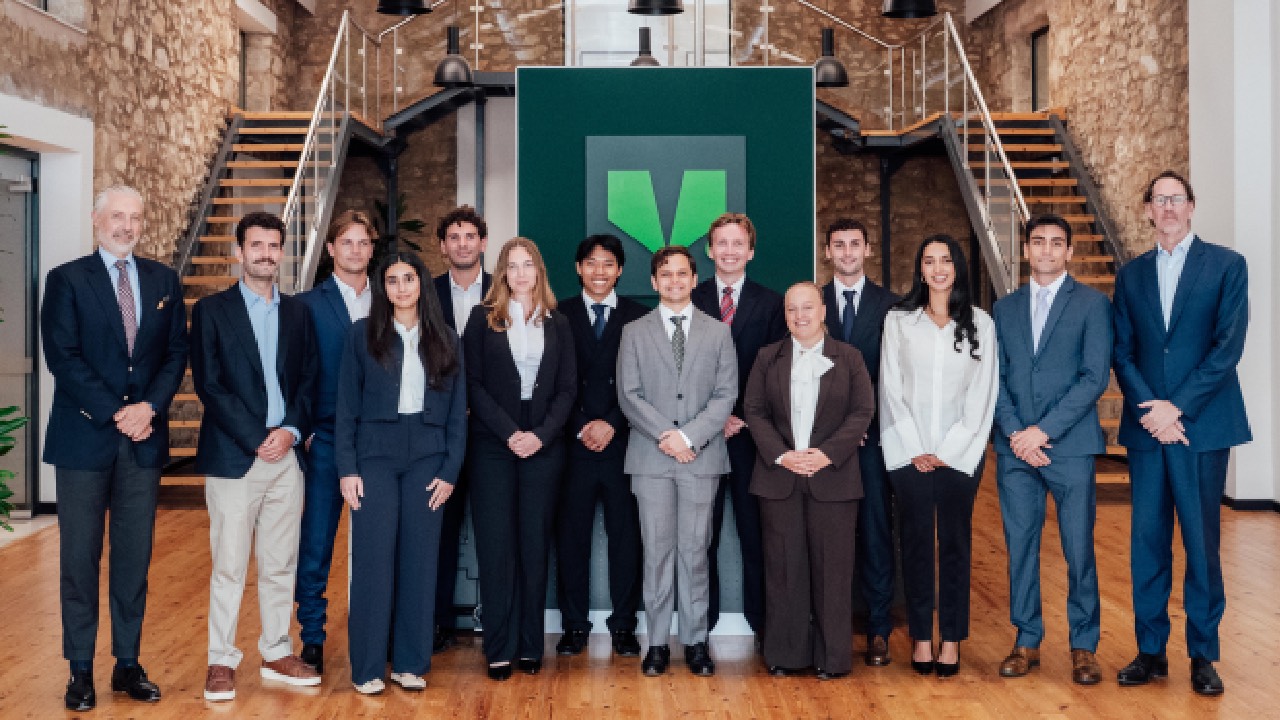
V. welcomes its new graduate cohort as programme expands across the group
Twelve graduates from nine nationalities join 11th year of V.’s expanded international management programme. V., the global ship manager and marine…

From Policy to Practice: Why Seafarers Are the Key to Maritime Excellence
The shipping industry is no stranger to regulation. Seafarers and ship operators work within a vast framework of international conventions, national…

Intermodal Report – Week 38 2026
Please find below the Intermodal market report for week 38 2026. Intermodal Report Week 38 2026 Market Insight By Nikos Tagoulis, Head of…

Allied – Weekly Market Review – Week 38
Please find below the Allied Weekly Report for Week 38 | 2026 ALLIED - Weekly Market Report- Week 38

Record year on the Northeast Passage but Arctic shipping remains very limited
In 2025, a record 103 transit voyages were made via the Northeast Passage. However, this is still equivalent to only around a day and a half of…

[xclusiv] S&P Report 21th September 2026
Please find below the [xclusiv] latest Weekly S&P Report [xclusiv] 2026_09_21 Market Commentary: VLCCs: Freight Boom Reprices the Fleet The VLCC…
Subscribe to our newsletter!
if you dont want to swim alone in the ocean of news, sign up for the newsletter, and you will receive daily all the important news of world shipping!
