Rolls-Royce and Lürssen to focus on methanol propulsion for large yachts


- Pioneering sustainable evolution in yachts
- Stage one: set up a methanol-fueled demo system powering a combined heat and power plant at the shipyard
Rolls-Royce and yacht/shipbuilder Lürssen are making a strong case for methanol as an environmentally friendly and climate-friendly fuel for yachts. They are already working on specific projects, including the propulsion of a Lürssen yacht using mtu methanol engines from Rolls-Royce. The two companies made the announcement at the Monaco Yacht Show, the world’s largest exhibition for large yachts.
The companies plan to focus on yachts with lengths of 75 meters and above, which offer great potential for being powered by methanol – ideally ‘green’ methanol. This is a synthetic fuel produced by taking carbon dioxide (which is harmful to the climate) from the atmosphere and converting it using electricity from renewable generation such as solar or wind farms. The amount of carbon dioxide given off by engines running on ‘green’ methanol is equivalent to the amount originally extracted from the air, resulting in a ‘net zero’ carbon footprint.
In addition, methanol engines emit much less particulate than comparable diesels, and their exhaust gases can be vented without undergoing SCR aftertreatment.
Daniel Chatterjee, Director of Sustainability, Technology Management & Regulatory Affairs at Rolls-Royce’s Power Systems business unit, and Peter Lürssen, CEO and co-proprietor of Lürssen, discussed the opportunities and challenges of this venture during the Monaco Yacht Show. “Methanol is currently leading the discussion on alternatives to fossil diesel,” said Chatterjee, who is heavily involved in numerous committees looking into tomorrow’s fuels. “Storage and usage challenges do exist because methanol is highly flammable. But the fuel is liquid at normal ambient temperatures, so these challenges can be managed safely, as with other fuels,” he added.
The main difference, and thus a challenge for naval architects shipbuilding engineers, is that in terms of calorific value methanol has around 2.4 times more volume than diesel, so the tanks have to be correspondingly larger. “Our customers want to dedicate as little hull-space as possible to propulsion and fuel storage. Methanol has disadvantages here compared to diesel, but clear advantages over other alternatives to fossil fuels. We’re now seeing that today’s prospective buyers of tomorrow’s yachts are increasingly thinking about how they can make running their vessels as climate-friendly and environmentally friendly as possible,” noted Peter Lürssen. “We are therefore registering a growing willingness among future customers to invest in new technology for climate protection, and to make space available for it in the vessel.”
“Lürssen is all about top-class yachtbuilding in the large and extra-large categories. We are proud to have been a partner for decades now, supplying innovative and highly sophisticated propulsion systems. That’s always technically challenging, and it will be the same with the methanol engine, especially if we – as a pioneer in the industry – want to influence the direction the market will take. Who, other than us, has the opportunity to provide such a trend-setting impetus to lead shipping into a climate-friendly future?” asked Denise Kurtulus, Vice President, Marine at Rolls-Royce’s Power Systems business unit. “We’re both convinced that methanol is going to be one of the key fuels powering tomorrow’s vessels, and that’s why we intend to use growing climate awareness in society and among our customers to set the direction for the industry and refine the technology,” she continued.
Rolls-Royce is currently developing a methanol engine based on the successful mtu Series 4000. Unlike the diesel engine, whose fuel self-ignites under high pressure, methanol – with its lower flash point – is ignited using a spark plug, in much the same way as a gasoline engine.
“Despite increasing climate awareness, we have to convince our customers of the benefits of methanol as a fuel, as engine power output will be lower than that of a diesel engine of the same weight and size,” said Lürssen Managing Director Dr. Justus Reinke. Because building large yachts – such as those produced by the Lürssen yards – involves a comparatively long lead time, he wants to convince customers on land, so to speak, even before the first methanol yacht is launched. “We want to work with Rolls-Royce to run a stationary methanol-fueled combined heat and power plant in one of our shipyards as a demonstrator for our customers,” said Dr. Reinke. At the same time, the company plans to use the methanol CHP plant as a source of power for its own shipyard, thus making operations more sustainable. Mechanical energy will be used to generate electricity, and the heat from the engine will be fed through to the shipyard’s heating grid. “This way, we’re going to reduce the yard’s carbon footprint quite considerably. After all, we don’t just want to help our customers be more sustainable, we also want to be a role model ourselves,” emphasized Peter Lürssen. Managing Director Dr. Justus Reinke is certain: “Together, Lürssen and Rolls-Royce are about to write a piece of yachting history.”



Related News.

ISLAND OIL: Unveiling of the Sculpture “Cyprus’s Journey Through the Ages” in Protaras – A Tribute and Landmark to Cyprus’s Historical Memory and Cultural Heritage
In a modest ceremony marked by a moving atmosphere, the sculpture “Cyprus’s Journey Through the Ages”, created by acclaimed Cypriot sculptor…
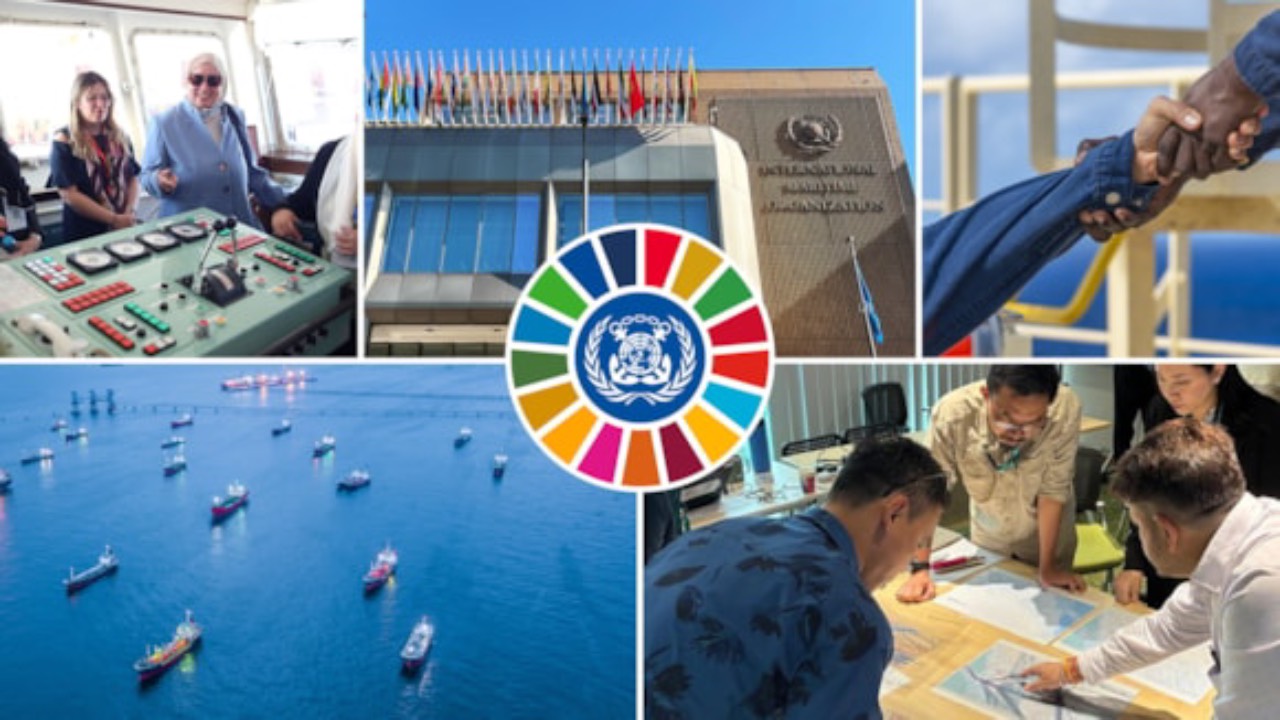
World Maritime Day 2026 from Policy to Practice – powering Maritime Excellence
Global regulations will deliver safer, more resilient shipping when they are implemented worldwide. The international maritime community marks…

Diana Shipping announces Time Charter Contract for m/v DSI Polaris with Dai An Ocean Shipping
Diana Shipping , a global shipping company specializing in the ownership and bareboat charter-in of dry bulk vessels, announced that, through a…

Chief Economists Expect Global Economy to Stabilize, but Fiscal Constraints, Rising Living Costs and AI Investment Uncertainty Threaten Growth
The global economy is stabilizing, but the fiscal support that cushioned successive shocks since 2020 is unlikely to play the same role in the year…
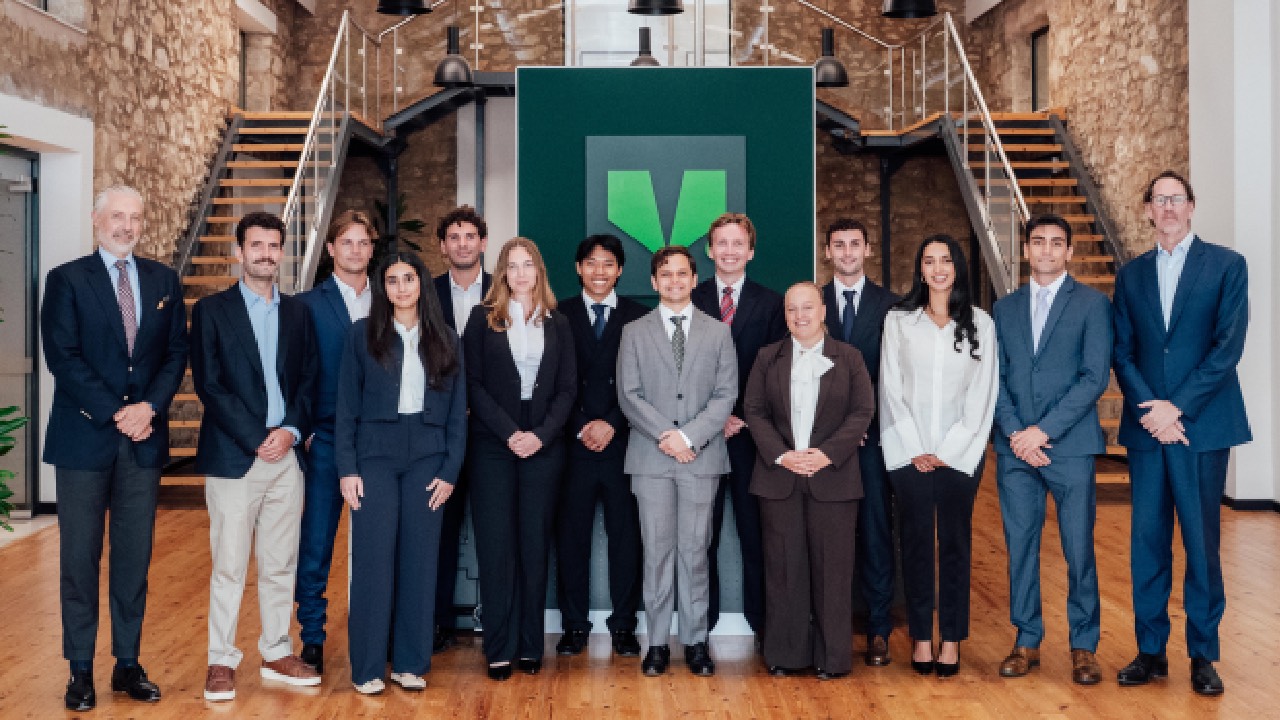
V. welcomes its new graduate cohort as programme expands across the group
Twelve graduates from nine nationalities join 11th year of V.’s expanded international management programme. V., the global ship manager and marine…

From Policy to Practice: Why Seafarers Are the Key to Maritime Excellence
The shipping industry is no stranger to regulation. Seafarers and ship operators work within a vast framework of international conventions, national…

Intermodal Report – Week 38 2026
Please find below the Intermodal market report for week 38 2026. Intermodal Report Week 38 2026 Market Insight By Nikos Tagoulis, Head of…

Allied – Weekly Market Review – Week 38
Please find below the Allied Weekly Report for Week 38 | 2026 ALLIED - Weekly Market Report- Week 38

Record year on the Northeast Passage but Arctic shipping remains very limited
In 2025, a record 103 transit voyages were made via the Northeast Passage. However, this is still equivalent to only around a day and a half of…

[xclusiv] S&P Report 21th September 2026
Please find below the [xclusiv] latest Weekly S&P Report [xclusiv] 2026_09_21 Market Commentary: VLCCs: Freight Boom Reprices the Fleet The VLCC…
Subscribe to our newsletter!
if you dont want to swim alone in the ocean of news, sign up for the newsletter, and you will receive daily all the important news of world shipping!
