NGO report on LNG Pathway makes flawed assumptions based on outdated data
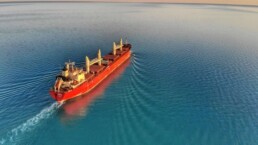

The recent ICCT study comparing the demand for, supply of and life-cycle emissions from bio, synthetic and fossil LNG marine fuels fails to take account of the latest data on technology available to LNG-fuelled vessels.
Cost of the LNG pathway
The ICCT significantly understates the potential availability of bioLNG for shipping in Europe and overstates its costs. It estimates a maximum of 700 PJ (Peta Joules) of bioLNG could be available in 2030 if shipowners, operators, and charterers are willing to pay up to €216/GJ. This is implausible when current volumes of European biomethane production are 690 PJ – from anaerobic digestion, only – at a cost of €14-25/GJ – according to the European Biogas Association.
The ICCT correctly states the supply of e-LNG is potentially unlimited but will be expensive. The ICCT fails to add that because approximately 80% of the cost of producing e-fuels is associated with producing the common renewable hydrogen feedstock, all e-fuels will be similarly expensive, not just e-LNG.
The ICCT’s forecast that Europe will need approximately €18bn pa of public support for the LNG pathway in 2030 is based on these flawed figures. SEA-LNG will have more to say on bioLNG cost and availability in early October. The ICCT also makes no attempt to quantify the support required for other fuels, which are based on unproven technologies and will, in addition, require massive new infrastructure investments.
Methane slip
The ICCT’s forecasts of life-cycle, or Well-to-Wake (WtW), CO2e emissions for LNG-fuelled vessels in 2030 are out of date. They are based on historic vessel fleet data dominated by older, obsolete 4-stroke low-pressure diesel engine technologies.
For its WtW CO2e GHG emissions calculations, ICCT uses secondary data based on old engine technologies to give a maximum GHG reduction for LNG-fuelled vessels of 15% compared to marine gas oil. This is far less than the 23% identified by Sphera in their landmark 2021 study, which uses current primary data from all major engine manufacturers, takes account of methane emissions and is widely available for review.
Furthermore, the latest DNV data on the LNG order book shows over half of LNG-fuelled new builds will use the latest high-pressure 2-stroke engines, of which 70% will be high-pressure engines producing negligible methane slip. These engines will operate in deep sea shipping where 70%-80% of marine fuel is burned, thus affecting the majority of GHG emissions.
The ICCT view on methane slip fails to account for engine technology development. LNG engine technology has reduced methane slip by over 75% since the fuel was first introduced at the turn of the century. The Sphera study forecasts that methane slip will have been virtually eliminated for all engine types by 2030 due to engine manufacturer innovations and other methane abatement initiatives.
Waiting is not an option – LNG as a marine fuel delivers immediate GHG benefits and a lower risk, lower cost, and has an incremental pathway to zero emissions through bioLNG in the near term and e-LNG in the mid to long term.



Related News.

OL Shipping Group in Tokyo: Capt. Eberhard Koch calls for realistic solutions to Maritime Decarbonisation
An intensive and engaging couple of days in Tokyo brought together leading figures from the international maritime community, providing a valuable…
Regatta for Peace one of the largest ever in Cyprus
Cyprus will host the first European stop on a global sailing journey leading up to the 2027 America’s Cup in Naples. More than 120 sailors…
The propulsion technology powering the marine energy transition
The marine industry is under increasing pressure to future-proof fleets, balancing the need to reduce emissions and improve efficiency. Propulsion…
Signal Ocean acquires Lgmar
Signal Ocean announced the acquisition of Lgmar, the Athens-based company behind Telix, a maritime email and communication platform in daily use…

Canada clean power push challenged by interprovincial grid limits, says GlobalData
Canada is entering a pivotal phase of power-sector expansion as federal tax credits, the phase-out of coal-fired generation, and accelerating…

Maritime safety depends on human factors and leadership, not procedures alone
Interim survey findings point to a gap between seafarers’ perceptions of risk and injury data Seafarers may misjudge when and where they are most at…

New BIMCO contracts tackle ship recycling and energy-saving retrofits
BIMCO adopted two new contractual solutions designed to help you manage important operational and regulatory challenges: the revised…
Stena Line to acquire vessel and make changes to its network
Stena Line has reached an agreement to acquire the RoRo vessel Somerset from CLdN. Subject to closure and transfer, the vessel would begin operating…

DORIC WEEKLY INSIGHT 16 OCTOBER 2026
Please find below the DORIC Market Insight for the week ending 16th October 2026. Weekly Report 16.10.2026

Important information for port clients and freight carriers effective November 1, a new traffic overpass and port checkpoint will open for traffic to the Port of Riga on Kundziņsala
Starting November 1 of this year, a new traffic overpass connecting Tvaika Street to Kundziņsala will open to facilitate traffic to and from the Port…
Subscribe to our newsletter!
if you dont want to swim alone in the ocean of news, sign up for the newsletter, and you will receive daily all the important news of world shipping!
