Ardmore Shipping to consider building methanol-fueled tankers
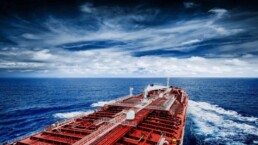

Leading tankers’ major, Ardmore Shipping may consider ordering new ships with an option to run on methanol fuel, a senior company executive told S&P Global Commodity Insights.
“Earlier we were busy strengthening the company’s balance sheet, refinancing costlier debt and rebuilding relationships with banks. Now the company can look into merger and acquisition activity,” Mark Cameron, Ardmore’s executive vice president and COO, said in an interview on the sidelines of the Nautical Institute of Singapore Conference late-last week.
The M&A activity has to be strategic in nature, “looking at real economics and overhead costs,” Cameron said.
The NYSE-listed Ardmore could also consider ordering new buildings with methanol as a fuel type, he said. Ardmore has one of the youngest tanker fleet in the world with an average age of around six years. It operates around 22 South Korea and Japan built product and chemical tankers, of which 14 are MRs and the rest are of smaller size.
Cameron did not give any time frame for ordering new ships. Many companies are not ordering new ships at this stage due to uncertainty over which fuel mix will be used in the coming decades, he said.
International Maritime Organization has put in place rules under which shipping companies have to reduce emissions from next year. For this purpose, maritime organizations and companies are researching over what could be the best fuel mix to reduce emissions without significantly escalating costs.
“As a fuel type, methanol has a very good future, people are going to use it,” Cameron said. “Methanol loves water from which it can extract high value of hydrogen.”
Platts assessed methanol bunkers in Singapore at $19.72/gig Sept. 2, down from $19.91/gig a month earlier, S&P Global data showed.
Another fuel which companies are considering is ammonia but Cameron cautioned that for using it, there will be a need for “phenomenal safety standards”.
LNG is also being used as a maritime fuel but Cameron pointed out that it also pollutes the atmosphere. “LNG has its place as a stepping stone in energy transition. Greenhouse gas emissions have to be looked at in their totality and not just carbonization,” he said.
From the analysis that is done and is still being made, methanol is a good option, he added.
“We are paying a lot more for our fuel at present,” Cameron said alluding to the rise in crude and bunker prices. In a way, the price which was to be paid for greener fuels in future, has already been reached, he said.
The overall future fuel mix will be diverse after factoring in the calorific value of fuels, flash point and cargo carrying ability, he said.
Depending on the fuel used, design of tankers will also have to be changed, he said. While making these changes, it will be important to factor in the draft size and length overall, or LOA, of the ship, he added.
The shore side infrastructure have to be modified to accommodate these ships at existing ports, Cameron said.
Carbon intensity indicator
Under the upcoming IMO norms, the grams of carbon dioxide emitted per cargo-carrying capacity and nautical mile for a ship will be calculated. The ship will be given a rating from A to E under a Carbon Intensity Indicator, or CII.
Cameron, who has been appointed the new managing director of the company for Asia, said that at least two of the elements which will affect the CII, routing and speed, are in control of charterers who have taken the ship on time charter.
The third aspect, technical management and related capital investment will be handled by the owner, he said. In the current quest to reduce emissions, the focus is on propulsion technology or the ship’s main engine, but what should not be ignored is that 20% of a ship’s emissions are from its generators, he said.
Due to different level of emissions by ships and depending on the type of fuels used, ships will command premium or enjoy discount and eventually maritime chartering will become a three tier market, he added.
While carbon pricing will vary significantly in different continents, ships trade or undertake voyages globally. European Union has already set up an Emissions Trading System, or ETS, where carbon prices are much higher than what they are likely to be in Asia.
Platts assessed the carbon accounted Aframax tankers on the Baltic-UKC route at w219.32 on Sept. 2, down from w227.74 a month earlier, S&P Global data showed.
Cameron said many shipping companies may not change domicile due to these disparities but they are reflective of the unfolding complexities in the shipping industry.
Source: Platts



Related News.

OL Shipping Group in Tokyo: Capt. Eberhard Koch calls for realistic solutions to Maritime Decarbonisation
An intensive and engaging couple of days in Tokyo brought together leading figures from the international maritime community, providing a valuable…
Regatta for Peace one of the largest ever in Cyprus
Cyprus will host the first European stop on a global sailing journey leading up to the 2027 America’s Cup in Naples. More than 120 sailors…
The propulsion technology powering the marine energy transition
The marine industry is under increasing pressure to future-proof fleets, balancing the need to reduce emissions and improve efficiency. Propulsion…
Signal Ocean acquires Lgmar
Signal Ocean announced the acquisition of Lgmar, the Athens-based company behind Telix, a maritime email and communication platform in daily use…

Canada clean power push challenged by interprovincial grid limits, says GlobalData
Canada is entering a pivotal phase of power-sector expansion as federal tax credits, the phase-out of coal-fired generation, and accelerating…

Maritime safety depends on human factors and leadership, not procedures alone
Interim survey findings point to a gap between seafarers’ perceptions of risk and injury data Seafarers may misjudge when and where they are most at…

New BIMCO contracts tackle ship recycling and energy-saving retrofits
BIMCO adopted two new contractual solutions designed to help you manage important operational and regulatory challenges: the revised…
Stena Line to acquire vessel and make changes to its network
Stena Line has reached an agreement to acquire the RoRo vessel Somerset from CLdN. Subject to closure and transfer, the vessel would begin operating…

DORIC WEEKLY INSIGHT 16 OCTOBER 2026
Please find below the DORIC Market Insight for the week ending 16th October 2026. Weekly Report 16.10.2026
Important information for port clients and freight carriers effective November 1, a new traffic overpass and port checkpoint will open for traffic to the Port of Riga on Kundziņsala
Starting November 1 of this year, a new traffic overpass connecting Tvaika Street to Kundziņsala will open to facilitate traffic to and from the Port…
Subscribe to our newsletter!
if you dont want to swim alone in the ocean of news, sign up for the newsletter, and you will receive daily all the important news of world shipping!
