Corvus Energy leads innovative research project to optimize combined use of hydrogen fuel cells and batteries in vessel propulsion
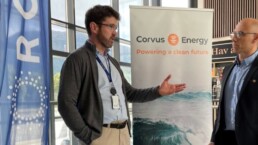

Project consortium collaborates to improve hydrogen fuel economy and extend system lifetime for maritime fuel cell-battery hybrid propulsion systems
Corvus Energy, the world’s leading provider of zero-emission solutions for the maritime industry is pleased to announce that the Company has been selected to lead an IPN project – a program funded by the Research Council of Norway to promote innovation in the industry. Corvus Energy joins forces with research institute NORCE and other partners for the project which has been awarded 13,9 million NOK in funding.
The industrial project, titled “Optimized Hydrogen Powered Maritime Mobility” or “OptHyMob” for short, will improve operations of hydrogen-driven marine vessels in order to reduce costs and extend the lifetime of both the hydrogen fuel cells and the batteries in hybrid configurations. The project builds on the ongoing H2NOR project, funded in part by Innovation Norway, where Corvus Energy and partners will develop, demonstrate and certify the inherently gas-safe modularized maritime PEM-based FC system based on technology from world leader Toyota.
Project outcomes will advance zero-emission shipping
The lifetime of current fuel cell installations and high cost of hydrogen are barriers for upscaling the hydrogen-driven vessel,” says Svenn Kjetil Haveland, Vice President of Development Projects at Corvus Energy. “By solving this we can accelerate decarbonization of shipping.”
Haveland elaborates: “The knowledge gained, as well as the models and systems developed through the OptHyMob project, will enable cost-effective use of hybrid fuel cell-battery systems applied for ship propulsion. Through increased efficiency, and extended lifetime of the systems, the total cost of ownership will be reduced. which is essential to the maritime industry’s progress toward zero-emission fuels.”
The project’s aim is cost-effective hydrogen ship propulsion
The power usage and hence the vessel’s energy consumption will vary a lot for different operational modes, such as acceleration and transit, and also depend upon weather conditions and waves etc. In addition, the hydrogen consumption in a fuel cell system will vary depending on how the system is operated.
“Simply stated, a fuel cell system prefers a stable load, but the power requirement fluctuates rapidly. To increase the effectiveness and lifetime of the fuel cell system you also need batteries, and it is vital to optimize the continuous balance of power from the fuel cell system and power from the batteries,” Haveland explains. “The project will develop models and systems for real-time recommendations of optimal load distribution that system integrators may utilize in the power management system.”
Leading edge R&D into fuel cell + battery hybrid operation
This project will perform its research in close collaboration with and in relation to another Research Council funded KSP project, titled “Energy efficient operation of hydrogen-powered vessels” or “HyEff” for short, led by NORCE and involving the same partners.
“This IPN project performed in tandem with the KSP ‘HyEff’ project will provide unique knowledge transfer between academia and the industry and establish best practices in batteries and fuel cell hybrid operation into the Norwegian and, ultimately, the global maritime industry in its quest towards zero-emission shipping and maritime transportation,” says Fionn Iversen, Chief Scientist at NORCE.
The projects will combine experimental and full-scale operational data to develop a cost-optimized system that can recommend the optimal load distribution between fuel cells and batteries applied for ship propulsion. Next-minute wave and load predictions will be developed using physics-based and data-driven models which will be implemented in an industrial clustered edge computing infrastructure.
In addition, research on degradation mechanisms in batteries and FC systems used in maritime applications will be performed to determine how these components affect each other and how they can best be combined to limit system degradation and extend system lifetime.
“Both the OptHyMob project led by Corvus and the HyEff project fit well into the Norwegian Government’s overall commitment to green shipping,” Haveland expresses. Iversen adds, “They correlate well with the ambitions for the Government-funded Norwegian Centre for Hydrogen Research – HyValue FME.”



Related News.

OL Shipping Group in Tokyo: Capt. Eberhard Koch calls for realistic solutions to Maritime Decarbonisation
An intensive and engaging couple of days in Tokyo brought together leading figures from the international maritime community, providing a valuable…
Regatta for Peace one of the largest ever in Cyprus
Cyprus will host the first European stop on a global sailing journey leading up to the 2027 America’s Cup in Naples. More than 120 sailors…
The propulsion technology powering the marine energy transition
The marine industry is under increasing pressure to future-proof fleets, balancing the need to reduce emissions and improve efficiency. Propulsion…
Signal Ocean acquires Lgmar
Signal Ocean announced the acquisition of Lgmar, the Athens-based company behind Telix, a maritime email and communication platform in daily use…

Canada clean power push challenged by interprovincial grid limits, says GlobalData
Canada is entering a pivotal phase of power-sector expansion as federal tax credits, the phase-out of coal-fired generation, and accelerating…

Maritime safety depends on human factors and leadership, not procedures alone
Interim survey findings point to a gap between seafarers’ perceptions of risk and injury data Seafarers may misjudge when and where they are most at…

New BIMCO contracts tackle ship recycling and energy-saving retrofits
BIMCO adopted two new contractual solutions designed to help you manage important operational and regulatory challenges: the revised…
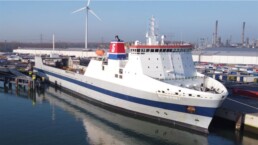
Stena Line to acquire vessel and make changes to its network
Stena Line has reached an agreement to acquire the RoRo vessel Somerset from CLdN. Subject to closure and transfer, the vessel would begin operating…
DORIC WEEKLY INSIGHT 16 OCTOBER 2026
Please find below the DORIC Market Insight for the week ending 16th October 2026. Weekly Report 16.10.2026

Important information for port clients and freight carriers effective November 1, a new traffic overpass and port checkpoint will open for traffic to the Port of Riga on Kundziņsala
Starting November 1 of this year, a new traffic overpass connecting Tvaika Street to Kundziņsala will open to facilitate traffic to and from the Port…
Subscribe to our newsletter!
if you dont want to swim alone in the ocean of news, sign up for the newsletter, and you will receive daily all the important news of world shipping!
