When is a vessel’s income earning capacity at risk?

Managing marine risks is not an easy task, which requires special knowledge and expertise on the subjectper se. Customarily, big ship management companies, operating a large number of vessels, employ a small army of marine professionals, manning different shipping departments, i.e Chartering, Marine insurance, Technical, Finance, Accounting, ISM, S&P, IT, Crew, Trading, Legal, Projects, Administration, and Operations department, which have to synchronise, when necessary, working together to discover the optimum solution(s) for managing risks timely, at the lowest possible cost, for their ship owners benefit.
On the other hand, small size companies managing a handful of vessels, usually have limited access, or can’t afford even to employ same or similar specialized and highly rewarded shipping personnel, making risk management for them terra incognita or, if not impossible, a task hard to plan and organize – mostly due to lack of knowledge – in a proactive and efficient way.
One of many risks a shipping company has to manage, is its vessels’ uninterrupted income earning capacity, particularly in a freight slump period.
Maintaining cash flow is literally, for any shipping company, the key for survival and growth. Freight or Hire, is vessels’ income, which often is at risk, particularly when vessel is deemed to be ‘off hire’ by her charterers, due to various causes. Having said that, one could verify in a vessel’s Charter Party terms what are the causes that trigger the activation of the ‘off hire clause’.
WHEN A VESSEL IS DEEMED TO BE ‘OFF HIRE’? and when a vessel’s income earning capacity temporarily seizes and her cash flow is endangered? What is there for a ship manager to do in his effort to eliminate or, minimize at least, if there hasn’t been a successful Risk Prevention Plan in place, the negative results of this probable risk?
Let’s delve into it: A vessel, in general, will be deemed to be ‘off-hire’ if there is an occurrence preventingthe full working of the vessel due to, among other things:
- operational deficiencies;
- the removal of a vessel from the water for repairs, maintenance or inspection, which
is referred to as dry-docking;
•equipment breakdowns;
•delays due to accidents or deviations from course;
•occurrence of hostilities in the vessel’s flag state;
- external factors, such as health regulations (i.e Covid-19), legal or political reasons, could trigger the off-hire clause as long as they impose restrictions which affect the nature of the vessel herself and her performance.
- closure of waterways or shipping routes due to natural or manmade causes, or other force majeure events;
•crewing strikes, labour boycotts, certain vessel detentions or similar problems; - failure to maintain the vessel in compliance with its specifications, contractual standards and applicable country of registry and international regulations or to provide the required crew;
- (‘Any other cause’ which is generally viewed to relate to the condition of the ship or her crew) and or;
- Piracy, WAR, K&R, Hijacking, Vessel’s detention.
Is worthwhile to note that the off-hire event must: a) Not be the result of a breach of contract on the part of charterer and b) Be fortuitous and not a natural result of charterers’ orders.
Some of the risks above can be avoided (as it is explained further) and others is worth transferring to the Marine Insurance Underwriters, in exchange of a fair price (insurance premium).
Risk probability ( % ) and premium cost (rate %) is closely related, however, as mentioned earlier, there are risks which a ship manager can afford and retain, particularly if proper Risk Prevention Plans have been in place for Risk Prevention and Avoidance.
Now, let’s see what is insurable and worth transferring to Underwriters, for a ship manager, so he can wisely act proactively purchasing the traditional LOSS OF HIRE or the more advanced LOSS OF EARNINGS INSURANCE (the traditional insurance Loss of Hire policy, enhanced with a couple add on benefits), to protect his principal’s/owner’s cash flow.

THE LOH (LOSS OF HIRE) traditional insurance cover provides to owners/managers an indemnity in case of a H&M policy covered accident. The Loss of Hire cover responds to a shipowner’s loss of income following physical damage to a vessel. It includes protection against stranding, physical obstruction of the vessel, preventing her from leaving port (excluding ice), and salvage or removal of damaged cargo, offering comprehensive support for shipowners. A vessel put off hire by charterers on account of a damage is generally regarded as ‘deprived of income’ as a result of that damage, which is the trigger of compensation under a Loss of Hire policy (minimum deductible usually 14 days).
STRIKE & DELAY LOSS OF HIRE INSURANCE COVER (its an add on) protects ship operators from otherwise uninsured losses caused by unexpected delays in port and at sea. Complementing both P&I and Hull and Machinery cover, it helps owners protect their revenues and control costs from specified events on board and ashore delaying their ships. Such risks are a continuing hazard to shipping.
PIRACY / K&R/HIJACKING/VESSEL’S DETENTION / WAR RELATED LOSS OF HIRE INSURANCE
In the event that a vessel is seized by pirates, the charterer may withhold charter payments until the vessel is released.
A charterer may also claim that a vessel seized by pirates was not “on hire” for a number of days that exceeds a specific requirement provided in the relevant charter agreement and therefore, the charterer is entitled to cancel the charter party agreement. Despite the fact that many Shipowners/Shipmanagers maintain insurance against such risks, they may not be adequately insured to cover losses from these incidents, which could have a material adverse effect on their cash flow. In addition, any detention and/or hijacking of their vessels as a result of an act of piracy, or an increase in cost or unavailability of insurance for their vessels could have a material adverse impact on their business, financial status, results of daily operations. Currently, market cost is very low compared to the cover offered, same is the probability (% of risk), but not eliminated.
War and war related events causing vessel’s deprivation by her owner can give a reason for charterer to withhold charter payments. War LOH can be included in the War Risk policy at a cost/premium.
Planning and being proactive has been proven to be the best strategy for success in shipping business and since, a healthy cashflow is key for survival and growth, ‘Cash flow protection’ planning is an economical solution for any ship management company who wishes to best manage and control its fleet uninterrupted income.



Related News.
OL Shipping Group in Tokyo: Capt. Eberhard Koch calls for realistic solutions to Maritime Decarbonisation
An intensive and engaging couple of days in Tokyo brought together leading figures from the international maritime community, providing a valuable…
Regatta for Peace one of the largest ever in Cyprus
Cyprus will host the first European stop on a global sailing journey leading up to the 2027 America’s Cup in Naples. More than 120 sailors…
The propulsion technology powering the marine energy transition
The marine industry is under increasing pressure to future-proof fleets, balancing the need to reduce emissions and improve efficiency. Propulsion…
Signal Ocean acquires Lgmar
Signal Ocean announced the acquisition of Lgmar, the Athens-based company behind Telix, a maritime email and communication platform in daily use…

Canada clean power push challenged by interprovincial grid limits, says GlobalData
Canada is entering a pivotal phase of power-sector expansion as federal tax credits, the phase-out of coal-fired generation, and accelerating…

Maritime safety depends on human factors and leadership, not procedures alone
Interim survey findings point to a gap between seafarers’ perceptions of risk and injury data Seafarers may misjudge when and where they are most at…

New BIMCO contracts tackle ship recycling and energy-saving retrofits
BIMCO adopted two new contractual solutions designed to help you manage important operational and regulatory challenges: the revised…
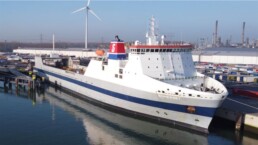
Stena Line to acquire vessel and make changes to its network
Stena Line has reached an agreement to acquire the RoRo vessel Somerset from CLdN. Subject to closure and transfer, the vessel would begin operating…

DORIC WEEKLY INSIGHT 16 OCTOBER 2026
Please find below the DORIC Market Insight for the week ending 16th October 2026. Weekly Report 16.10.2026
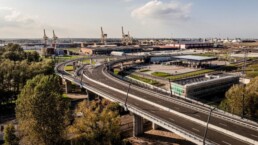
Important information for port clients and freight carriers effective November 1, a new traffic overpass and port checkpoint will open for traffic to the Port of Riga on Kundziņsala
Starting November 1 of this year, a new traffic overpass connecting Tvaika Street to Kundziņsala will open to facilitate traffic to and from the Port…
Subscribe to our newsletter!
if you dont want to swim alone in the ocean of news, sign up for the newsletter, and you will receive daily all the important news of world shipping!
