Aker BP projects create 145,000 man-years at Norwegian supplier companies
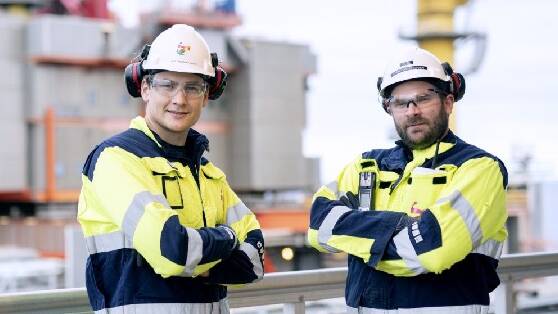

Aker BP will invest NOK 150 billion in development projects on the Norwegian continental shelf over the next five to six years. The projects operated by Aker BP alone will contribute to 145,000 man-years in Norway and NOK 170 billion in expected tax payments to the Norwegian State.
“The package of measures adopted by a broad majority in the Norwegian Parliament (Stortinget) two years ago has been a fantastic success for both the supplier industry and the society in general,” says Karl Johnny Hersvik, CEO of Aker BP.
Rigged for profitable growth
Following the merger with Lundin Energy, Aker BP is working on a total of 15 development projects on the Norwegian continental shelf, where the Plan for Development and Operation (PDO) will be submitted to the Ministry of Petroleum and Energy during the year.
The largest development project is in the NOAKA area in the North Sea, a coordinated development of several fields where total investments are estimated at about NOK 80 billion (USD 10 billion). This project alone will create around 50,000 Norwegian man-years in the development and operation phase.
Construction of a new platform on the Valhall field in the southernmost part of the Norwegian North Sea, and hook-up of the Fenris field (formerly King Lear) to the new platform, has estimated investments of NOK 40-50 billion, which will result in 65,000 Norwegian man-years in total employment.
The development of several satellite fields in the vicinity of the Skarv FPSO in the Norwegian Sea is the third largest development project operated by Aker BP. Investments are estimated at NOK 16-20 billion, total employment 8,500 full-time equivalents. Aker BP also has several subsea developments which will be tied back to the Alvheim, Edvard Grieg and Ivar Aasen fields, all in the North Sea.
The estimates are presented in the Impact assessments for the respective projects. The employment effect of all projects operated by Aker BP is estimated at 145,000 man-years in Norway. In addition, there are ripple effects of Aker BP’s share in the Wisting development, where Equinor is the operator.
Competitive advantage
Hersvik points to the contrast to the spring of 2020, which was characterized by a pandemic, an oil price that collapsed and an industry that put all the brakes on.
“When we were in the midst of the crisis, the Norwegian society showed itself from its very best side. The authorities, the political parties in the parliament, employers’ and employees’ organisations and the industry – all talked together and sought a solution to a dramatic situation for the supplier companies across the country. The result was a package of measures adopted by a broad majority in the parliament (Stortinget) in June 2020. This package of measures made the oil companies able to invest again. The wheels started turning. And now the suppliers are receiving large and important assignments,” says Hersvik.
The requirement from the politicians to the oil companies was to use the package of measures to secure activity, preserve jobs and develop expertise in the industry in Norway in the period before renewable energy projects increase in scope.
“Now we are standing here a little over two years later and see the direct result of the package of measures that was adopted,” says Hersvik, referring most recently to the award of a billion-NOK contract to Rosenberg Worley in Stavanger to build parts of the new central platform on the Valhall field. The contract, which was announced on 26 August, ensures full activity at the Stavanger yard for two years, starting in the second half of 2023.”
“In addition, together with Cognite, Aize and Aker Solutions, among others, we are building up new digital knowledge and setting new standards in the planning and implementation of major development projects. This increase in expertise gives Norwegian supplier companies a competitive advantage when they are competing for renewable projects in the future globally,” says Hersvik.
NOK 400 billion in taxes
The development projects, as well as a number of improved recovery and efficiency measures, means that Aker BP expects to increase its production from the current 400,000 barrels per day to about 525,000 barrels in 2028.
“We will lead the transformation of the oil and gas industry. We are investing heavily in a number of digitalisation initiatives aimed at creating a productivity revolution in the oil and gas industry. At the same time, we work closely with our alliance partners, all to maximise value creation and reduce emissions.”
Hersvik also emphasizes that the energy transition is the biggest and most important strategic challenge the Norwegian industry has ever faced, and that in addition to reducing its own emissions, oil and gas resources must be managed in a way that gives even more back to society.
Including the NOK 170 billion from the new development projects, Aker BP estimates to contribute more than NOK 400 billion to the Treasury in the form of taxes over the next ten years.



Related News.
Cyprus Maritime Innovation takes Centre Stage at SMM Hamburg 2026
Underscoring its expanding role as a premier international hub for cutting-edge maritime technology and sustainable shipping, the Republic of Cyprus…

Trump seeks to refill US oil reserve with Venezuela deal but faces long delay
U.S. President Donald Trump said on the 30th (local time) that he would refill the U.S. Strategic Petroleum Reserve, which has been depleted with…
US Navy Official visits South Korean Shipyards in private
With U.S. President Donald Trump pushing a plan to allow overseas construction of U.S. warships, attention is focusing on whether the building of…
SES and De Boer Marine expand collaboration with FlexMaritime deployment across Global Markets
SES, a leading space solutions company, and De Boer Marine, a leading provider of top-quality marine equipment and maritime connectivity services,…
New ESG guidance to help maritime industry turn sustainability into commercial advantage
New framework helps shipowners and ports align ESG strategy with access to capital, charterer expectations and long-term asset value. Maritime…

Britannia P&I Club analysis finds four in five crew deaths linked to illness rather than accidents
New report highlights cardiovascular disease as leading cause of fatalities and raises concerns over mental health risks among younger seafarers.…
The Swedish Club launches new Loss Prevention podcast, Knot Another Lesson
The Swedish Club has launched Knot Another Lesson, a new podcast exploring the practical lessons, emerging risks and operational challenges shaping…
Lloyd’s Register appoints Jens Grunenberg as Senior Representative for Germany
Lloyd’s Register has appointed Jens Grunenberg as its Senior Representative for Germany, effective 1 September. Based in Hamburg, Grunenberg will…
Indian Register of Shipping sets sights on Hamburg for European Expansion
Indian Register of Shipping, a leading international classification society and full member of the International Association of Classification…
MOL completes Merger of 6 Ship Management Companies
Unifying Management of Over 200 Vessels and Strengthening Safety Mitsui O.S.K. Lines, announced that it has completed the integration of the MOL…
Subscribe to our newsletter!
if you dont want to swim alone in the ocean of news, sign up for the newsletter, and you will receive daily all the important news of world shipping!
