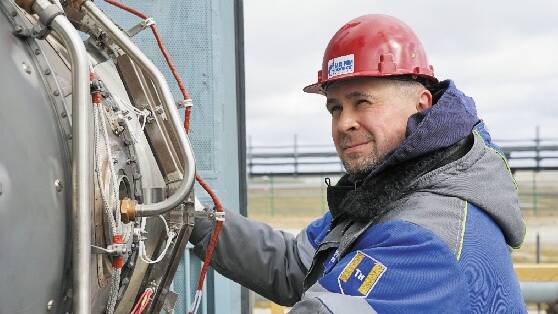

Three offline Nord Stream gas turbines in need of maintenance
‘Everything there is to say about the turbine has been said’: Siemens
Nord Stream running at just 20% of capacity since July 27
Russia’s state-controlled Gazprom said Aug. 4 the risk of a sanctions impact related to the maintenance of key Nord Stream gas turbines also concerned three units currently awaiting overhaul.
In a statement, Gazprom also reiterated it was impossible for it to take delivery of turbine 073, which had been returned to Germany from Canada after maintenance in mid-July under a sanctions waiver approved by Ottawa.
“In the absence of official clarifications from the EU and the UK on the application of sanctions, it is not clear that the repair and transportation of gas turbine engines will not be subject to export restrictions,” Gazprom said.
“Similar risks remain for engines 072, 074 and 121 subject to overhaul,” it said.
A total of eight turbines can be used at Nord Stream’s Portovaya compressor station — six big units (071, 072, 073, 074, 075 and 076) and two smaller ones (120 and 121).
Nord Stream needs five of the bigger turbines to be operational at Portovaya to flow at 100% capacity — with the sixth usually used as a standby unit — but only one is currently operational, reducing supply via the pipeline to 20% of capacity.
Turbines 072, 074, and 121 were taken offline as they were in need of scheduled maintenance, Gazprom said.
The 073 turbine is at a Siemens factory in Germany awaiting delivery to Russia, but Gazprom said it could not accept the turbine due to the current sanctions regimes of Canada, the EU and the UK.
“The current anti-Russian sanctions prevent the successful resolution of the situation with the transportation and repair of Siemens gas turbine engines for the Portovaya compressor station,” Gazprom said Aug. 4.
“Currently, only one of the six main gas pumping units is in operation at Portovaya and the daily capacity of the station is no more than 33 million cu m/d,” it said.
High prices
Russian gas flows via Nord Stream to Germany have been running at just 20% of capacity since July 27, with Gazprom blaming the reduction on maintenance issues with turbines at Portovaya.
The reduced Nord Stream flows have seen European gas prices surge back close to the record highs seen in March in the immediate aftermath of Russia’s invasion of Ukraine .
The Dutch TTF month-ahead price reached an all-time high of Eur212.15/MWh ($215/MWh) on March 8, according to Platts price assessments from S&P Global Commodity Insights, and was last assessed at Eur198.90/MWh on Aug. 3.

Given Gazprom’s statements, it seems highly unlikely Nord Stream flows will recover any time soon, and with only one operational turbine that could also require maintenance there is always a risk of supplies being halted completely.
German Chancellor Olaf Scholz Aug. 3 accused Russia of blocking the return of the turbine that had been delivered to Germany from Canada, saying the situation would be easily resolved if Gazprom gave the go-ahead. But Gazprom said the sanctions regimes of Canada, the EU, the UK made delivery of the turbine impossible.
Following the latest Gazprom statement Aug. 4, a spokesperson for Siemens Energy said: “Everything there is to say about the turbine has been said.”
“It is ready for operation and can be transported immediately from our side, so if the operator really wants the turbine, he will get it,” the spokesperson said.
Sanctions uncertainty
Explaining its position, Gazprom said a contract had been signed with UK company Industrial Turbine Company (UK) Ltd, part of the Siemens Energy group, to repair the turbines in Canada.
“Canadian authorities have issued engine removal documents, which are in no way related to the current contract, to Siemens Energy Canada Ltd, which is not a party to the contract,” Gazprom said.
“If the engine is transported to Russia, there is a risk that the Canadian authorities may consider this a violation or circumvention of the conditions of the issued permit,” it said.
“In turn, this may lead to the revocation of the permit and the impossibility of repairing other engines of the Portovaya compressor station in Canada.”
Gazprom said that because Industrial Turbine Company (UK) Ltd was a party to the contract, it was subject to the requirements of UK law, including sanctions restrictions.
It also said the supply of an engine from Canada to Germany created risks associated with the application of EU sanctions, in particular the provisions of EU Regulation 833/2014.
These establish that it is “prohibited to sell, supply, transfer, sell or export directly or indirectly gas turbine engines, technologies and other goods specified in the sanctions lists, regardless of whether they are produced whether the specified goods or technologies in the EU, any individual or legal entity in Russia or for use in Russia,” it said.
Source: PLATTS



Related News.
Cyprus Maritime Innovation takes Centre Stage at SMM Hamburg 2026
Underscoring its expanding role as a premier international hub for cutting-edge maritime technology and sustainable shipping, the Republic of Cyprus…

Trump seeks to refill US oil reserve with Venezuela deal but faces long delay
U.S. President Donald Trump said on the 30th (local time) that he would refill the U.S. Strategic Petroleum Reserve, which has been depleted with…
US Navy Official visits South Korean Shipyards in private
With U.S. President Donald Trump pushing a plan to allow overseas construction of U.S. warships, attention is focusing on whether the building of…

SES and De Boer Marine expand collaboration with FlexMaritime deployment across Global Markets
SES, a leading space solutions company, and De Boer Marine, a leading provider of top-quality marine equipment and maritime connectivity services,…

New ESG guidance to help maritime industry turn sustainability into commercial advantage
New framework helps shipowners and ports align ESG strategy with access to capital, charterer expectations and long-term asset value. Maritime…

Britannia P&I Club analysis finds four in five crew deaths linked to illness rather than accidents
New report highlights cardiovascular disease as leading cause of fatalities and raises concerns over mental health risks among younger seafarers.…

The Swedish Club launches new Loss Prevention podcast, Knot Another Lesson
The Swedish Club has launched Knot Another Lesson, a new podcast exploring the practical lessons, emerging risks and operational challenges shaping…

Lloyd’s Register appoints Jens Grunenberg as Senior Representative for Germany
Lloyd’s Register has appointed Jens Grunenberg as its Senior Representative for Germany, effective 1 September. Based in Hamburg, Grunenberg will…

Indian Register of Shipping sets sights on Hamburg for European Expansion
Indian Register of Shipping, a leading international classification society and full member of the International Association of Classification…
MOL completes Merger of 6 Ship Management Companies
Unifying Management of Over 200 Vessels and Strengthening Safety Mitsui O.S.K. Lines, announced that it has completed the integration of the MOL…
Subscribe to our newsletter!
if you dont want to swim alone in the ocean of news, sign up for the newsletter, and you will receive daily all the important news of world shipping!
