Corvus Energy becomes the preferred partner for Yaskawa Environmental Energy


Finland-based power electronics specialist is set to join forces with leading maritime energy storage system manufacturer Corvus Energy to continue the development of its smart Battery Short-Circuit Limiter protection device for large-scale battery solutions and advanced DC power distribution.
Under the three-year memorandum of understanding (MoU), Corvus Energy becomes the preferred partner for Yaskawa Environmental Energy / The Switch in the ongoing development of its proprietary BSCL device. The agreement also includes the joint promotion of each party’s products.
“We are very happy to be working with Corvus Energy as a world leader in marine ESS and look forward to constructive collaboration and teamwork,” said Yaskawa Environmental Energy / The Switch Division President Miika Reinikka.
“We are pleased to join forces with Yaskawa Environmental Energy / The Switch. Their unique skill in thinking outside the box to solve complex challenges makes them a valuable partner on our journey to decarbonize shipping. Their innovative technology makes a big difference for the utilization, scalability and safety of marine battery systems,” said Corvus Energy CEO Geir Bjørkeli.
Solving the scalability challenge
Connecting high-energy-content batteries to one electrical system carries high risk of releasing a massive amount of short-term current that can result in system damage. Battery packs consequently have to be split between several DC-Hubs to handle the amount of energy. The more batteries you hook up, the more DC-Hubs would be required – theoretically up to eight for a 20 MWh ESS. The innovation BSCL brings is to limit short-term current from each set of batteries, immediately blocking the short-circuit system. This allows more batteries to be connected to the electrical system and fewer DC-Hubs, making the entire system more compact and representing a significant financial saving. The space saving in terms of cabinet length means less CAPEX while at the same time promoting safety, efficiency and reliability.
Microsecond response
“The BSCL is essentially an ultra-fast, semi-conductor-based protection device that operates based on actual system measurements with microsecond response. It opens the DC electrical circuit by disconnecting a battery set in the event of a fault anywhere in the system, preventing the battery set from discharging itself. Such a sudden release of energy could result in major damage and, in the worst case, an electrical fire. BSCL minimizes the risk by stopping the energy loss in microseconds,” said Teemu Heikkilä, Head of Product Line, Converters at Yaskawa Environmental Energy / The Switch.
“From a technical perspective, the market hasn’t yet come to grips with this connectivity challenge. Class rules, which were primarily designed for AC/DC systems, are lagging behind the rapid pace of technology in DC power distribution. The BSCL is the first product fit for purpose with battery systems that are getting bigger almost by the day. Its key benefit, mirroring the electrification trend where the larger the ESS the better, is that you can increase the energy content of the ESS while minimizing the number of parallel systems required. In principle, implementing BSCL means you still only need two DC-Hubs for an ESS up to 40 MWh, so the savings grow in tandem with the size of the battery package,” he added.
Complementing Corvus Energy’s large battery system installations
While battery systems on board ships until now have been limited to below 10 MWh installations, future projects are increasing to many times this size. The device works for the entire Corvus ESS portfolio, including Corvus Orca, but is particularly suited to Corvus Energy’s Blue Whale ESS, which is designed to meet large operational energy demands at a cost-effective kWh price. The Blue Whale system has been specifically developed for large battery installations ranging from 10 MWh and upwards. Typical vessel applications include cruise ships as well as large ferries, yachts, merchant ships, inland vessels and workboats.
The Battery Short-Circuit Limiter (BSCL) is a standalone product to be placed close to the batteries and between drives. The space saving it generates complements Blue Whale’s low weight and low total system volume. The BSCL can also be retrofitted to existing systems for extra security.
Cousin to EBL and EDCB
The BSCL is closely related to Yaskawa Environmental Energy / The Switch’s recently launched Electronic Bus Link (EBL) and Electronic DC Breaker (EDCB) devices that serve to guarantee selectivity and safety through ultra-rapid fault detection and disconnection, ensuring complete redundancy in DC power distribution for fully electric and hybrid vessels. Both devices are now standard building blocks in the company’s marine drive offering. They enable The Switch DC-Hubs to perform at the highest standards of efficiency and reliability, delivering maximum system protection and ride-through capability.



Related News.
AeroVironment and Elsight partner to strengthen Mayhem 10 Connectivity in Contested Environments
Elsight’s Halo technology is designed to integrate satellite, cellular and radio communications to reduce single points of failure and operator…

ZoomInfo launches Native Integration with n8n through GTM.AI
ZoomInfo (NASDAQ: GTM), the all-in-one AI GTM platform, has confirmed a native integration with n8n, the workflow automation platform teams use to…

Maritime cyber specialist BroCoTec recruits NASA engineer to strengthen marine IT operations
Houston-based maritime IT network specialist BroCoTec is bringing space age tech expertise to its rapidly expanding team with the appointment of NASA…
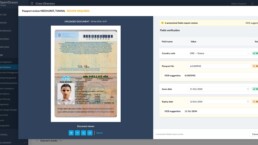
90POE launches Crew Docs AI – catching passport errors before crew changes fail
90POE builds AI passport checks into OpenOcean STUDIO® Crew Crew Docs AI reads each passport as it is uploaded and flags errors before they reach…
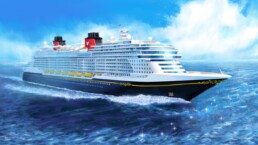
Disney Imagination revealed as the first Disney Cruise Ship to sail from Japan
Ariel and Sebastian to adorn the ship’s signature stern as Disney Imagination prepares to debut in spring 2029 Oriental Land revealed the name of…

Holland America Line makes spirits bright with joyful holiday festivities and culinary Ttaditions
Guests aboard 2026 holiday cruises can enjoy Thanksgiving dinner, Brunch with Santa, Feast of the Seven Fishes, festive entertainment, seasonal décor…
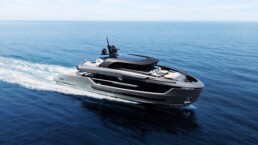
Van der Valk Shipyard unveils concept project NEXO
Van der Valk Shipyard has unveiled its new 30-metre concept, Project NEXO, short for New Experience X-Over, or Crossover: a yacht conceived for…
Navigating the Multi-Orbit Era: In Conversation with Intellian’s Jon Harrison at SMM 2026
At SMM 2026 in Hamburg, the rapid evolution of maritime satellite communications took centre stage. Across the exhibition halls, discussions among…

Cyprus ports need joint energy and investment strategy, shipping agents chief says
Cyprus needs a coordinated strategy for shipping, energy and environmental protection to support port investment and modernisation, Cyprus shipping…

MASO Public Affairs introduces MASO Regulatory Intelligence
A new subscription service helping businesses understand what is changing and what it means for them MASO Public Affairs introduces MASO Regulatory…
Subscribe to our newsletter!
if you dont want to swim alone in the ocean of news, sign up for the newsletter, and you will receive daily all the important news of world shipping!
