
- S. importers and exporters face the highest shipping charges
- D&D charges across 8 key ports in China increased by a staggering rate of 79% from $390 in 2020 to $700 in 2021; while still being much lower than the U.S.
- COSCO shipping line has the lowest Demurrage and detention fees amongst the top shipping lines studied (part of the research report)
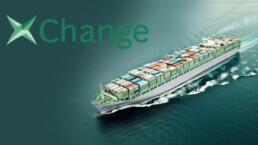
Container xChange’s new Demurrage & Detention Benchmark 2022 report, published, compares Demurrage & Detention rates* imposed on customers by the world’s ten largest shipping lines across 60 of the world’s biggest container ports.
The report notes that global average D&D charges levied by container lines on customers two weeks after cargo were discharged from the vessel increased by 38% for standard-sized containers from $586 in 2020 to $868 in 2021. So far in 2022, average D&D charges by major ports have declined to an average of $664 per container by 26%, although fees remain far higher than pre-pandemic at around 12%.
The U.S. came out worse regarding D&D costs in regional comparisons in Container xChange’s Demurrage & Detention Benchmark 2022 report. By region, D&D charges in May in the US were the highest at $2,692 per container. This compared to $549 in Europe, $482 in India, $453 in China and $366 in the ‘Rest of Asia’.
“Throughout this pandemic, as shipping costs have soared and inflation has become a threat to the global economy, it has become critical for shippers to develop visibility into container operations to manage costs like Demurrage and Detention. China leads the world in maritime exports and even though it has some of the busiest ports in the world, they’ve ensured they are the most efficient – even during lockdowns.” said Christian Roeloffs, co-founder of Container xChange.
Shanghai, Qingdao and Ningbo – which are 3 of only 8 ports that increased in Demurrage and detention (D&D) charges in 2022, still exhibit a much lower D&D charge in general, ranking #43, #52 and #42 on the global list respectively. On average, the D&D charges at these 8 Chinese ports rose from $390 in 2020 to $700 in 2021 – a staggering rise of 79.4%. The average D&D charges for these 8 ports in China fell to $614, declining by 12.2%.
For Hong Kong, where the container congestion was the worst, there was a 105% hike in its D&D charges from $813. Hong Kong recorded a fall of 8.9% in its D&D charges, coming down to $1515. The trend reversed slightly, with D&D charges falling in some of the major ports but continuing to increase in Dalian, Ningbo, Qingdao, and Shanghai.
Yichang, Rugao & Zhenjiang in China are amongst the ports with the lowest demurrage and detention charges after two weeks.
“The main reasons for lower congestion in ports like Busan, Qingdao, and Port Kelang are higher port productivity combined with less COVID-19 restrictions. Furthermore, fewer imports were received in these ports, which have also fewer direct calls from the major shipping lines. This helped achieve better productivity. Port Kelang and Qingdao had equipment shortages during the pandemic, therefore, you can see fewer D&D charge occurrences. In addition, Busan is also one of the largest transhipment ports in Northeast Asia. And although its container capacity is the largest, a considerable proportion of its traffic is not destined to South Korea.”, commented Drewry, a shipping maritime research company.
Free Days
In the graph below, the average free days per shipping line across ports and container types for both imports and exports are 7. In Busan, shipping lines have the highest average number of free days at 11 days. Meanwhile, shipping lines at Long Beach and well as Los Angeles do not allow the free use of containers at no cost beyond 4 days.
This is because the recent container logjams in both the US ports forced shipping lines to reduce the free days in order to incentivize the customers to remove the boxes. This also explains why the D&D rates are lowest in places where free days are highest.
DEFINITIONS
Demurrage and detention tariffs have two main purposes: (1) compensating the shipping line for the use of its container and (2) encouraging the merchant to return the container as soon as possible for the shipping line to re-use it and have a fast turnaround.
Demurrage
The charge that you pay for the use of the container within the terminal beyond the free time period. For import cargo, the demurrage time is the period from container discharge from the vessel until gate-out of the full container from the terminal. For export cargo, the demurrage time is the period from gate-in of the full container into the terminal until the full container is loaded on board a vessel.
Detention
The charge that you pay for the use of the container outside of the terminal or depot, beyond the free time period. For import cargo, the detention time is the period from gate-out of the full container until gate-in of the empty container into the restoration point. For export cargo, the detention time is the period from the pick-up of the empty container from the terminal or depot until gate-in of the full container in the terminal.
Please visit website for more information – https://www.container-xchange.cn/



Related News.
Navigating the Multi-Orbit Era: In Conversation with Intellian’s Jon Harrison at SMM 2026
At SMM 2026 in Hamburg, the rapid evolution of maritime satellite communications took centre stage. Across the exhibition halls, discussions among…
Cyprus ports need joint energy and investment strategy, shipping agents chief says
Cyprus needs a coordinated strategy for shipping, energy and environmental protection to support port investment and modernisation, Cyprus shipping…

MASO Public Affairs introduces MASO Regulatory Intelligence
A new subscription service helping businesses understand what is changing and what it means for them MASO Public Affairs introduces MASO Regulatory…
Anglo-Eastern helps turn CMBTECH’s ammonia ambition into an operational reality
From early feasibility study and risk-based design to newbuilding supervision, crew readiness and technical management, Anglo-Eastern drew on its…

Escalation of attacks threatens to derail recovery in Middle East oil exports
World oil demand is forecast to fall by 2.5 mb/d y-o-y in 4Q26 and 2.6 mb/d on average in 2026. As the Iran war manifests itself through restricted…
New study finds shipping pays twice its share to EU ETS earmarked revenues should triple to help build market for sustainable fuels and technologies
Shipping is responsible for around 10% of EU ETS emissions but pays almost 20% of the ETS bill. Unlike other sectors, it has never received free…

MSARC strengthens maritime mass rescue readiness through training and national live exercise off Dakar, Senegal
Joint MSARC–FHAS programme combines three days of SAR training with a national multi-agency live exercise The Maritime Search and Rescue Council ,…
Sogese report deliveries are still being delayed as container freight rates fluctuate
FOR IMPORTERS Spot rates into the Mediterranean are back at January levels, Far East to Europe reliability sits at pandemic lows, and nearly…

Glencore begins trading on Australian Securities Exchange
Glencore has begun trading on the Australian Securities Exchange under the ASX code GLC. Gary Nagle, Glencore’s CEO, said it was an exciting day for…
BIMCO Shipping Number of the Week
Suez Canal container ship transits exceed 50% of pre-disruption levels "During the first two weeks of October, weekly container ship capacity…
Subscribe to our newsletter!
if you dont want to swim alone in the ocean of news, sign up for the newsletter, and you will receive daily all the important news of world shipping!
