“Sustainability is at the core of everything we doubt we cannot achieve our green future alone”, says Pierfrancesco Vago, executive chairman of MSC group’s cruise division
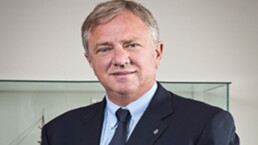

Nearly 30 million people in 2019 went on cruises pre-pandemic and while as an industry we’re not quite back to those numbers yet, we certainly will be by 2023. So, as the pandemic hopefully recedes and we return to relative normality, the Cruise Division of MSC Group and our industry face the new challenge of charting a sustainable future where we ensure that our guests have the best possible experience with the smallest possible impact on the environment.
That’s the focus of our Sustainability Action Plan, outlined in the recently published MSC Cruises 2021 Sustainability Report.
The big picture is that we are on track to achieve the International Maritime Organization’s 40 per cent carbon intensity reduction for the maritime industry three years ahead of the target of 2030. And our cruise operations will be net zero by 2050.
It is essential to have these goals and to have a detailed plan to meet them.
A number of sustainability measures are, in fact, make good business sense because they reduce costs in addition to our environmental footprint.
Energy efficiency is an obvious example of that, with LED lighting and heat recovery systems having that dual impact. Anti-fouling paint reduces drag, trim optimisation makes the voyage more comfortable and reduces fuel consumption, as does reducing speed. We scrutinised last year every mile of all of our ships’ itineraries and have cut our ships’ speed by an average of two knots.
I think of these as the tactical steps I would expect every operator to take. The real difference comes when we start looking at the bigger projects that will fundamentally change our environmental footprint.
I am determined that these investments will help everyone because we have duty to future generations.
We will launch MSC World Europa in November. She will be the world’s largest liquefied natural gas (LNG) powered cruise ship, an important fuel type because LNG virtually eliminates certain air pollutants and significantly reduces carbon emissions.
It also has a long-term role. It will take time to develop low and zero carbon fuels such as green hydrogen and its derivatives at the scale we need.
And some of these fuel solutions require new generation power and storage systems. In the interim we need to find and test hybrid solutions that can use fossil-LNG to create our energy while future fuels are made commercially available. This is why MSC World Europa will include a 150-kilowatt solid oxide fuel cell demonstrator. This will generate auxiliary power and verify the technology in full operational mode, using LNG, but capable of utilising green hydrogen or its derivative fuels when they become available to us.
Ultimately, we hope the industry – not just MSC Cruises and Explora Journeys – will be able to use fuel cells for the main propulsion.
To facilitate a complete and expeditious energy transition, we need a supporting regulatory framework from governments that will incentivise promising options and ensure that our industry has the alternative fuels available that are needed in the market.
MSC World Europa is the first of three LNG-powered ships we currently have on order. Each one represents more than Euros €1 billion of investment and 16 million hours of work.
We are determined that they embody our sustainable future. It is, without doubt, the right thing to do. But it isn’t cheap. Therefore, we need the financing tools that support the building and export of cruise ships to remain in place. More than that, those tools are vital so we can develop and deploy the technology we need to reduce our carbon footprint and meet our 2050 net zero ambition.
Our ships spend most of their time on the water but inevitably they also interact with the land. We are investing in more shore-to-ship power to reduce the time our engines are operating in ports and examining where that power comes from: where it’s available, we always source renewably generated power.
This is another tactical measure to reduce emissions that is also behind our investment in terminals in key destinations like Barcelona, Miami and Durban where we will work with our partners to ensure they provide this power source. We will, in fact, have two of our vessels connecting this summer for the first time in the ports of Southampton in the UK and Warnemunde in Germany.
However, there is more to our vision than just the technology. We also need other broader initiatives, and the Ocean Cay MSC Marine Reserve is an example of our holistic approach.
When we took over the island in 2015, it was essentially a post-industrial wasteland in The Bahamas.
Our priority was to create a sustainable and attractive nature reserve, which we have done. Now we are focused on developing it into an attraction for our guests to educate them about the importance of the environment and how it contributes to research through initiatives like our MSC Foundation’s Super Coral Programme.
There is, of course, much more detail in our Sustainable Action Plan but it is our overarching ethos about sustainability that drives everything we do.
Every decision we take, every meeting we have, is guided by questions around sustainability. Are we doing everything we can? What more can we do? What new technology is on the horizon, that deserves our attention? This everyday questioning is what will make the long-term difference.
However, while we are making huge investments and doing all we can ourselves we must not forget we are simply a small link in a huge chain.
We cannot achieve our goals alone and we need the support of all our partners to achieve a sustainable future.
Whether it is energy suppliers providing our next green fuel at the scale we require or governments having the right incentives in place for us to be able to invest in the next generation of technologies.
These are the things that together power our green future.



Related News.

Navigating the Multi-Orbit Era: In Conversation with Intellian’s Jon Harrison at SMM 2026
At SMM 2026 in Hamburg, the rapid evolution of maritime satellite communications took centre stage. Across the exhibition halls, discussions among…
Cyprus ports need joint energy and investment strategy, shipping agents chief says
Cyprus needs a coordinated strategy for shipping, energy and environmental protection to support port investment and modernisation, Cyprus shipping…

MASO Public Affairs introduces MASO Regulatory Intelligence
A new subscription service helping businesses understand what is changing and what it means for them MASO Public Affairs introduces MASO Regulatory…
Anglo-Eastern helps turn CMBTECH’s ammonia ambition into an operational reality
From early feasibility study and risk-based design to newbuilding supervision, crew readiness and technical management, Anglo-Eastern drew on its…

Escalation of attacks threatens to derail recovery in Middle East oil exports
World oil demand is forecast to fall by 2.5 mb/d y-o-y in 4Q26 and 2.6 mb/d on average in 2026. As the Iran war manifests itself through restricted…
New study finds shipping pays twice its share to EU ETS earmarked revenues should triple to help build market for sustainable fuels and technologies
Shipping is responsible for around 10% of EU ETS emissions but pays almost 20% of the ETS bill. Unlike other sectors, it has never received free…
MSARC strengthens maritime mass rescue readiness through training and national live exercise off Dakar, Senegal
Joint MSARC–FHAS programme combines three days of SAR training with a national multi-agency live exercise The Maritime Search and Rescue Council ,…
Sogese report deliveries are still being delayed as container freight rates fluctuate
FOR IMPORTERS Spot rates into the Mediterranean are back at January levels, Far East to Europe reliability sits at pandemic lows, and nearly…
Glencore begins trading on Australian Securities Exchange
Glencore has begun trading on the Australian Securities Exchange under the ASX code GLC. Gary Nagle, Glencore’s CEO, said it was an exciting day for…
BIMCO Shipping Number of the Week
Suez Canal container ship transits exceed 50% of pre-disruption levels "During the first two weeks of October, weekly container ship capacity…
Subscribe to our newsletter!
if you dont want to swim alone in the ocean of news, sign up for the newsletter, and you will receive daily all the important news of world shipping!
