KPI OceanConnect CEO sees 8% bunker growth, outpacing industry average in 2022
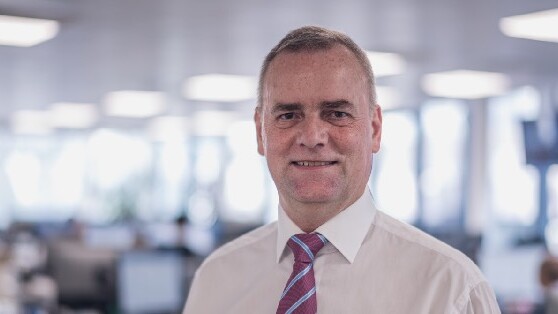

Bunker supplier KPI OceanConnect is targeting 8% growth in its global traded volumes in 2022, about twice that of the whole industry, company CEO Soren Holl told S&P Global Platts in an interview Jan. 31
The 8% target is in line with its figure for 2021 and compares with the growth of 3%-5% that the company expects to see across the industry at large, he said.
Platts estimates global bunker demand to grow 3% on the year to 6.20 million b/d in 2022.
KPI OceanConnect’s most pronounced volume increases in 2021 were in Asia, which rose about 17% on the year, while increases in the Mediterranean and Northwest Europe were around 14%, Holl said.
The company had previously said that it was targeting the Asian market as the main driver of growth and this plan remains in place.
In particular, the Singapore bunker market holds great potential with marine fuel sales volumes likely to be steady to slightly higher year on year in 2022, Holl said.
Singapore’s bunker industry wrapped up 2021 with marine fuel sales of close to 50 million mt, the second-highest total on record, data from the Maritime and Port Authority of Singapore showed.
The city-port’s total container throughput hit a record high of 37.5 million 20-foot equivalent units last year despite COVID-19-related hurdles, with the port handling 599 million mt of cargo in 2021.
Among other Asian markets, KPI OceanConnect is also focusing on its China operations through its offices in Hong Kong and Singapore, Holl said.
NEW FRONTIERS
KPI OceanConnect has also created an alternative marine fuels division as impending environmental regulations loom for international shipping.
“Product is one thing but it is also actually about how this product is produced. So, there is a long chain of factors [involved] when we talk about sustainable fuels,” Holl said.
The company is actively engaged with its suppliers and clients who want to know more about cleaner fuel solutions in order to decarbonize.
“We are working with different suppliers on different products and it is a portfolio ranging from LNG, methanol and biofuels, to hydrogen and carbon offsets, which is also quite an interesting area, given the European Trading Scheme that will come into effect from Jan. 1,” Holl said.
Over the last 12 months or so, there has been an acceleration in the industry’s willingness to find different pathways to decarbonize, Holl said.
While alternative fuels are gaining traction, demand for fossil fuels will remain, he said.
Platts Analytics expects that between 2030 and 2050 the fleet order book will shift rapidly to alternative fuels from the currently prevalent petroleum-based fuels and that, toward the end of that period, ammonia will account for 20% of the order book, hydrogen for 5%, methanol for 25%, biofuel for 10% and LNG for 40%.
FUTURE FOR SCRUBBER
Exhaust gas cleaning systems, or scrubbers will still be part of the propulsion mix in the coming years, Holl said.
“I think there are some quite interesting projects going on, on how to capture the exhausts,” and going forward scrubbers will play a role, as well as alternative fuels, he said.
The economics for the units are favorable at present, with a spread of over $100 between 0.5% sulfur fuel oil and 3.5%S FO. The very low sulfur fuel meets International Maritime Organization regulations and so does not need a scrubber while the non-compliant high sulfur fuel does require a scrubber.
The wider the spread the shorter a shipowner can make back their investment and save money by buying cheaper 3.5%S FO.
The spread between benchmark Singapore marine fuel 0.5%S cargoes and Singapore 380 CST HSFO cargoes averaged $119.69/mt in 2021, up from $96.91/mt in the previous year, Platts data showed. The spread rose 82.43% to average $126.17/mt in the second half of 2021 compared to the H2 2020 average.
At levels of around $100/mt or more, payback for a scrubber is two-to-three years, according to calculations by Platts Analytics.
Platts Analytics said Nov. 4 that it expected scrubbers to be fitted on 21% of the fleet in 2023, rising to 28% in 2030. International environmental regulations are likely to become stricter after 2030 and some sources say shipowners may need to abandon fossil fuels.
“I think we will see a [Hi-5] spread around the level we have at the moment… within a range of 5%-10% perhaps plus/minus but it will be around this level for some time,” Holl said.
“I think some healthy fundamentals are in place to keep the spread at that level and the demand is there,” he added.
Source: KPI OceanConnect



Related News.

Cyprus Maritime Innovation takes Centre Stage at SMM Hamburg 2026
Underscoring its expanding role as a premier international hub for cutting-edge maritime technology and sustainable shipping, the Republic of Cyprus…

Trump seeks to refill US oil reserve with Venezuela deal but faces long delay
U.S. President Donald Trump said on the 30th (local time) that he would refill the U.S. Strategic Petroleum Reserve, which has been depleted with…
US Navy Official visits South Korean Shipyards in private
With U.S. President Donald Trump pushing a plan to allow overseas construction of U.S. warships, attention is focusing on whether the building of…

SES and De Boer Marine expand collaboration with FlexMaritime deployment across Global Markets
SES, a leading space solutions company, and De Boer Marine, a leading provider of top-quality marine equipment and maritime connectivity services,…

New ESG guidance to help maritime industry turn sustainability into commercial advantage
New framework helps shipowners and ports align ESG strategy with access to capital, charterer expectations and long-term asset value. Maritime…

Britannia P&I Club analysis finds four in five crew deaths linked to illness rather than accidents
New report highlights cardiovascular disease as leading cause of fatalities and raises concerns over mental health risks among younger seafarers.…
The Swedish Club launches new Loss Prevention podcast, Knot Another Lesson
The Swedish Club has launched Knot Another Lesson, a new podcast exploring the practical lessons, emerging risks and operational challenges shaping…

Lloyd’s Register appoints Jens Grunenberg as Senior Representative for Germany
Lloyd’s Register has appointed Jens Grunenberg as its Senior Representative for Germany, effective 1 September. Based in Hamburg, Grunenberg will…
Indian Register of Shipping sets sights on Hamburg for European Expansion
Indian Register of Shipping, a leading international classification society and full member of the International Association of Classification…
MOL completes Merger of 6 Ship Management Companies
Unifying Management of Over 200 Vessels and Strengthening Safety Mitsui O.S.K. Lines, announced that it has completed the integration of the MOL…
Subscribe to our newsletter!
if you dont want to swim alone in the ocean of news, sign up for the newsletter, and you will receive daily all the important news of world shipping!
