
The escalation of the Ukraine /Russian crisis has highlighted the challenges shipping companies are facing due to growing geopolitical risks. Black Sea is a key transit point for agriculture products, metals and energy and is expected that the military action will disrupt supply chains and their operations.
The US, EU, UK, Japan and Canada have unveiled a range of economic sanctions against Russia. The sanctions so far, have targeted different areas, hitting specific financial institutions, entities, several Russian wealthy individuals and commodities.
Shipping companies, as a result, need to review carefully their current contractual obligations under charter parties, supply and agency contracts (including crew manning agreements) and put into effect due diligence procedures concerning payment instructions which may involve Russian banks (direct or intermediate) or other financial entities.
Potential damaging effects shipping companies could encounter range from financial penalties against company and its directors, freezing of assets and bank transfers, to the arrest or detention of ships and its cargo. French authorities have detained the Russian flagged cargo ship ‘Baltic Leader’ on the grounds that the ship “may be related to Russian interests subject to sanctions”, under imposed US sanctions on Russia. The tension has resulted to the suspension of commercial shipping at the Ukraine ports, although some Russian Black Sea ports remain open.
There are certain Charter party clauses that need careful consideration i.e Trading Areas and Sanctioned Countries clauses. Trading within the ports, not only of the countries involved in the hostilities, but also in the Black Sea region may present a challenge, in the coming days. Most charter parties include sanction clauses. BIMCO has issued in 2020 Sanctions Clauses for Time Charter Parties and for Voyage Charter Parties which provide, in the case of time charter parties, an express right of termination and in the case of voyage charter parties, cancellation rights.
Safe Berths / Safe Ports clauses. A port must be both physical safe and political safe. “A port will not be safe unless, in the relevant period of time, the particular ship can reach it, use it and return from it without, in the absence of some abnormal occurrence, being exposed to danger which cannot be avoided by good navigation and seamanship…” The Eastern City [1958]
So far it has been reported that two ships have been hit by shells near Ukraine’s ports.
Force Majeure clauses. Typical force majeure events include war risks but it will depend on the wording of the relevant force majeure clause.
War risk clauses. Most charter parties include war risks clauses either in the standard form or as rider clauses, whereby the vessel shall not be obliged to proceed or required to continue to or through, any port, place, area or zone, …where it appears that the vessel, cargo, crew or other persons on board the vessel, …may be exposed to War Risks whether such risk existed at the time of entering into this Charter Party or occurred thereafter. (BIMCO CONWARTIME and VOYWAR War Risks Clauses)
Shipping companies must seek legal advice and assistance of their P&Is.
Lloyd’s emerging risk report 2021, published in September 2021, and produced in partnership with the Cambridge Centre for Risk Studies, titled “Shifting powers – Meeting the challenges of the geopolitical landscape” recognises that in just the last decade, the geopolitical risk landscape has undergone something of a paradigm shift. The Western-dominant, American-led, liberally fiscal, status quo that defined the political world and economic growth for much of the second half of the 20th century no longer feels like a realistic barometer for how future events – wars, riots, elections, treaties – will play out on the global stage.
Who can doubt that, with the last days’ events taking place in Ukraine? Russia’s invasion of Ukraine has shocked and stunned the world.
The report further states that in the short term, geopolitics is set to become more idiosyncratic and unpredictable, with raised tensions destabilising societies and flowing through to international business and markets.Geopolitical risks can quickly cascade and negatively impact a shipping company’s finances. Exploring the insurance market for products that would minimize the financial risks related to geopolitical uncertainty can proactively manage same and safeguard a company’s future income. Such products are provided and marketed, last thirty years by Marasco Marine Ltd, as Cash Flow Earnings Insurance (CFEI), insuring the future of a Ship Owner/Ship Manager and, or Ship Operator, at times when is mostly needed.
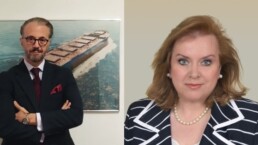
Written by: *Mrs Mary Pothitos – *Mr Anastasios Maraslis
* Mrs Mary Pothitos is an experienced Marine claims consultant,DNV Academy and HMC / ICS Greek Branch trainer, head of the Paralegal Maritime Services and a valuable member of Marasco Marine Ltd’s Board of Advisors
*Mr Anastasios Maraslis is the founder and President of Marasco Marine Ltd.
More about Marasco Marine Ltd and it’s Board of Advisors at: www.marasco-marine.com



Related News.

Crewing After 2026: How AI Will Take Over the Routine in 2027
The crewing market of late 2026 is not the market of 2025. Artificial intelligence has moved from presentations into daily crewing work, while the…

Dualog launches secure maritime AI service amid surge in seafarer AI use
The new service, Sparks lets crew and shore teams search company emails, documents and conversations without exposing sensitive fleet information to…

Time Ticking: Two weeks for Governments to Green-Light Framework for Cutting Shipping Emissions
As a crucial fortnight of meetings opens at the International Maritime Organization opens in London, the Clean Shipping Coalition calls on member…

“K” LINE signs contract for construction of two LPG dual-fuel VLGCs
Kawasaki Kisen Kaisha, announces today that it has signed agreements with South Korea-based HD Hyundai Samho regarding the construction of two LPG…

Equinor and VNG sign 18-year gas sales agreement for supplies to Germany
Equinor will supply natural gas to the German energy company VNG until the end of 2044. The 18-year agreement is the longest gas sales agreement…

Open letter to MEPs to reject the motion for a resolution and support the inclusion of Indian ship recycling yards on the European List
Dear Members of the European Parliament, Ahead of this week’s plenary vote, European Shipowners | ECSA, BIMCO, the Cruise Lines International…

ShipVet appoints James Stairmand as Chief Executive Officer
Founder Captain Fintan Cullen moves to a non-executive role as the company builds on investment in its vetting team and technology. ShipVet, the…

USD ≈7bn lost per year the hidden cost of how shipping trades
New Torvald Klaveness study quantifies around USD 7bn a year in potentially avoidable costs in dry bulk and product tanker shipping, with a possible…

APM Terminals Maasvlakte II and Port of Rotterdam Authority take next step in terminal development
APM Terminals Maasvlakte II and the Port of Rotterdam Authority are moving forward in terminal’s development with preparations for a new phase of…

ABP inspiring the next generation
ABP host 500 young people to explore maritime and transport careers More than 500 young people from across Hampshire and the Solent explored career…
Subscribe to our newsletter!
if you dont want to swim alone in the ocean of news, sign up for the newsletter, and you will receive daily all the important news of world shipping!
