Samsung Electronics expands its ‘Green Chip’ Line-Up
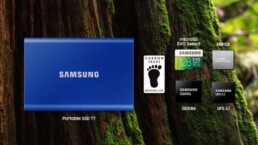

Five memory products successfully achieved carbon reduction certification, with automotive LED packages joining Samsung’s list of products to receive carbon footprint verification, setting the benchmark for future carbon reduction
Samsung Electronics, a world leader in advanced semiconductor technology, announced that five of its memory products achieved global recognition for successfully reducing its carbon emission, while 20 additional memory products received carbon footprint certification. Samsung’s automotive LED packages also had their carbon footprint verification, a first in the industry for automotive LED packages, further expanding Samsung’s portfolio of eco-conscious ‘green chips’.
“It is exciting to see our environmentally sustainable efforts receiving global acknowledgements,” said Seong-dai Jang, Senior Vice President and Head of DS Corporate Sustainability Management Office at Samsung Electronics. “We will continue our path towards a sustainable future with ‘greener’ chips enabled by Samsung’s cutting-edge technology.”
Five Samsung memory products – HBM2E (8GB), GDDR6 (8Gb), UFS 3.1 (512GB), Portable SSD T7 (1TB), microSD EVO Select (128GB) – recently earned ‘Reducing CO2’ labels from the Carbon Trust. The previous versions of the five products had received the ‘CO2 Measured’ certification from the Carbon Trust last year. The Carbon Trust recently also certified the product carbon footprints of 20 memory products1 by giving them the ‘CO2 Measured’ product carbon footprint label.
The Carbon Trust is an independent and expert partner of organizations that advises businesses on their opportunities in a sustainable, low-carbon world. The Carbon Trust also certifies the environmental footprint of organizations, supply chains and products.
The Reducing CO2 label certifies that a product’s carbon emission has decreased. Samsung was able to cut the carbon emission of the five memory products through enhanced production efficiency. This means that less electricity and raw materials were used per chip. For the Portable SSD T7 (1TB), Samsung used environmentally sustainable paper instead of plastic as packaging material to minimize the carbon footprint of the product.
Samsung estimates that the volume of carbon emissions reduced from the five products, after their release until July 2021, amounts to approximately 680,000 metric tons of CO2, which is equivalent to 11.3 million urban tree seedlings grown for ten years or the greenhouse gas emitted from 149,000 cars driven for one year.
Before a product can be certified for carbon reduction, its current carbon footprint must be validated in order to set the starting line for measuring carbon footprint changes. The CO2 Measured label verifies the current carbon emission of the product with a globally recognized specification (PAS 2050). Thus, the 20 Samsung memory products with the CO2 Measured label has now set the benchmark for future carbon reduction.
“We have certified five of Samsung’s memory chip products with the CO2 Reducing label, and are pleased to bring on board 20 more products with the CO2 Measured label,” said Hugh Jones, Managing Director at the Carbon Trust Advisory. “We hope that Samsung’s efforts could spread out to the entire semiconductor industry, so that the industry can continue its journey towards a more sustainable future.”
Carbon Footprint of C-series 3W Automotive LEDs Verified by UL

Four C-series 3W Automotive LED packages manufactured by Samsung – Gen3 (third generation) 3W White, Gen3 3W Amber, Gen2 (second generation) 3W White and Gen2 3W Amber – received verification of their carbon footprint to ISO 14064-3 by UL.

UL, the global safety science leader, provides testing, inspection and certification, advisory and risk management services, decision-making tools, training and business intelligence offerings to help customers based in more than 100 countries solve critical business challenges, achieve sustainability goals and prepare for future opportunities.
Since Samsung’s C-series 3W Automotive LED packages are energy efficient products that draw less power but produces more light output, they reduce carbon emissions of cars by improving energy efficiency and ensure longer driving range for electric vehicles in a single charge.
“UL congratulates Samsung for pursuing carbon footprint verification for their four C-series 3W Automotive LED packages, which will help automotive manufacturers select products with transparent, verified information about their environmental footprint,” said Doug Lockard, Vice President and General Manager of UL’s Retail and Consumer Products group. “By understanding the carbon impact of products, manufacturers like Samsung can work to reduce those impacts and improve the environmental performance of products over time.”



Related News.

PSA Singapore breaks ground on Tuas Port Phase Two to strengthen Global Trade Connectivity
PSA Singapore marked the groundbreaking of Tuas Port Phase Two, a significant step in the development of the world’s largest fully automated…

 …

BIFA welcomes UK–EU trade progress and calls for clarity on implementation
The British International Freight Association (BIFA) has welcomed progress made at today's UK–EU Summit in Brussels, highlighting the potential…

San Pedro Bay Ports Mark 20 Years of Landmark Clean Air Action Plan
Two decades of emissions reductions set the stage for expanded zero-emission operations and new clean air commitments Twenty years after adopting the…

PortConnect on Track from research project to practical application in the Port of Hamburg
The PortConnect research project is making significant progress towards the development of a networked workforce planning system. At a joint project…
Teledyne Raymarine Commercial Launches MyFleet Mobile App for Fleet Visibility on the Go
New iPhone and Android app gives fleet managers, vessel owners and operations teams mobile access to vessel positions, voyage progress and estimated…

Thai Navy cancels Hanwha Ocean selection over tender rule gaps
Royal Thai Navy Cancels 17 Billion Baht Frigate Bid and Forms New Committee, Saying the Bidding Criteria Faulted Over Past Shipbuilding Contract…
Hanwha Ocean wins two VLCC orders
Deal Brings Yearly Tally to 47 Vessels and $8.54 Billion, Emphasizing Eco-Friendly High-Value Ships Hanwha Ocean has won an order for two Very Large…

Econowind turns ten as maritime players turn to wind-assisted ship propulsion to tackle rising fuel costs
From wooden prototypes on a car roof to more than 170 VentoFoil units sold, the Dutch wind-assisted ship propulsion (WASP) specialist looks back on a…

StormGeo weather intelligence strengthens climate resilience for Brazilian state with Climatempo’s Radar RS project
Rio Grande do Sul protecting citizens from extreme weather with advanced system. Flagship project demonstrates value of integrated radar solution…
Subscribe to our newsletter!
if you dont want to swim alone in the ocean of news, sign up for the newsletter, and you will receive daily all the important news of world shipping!
