Why we’re investing $15 billion in a lower-carbon future


At ExxonMobil, we develop and deploy solutions that meet society’s needs. Today, that means taking a leading role in providing the products that enable modern life, reducing carbon emissions and developing needed technologies to advance a lower-carbon emissions future.
Over the next six years, ExxonMobil plans to invest more than $15 billion on lower greenhouse gas emission initiatives. This significant increase in spending will further accelerate efforts to reduce greenhouse gas emissions from our operated facilities. To that point, we are on track to meet our 2025 emission-intensity reduction goals by the end of this year – four years earlier than anticipated. As a result of our progress, we’re working on even more aggressive reduction plans that are consistent with our support for the goals of the Paris Agreement, the U.S. and European Union’s Global Methane Pledge, as well as the U.S. Methane Emissions Reduction Action Plan announced last week.
A significant share of the spending will be directed toward our Low Carbon Solutions business, which is focused on reducing greenhouse gas emissions from hard-to-decarbonize sectors such as heavy industry, commercial transportation and power generation, which together account for more than 80% of the world’s energy-related emissions.
We see tremendous opportunities to use our technology and expertise in carbon capture and storage, hydrogen, and biofuels to support meaningful reductions in global emissions. We expect those opportunities to grow as policy support for low-carbon solutions increases.
Carbon capture and storage
Key among those technologies is carbon capture and storage, a proven way to collect CO2 emissions and securely store them deep underground. Carbon capture and storage is critical to reaching net zero by 2050, according to independent experts like the International Energy Agency and the UN Intergovernmental Panel on Climate Change.
ExxonMobil is the world leader in carbon capture, and has captured more human-made CO2 than any other company.
In recent months, we’ve announced several carbon capture and storage “hub” concepts where high-emission industries can share infrastructure, enabling benefits from economies of scale. Expanded use of carbon capture and storage can further improve the emission reductions associated with hydrogen and biofuels.
The interest we’ve received for the hub concepts has been extremely positive.
Eleven companies, including ExxonMobil, have expressed interest in supporting a large-scale carbon capture and storage hub in the Houston industrial area. We believe that by 2040, it could be possible to annually capture about 100 million metric tons of CO2 from refineries, chemical plants and power generation facilities in the area. That’s equal to the greenhouse gas emissions today from more than 20 million gasoline-powered passenger vehicles.1
In Wyoming, we’re planning to expand carbon capture and storage capacity at our natural gas and helium production site, which has already captured more CO2 than any other facility in the world.
In Europe, ExxonMobil is working with other companies and governments to advance potential carbon capture and storage hubs in Scotland, France, Belgium and the Netherlands.
In Southeast Asia, we recently outlined our vision for a carbon capture and storage hub to serve heavy industry areas around Singapore. We signed an MOU with Pertamina, the state-owned energy company of Indonesia, to evaluate the potential for deploying low-carbon technologies there, and another with PETRONAS, the state-owned energy company of Malaysia, to collaborate and jointly explore potential carbon capture and storage projects in Malaysia.
Biofuels and hydrogen
Biofuels will also play an important role in a lower-carbon future, especially in reducing greenhouse gas emissions from commercial transportation.
Our Canadian affiliate, Imperial Oil, is progressing plans to produce renewable diesel at its Strathcona refinery in Edmonton using a proprietary catalyst technology that enables advantaged production. Renewable diesel is a drop-in fuel for use in today’s engines that generates 70% fewer carbon emissions than conventional diesel.
Here in the U.S., we expanded our agreement with Global Clean Energy to purchase up to 5 million barrels per year of renewable diesel from its biorefinery in Bakersfield, California starting next year.
ExxonMobil also produces about 1.3 million metric tons of hydrogen annually, and is working to develop new technologies that significantly lower production costs.
And finally, we continue to advance research with university partners and other stakeholders to explore and commercialize new biofuel technologies.
Supportive policy
Governments’ assistance is critical in developing durable, predictable, and market-driven policies in order to help drive the greatest greenhouse gas emissions reductions at the lowest cost to society. For example, initial policy support for carbon capture and storage could facilitate the development of an effective marketplace that reduces costs and incentivizes additional investment.
To deploy the technology at the pace and scale required to support society’s ambition of a net-zero future, government policies will need to provide direct investment and incentives similar to those available to other lower-carbon technologies. We have long supported an explicit price on carbon to establish market incentives and provide the needed clarity and stability required for investments.
No single technology can enable society to achieve its lower-carbon ambitions. Predictable, stable, cost-effective policies are necessary to incentivize the development and scalability of a wide range of lower-carbon technologies across the economy.



Related News.

ISLAND OIL: Unveiling of the Sculpture “Cyprus’s Journey Through the Ages” in Protaras – A Tribute and Landmark to Cyprus’s Historical Memory and Cultural Heritage
In a modest ceremony marked by a moving atmosphere, the sculpture “Cyprus’s Journey Through the Ages”, created by acclaimed Cypriot sculptor…

World Maritime Day 2026 from Policy to Practice – powering Maritime Excellence
Global regulations will deliver safer, more resilient shipping when they are implemented worldwide. The international maritime community marks…

Diana Shipping announces Time Charter Contract for m/v DSI Polaris with Dai An Ocean Shipping
Diana Shipping , a global shipping company specializing in the ownership and bareboat charter-in of dry bulk vessels, announced that, through a…

Chief Economists Expect Global Economy to Stabilize, but Fiscal Constraints, Rising Living Costs and AI Investment Uncertainty Threaten Growth
The global economy is stabilizing, but the fiscal support that cushioned successive shocks since 2020 is unlikely to play the same role in the year…
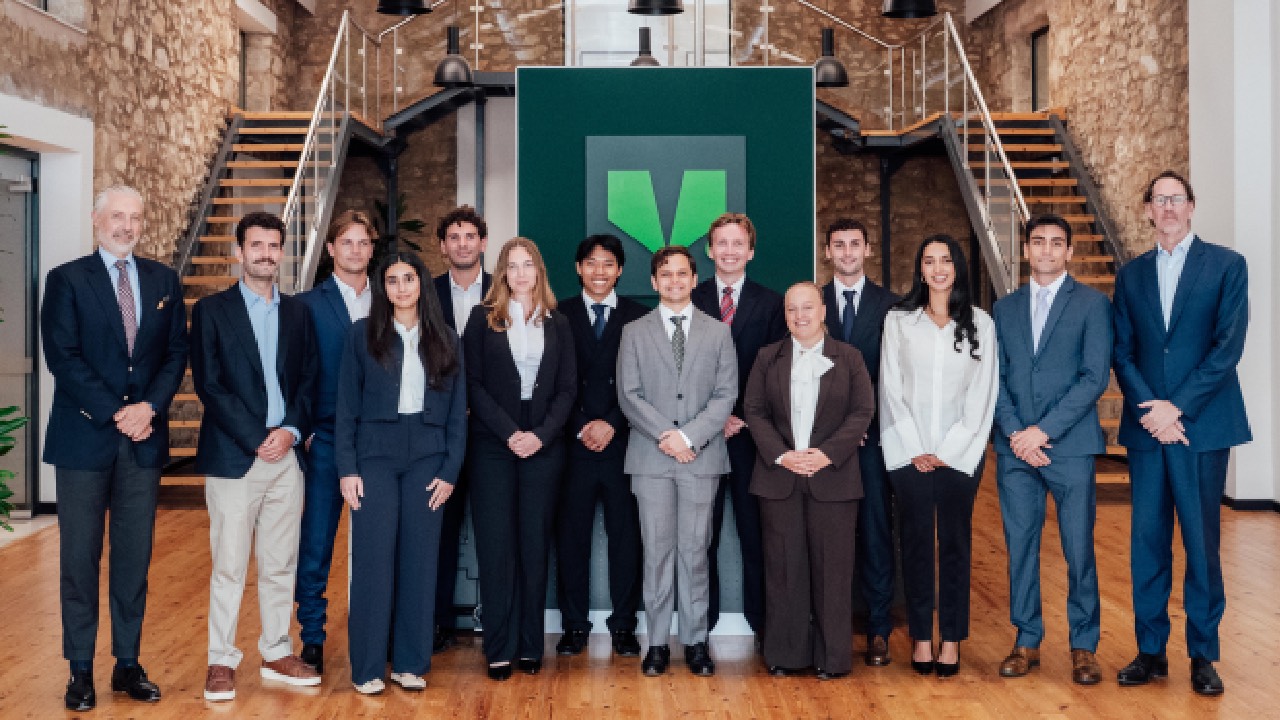
V. welcomes its new graduate cohort as programme expands across the group
Twelve graduates from nine nationalities join 11th year of V.’s expanded international management programme. V., the global ship manager and marine…

From Policy to Practice: Why Seafarers Are the Key to Maritime Excellence
The shipping industry is no stranger to regulation. Seafarers and ship operators work within a vast framework of international conventions, national…

Intermodal Report – Week 38 2026
Please find below the Intermodal market report for week 38 2026. Intermodal Report Week 38 2026 Market Insight By Nikos Tagoulis, Head of…

Allied – Weekly Market Review – Week 38
Please find below the Allied Weekly Report for Week 38 | 2026 ALLIED - Weekly Market Report- Week 38

Record year on the Northeast Passage but Arctic shipping remains very limited
In 2025, a record 103 transit voyages were made via the Northeast Passage. However, this is still equivalent to only around a day and a half of…

[xclusiv] S&P Report 21th September 2026
Please find below the [xclusiv] latest Weekly S&P Report [xclusiv] 2026_09_21 Market Commentary: VLCCs: Freight Boom Reprices the Fleet The VLCC…
Subscribe to our newsletter!
if you dont want to swim alone in the ocean of news, sign up for the newsletter, and you will receive daily all the important news of world shipping!
