Seaplace receives LR Approval in principle for its floating offshore wind platform ballast control system.
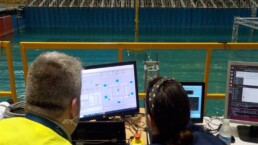

Ballast control system designed to improve the stability of floating offshore wind platforms.
Lloyd’s Register (LR) has granted Seaplace Approval in Principle for its active ballast control system, designed specifically for the company’s floating offshore wind platforms concept, CROWN, a novel technology that includes both buoy and reduced-draft spar operational concepts, expected to reduce CAPEX costs of the floating wind generation.
Seaplace’s active ballast control system is used to ballast/de-ballast the unit, changing the floater from its transport draft to its operational draft and vice versa. The system can also be used to partially or fully compensate the mean tilt produced by the wind loads improving the stability of floating offshore wind platforms.
The system can be used to stabilise the platform if a compartment is damaged, improving the safety level of the floating platform. Additionally, the system’s level of redundancy ensures it will still function even if one component, such as a valve or pump, fails for any reason.
The system was reviewed against applicable Rules and Regulations for the Classification of Offshore Units, including the acceptance of preliminary Failure Modes Effects and Criticality Analysis (FMECA) of the system. In addition, its software allows for remote manual operation, semi-automatic control and automatic operation.
Seaplace’s system, which has been designed to be used with different types of floating wind platforms, was first tested with software-in-the-loop tests and then with scale model tests performed at the IH Cantabria Offshore basin, as part of the CROWN project.
Approval in Principle forms part of the final phase of the CROWN technology development which enables Seaplace to move forward with the full-size demonstration concept.
Mark Darley, LR Marine & Offshore Director, commented: “Lloyd’s Register is proud to have supported Seaplace in the final phase of the CROWN technology development, enabling the company to move onto the full-size demonstration concept stage. This novel technology could help operators and their floating wind assets reach their market potential, with estimates of up to 10GW of capacity projected to be installed globally by 2030 and more than 100 GW by 2050.”
The floater platform technology has been designed to optimise manufacturing, enabling the production of one unit per week. Seaplace anticipates the floater concept will be able to host not only large wind turbines, but also hydrogen/ammonia systems and solar panels, all at once without impacting the unit stability.



Related News.

Navigating the Multi-Orbit Era: In Conversation with Intellian’s Jon Harrison at SMM 2026
At SMM 2026 in Hamburg, the rapid evolution of maritime satellite communications took centre stage. Across the exhibition halls, discussions among…

Cyprus ports need joint energy and investment strategy, shipping agents chief says
Cyprus needs a coordinated strategy for shipping, energy and environmental protection to support port investment and modernisation, Cyprus shipping…

MASO Public Affairs introduces MASO Regulatory Intelligence
A new subscription service helping businesses understand what is changing and what it means for them MASO Public Affairs introduces MASO Regulatory…

Anglo-Eastern helps turn CMBTECH’s ammonia ambition into an operational reality
From early feasibility study and risk-based design to newbuilding supervision, crew readiness and technical management, Anglo-Eastern drew on its…

Escalation of attacks threatens to derail recovery in Middle East oil exports
World oil demand is forecast to fall by 2.5 mb/d y-o-y in 4Q26 and 2.6 mb/d on average in 2026. As the Iran war manifests itself through restricted…

New study finds shipping pays twice its share to EU ETS earmarked revenues should triple to help build market for sustainable fuels and technologies
Shipping is responsible for around 10% of EU ETS emissions but pays almost 20% of the ETS bill. Unlike other sectors, it has never received free…

MSARC strengthens maritime mass rescue readiness through training and national live exercise off Dakar, Senegal
Joint MSARC–FHAS programme combines three days of SAR training with a national multi-agency live exercise The Maritime Search and Rescue Council ,…

Sogese report deliveries are still being delayed as container freight rates fluctuate
FOR IMPORTERS Spot rates into the Mediterranean are back at January levels, Far East to Europe reliability sits at pandemic lows, and nearly…

Glencore begins trading on Australian Securities Exchange
Glencore has begun trading on the Australian Securities Exchange under the ASX code GLC. Gary Nagle, Glencore’s CEO, said it was an exciting day for…

BIMCO Shipping Number of the Week
Suez Canal container ship transits exceed 50% of pre-disruption levels "During the first two weeks of October, weekly container ship capacity…
Subscribe to our newsletter!
if you dont want to swim alone in the ocean of news, sign up for the newsletter, and you will receive daily all the important news of world shipping!
