Decent work for fishing and seafood migrant workers in Asia Pacific
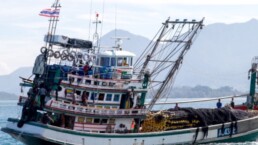

European Union and United Nations continue efforts to support safe labour migration and decent work in the fishing and seafood processing sectors in South East Asia
Migrant workers in South-East Asia’s fishing and seafood processing sectors will benefit from a new programme that continues efforts to promote regular and safe labour migration throughout the industry.
“Ship to Shore Rights South East Asia ” is a four year (2020-2024) programme implemented by the International Labour Organization (ILO) in collaboration with the International Organization for Migration (IOM) and the United Nations Development Programme (UNDP). The €10 million (US$11.29 million) initiative is funded by the European Union (EU).
The objectives of the programme include strengthening legal frameworks, protecting labour rights, and empowering workers in the fishing and seafood processing sectors in Cambodia, Indonesia, Laos People’s Democratic Republic, Myanmar, the Philippines, Thailand and Viet Nam.
The programme will build upon the work of the EU-funded Ship to Shore Rights project, which came to an end in March 2020. By bringing together the three UN agencies it will draw on the partners’ experience in the region, to protect the rights of migrant workers and address issues such as forced labour, human trafficking, illegal recruitment practices, and poor access to information.
The programme will work with current, potential and returning migrant workers in the fishing and seafood processing sectors, their families, and communities in the countries of origin and destination. It will also collaborate with national government authorities, workers’ and employers’ organizations, recruitment agencies, vessel owners and their associations, civil society organizations, and community-based organizations.
Pirkka Tapiola, Ambassador of the European Union to Thailand said, “The regional, multi-country cooperation will help create a level playing field that will benefit the relevant governments, private sectors and workers. This regional intervention will maintain the political link between sustainable fisheries and decent labour practices.”
“While progress has been made to improve working conditions for migrant workers in the fisheries and seafood processing sectors, many challenges still exist. This new initiative will promote innovative, rights-based and safe solutions to manage cross-border migration and employment. It will lead to a stronger industry and decent work for the women and men it employs,” said Chihoko Asada-Miyakawa, ILO Regional Director for Asia and the Pacific.
“This programme will continue to promote regular labour migration for those working in the fishing and seafood processing industries, ensuring that workers are recruited through safe channels. The project also places particular importance on the ability of migrants to affect change through increased awareness of their labour rights and ability to seek remedies where exploitation or trafficking is identified,” said Nenette Motus, IOM Regional Director for Asia and the Pacific.
“The contributions of migration to development in Asia Pacific are significant and can increase further, especially where it occurs through safe, orderly and regular channels. UNDP highly values our partnership with the European Union, ILO and IOM under this programme, as it allows us to unlock the transformative potential of migration and to support socio-economic progress in South-East Asia,” said Christophe Bahuet, UNDP Deputy Regional Director for Asia and the Pacific.
Countries in South-East Asia are among the world’s top producers and exporters of fish and seafood products. The fishing and seafood processing supply chains rely on several elements including capture fisheries and land-based primary and secondary processing. Migrant workers contribute significantly to these sectors as fishers and workers in the processing phase.
The regulatory framework for labour migration in the fishing and seafood processing sectors is often weak, with migrant workers frequently recruited through irregular and informal channels. While there have been important improvements in recent years, workers still report lack of written work contracts, underpayment or withholding of wages, other types of wage theft, and coercion or involuntary work. The COVID-19 pandemic has also had a severe impact on the lives and livelihoods on migrant workers and their families. The Ship to Shore Rights South East Asia programme will support governments and partners in tackling these challenges and ensure robust protection for all migrant workers in these economically and socially important sectors.
Source: ILO



Related News.

Meet the panellists of the CSN London Maritime Forum – Panel Discussion – “International Rule of Law; Is it a thing of the past?”
Meet the Panellists of the CSN London Maritime Forum "Shipping: Predicting an Unpredictable Future" - Panel Discussion - “International Rule of Law;…
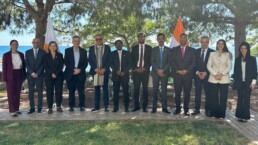
1ST Joint Maritime Committee Meeting Cyprus and India
The 1st meeting of the Cyprus–India Joint Maritime Committee was held yesterday in Limassol, within the framework of the Bilateral Agreement on…
BSM expands offshore services with strategic investment in OffshoreCrew
Bernhard Schulte Shipmanagement has agreed to acquire a 50% stake in OffshoreCrew AS, a Norwegian specialist in offshore recruitment and crewing…

Australia’s accelerated coal phase-out demands swift dispatchable capacity replacement, says GlobalData
Australia operates one of the world’s fastest-decarbonizing power systems, marked by a rapid structural shift away from thermal baseload generation…
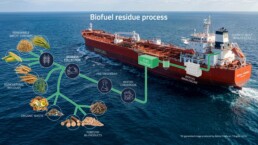
From residue to resource – the Rise and Risks of Marine Biofuels
While corn, sugarcane, wheat, or vegetable oils can be converted into fuel, their use for food is driving demand to develop waste or bi-products from…

PATH TO NET ZERO: Shipping companies face slow low-carbon bunker transition
Intensity reduced, not total emissions Cost of green fuel much higher Cargo owners less willing to pay premiums This is the sixth…

Allied Weekly Market Review Week 39
Pls find below the Allied - Weekly Market Review - Week 39 ALLIED - Weekly Market Report- Week 39

DORIC MONTHLY CHINA BAROMETER SEPTEMBER 2026
Pls find below the DORIC MONTHLY - CHINA BAROMETER SEPTEMBER 2026 CHINA_BAROMETER_SEPTEMBER_2026

Intermodal Report Week 39 2026
Pls find below the Intermodal Report - Week 39 2026 Intermodal Report Week 39 2026

New Direct Travel sustainability report sets context for lower-carbon crew change travel
Scope 1, 2 and 3 emissions baseline established across the combined organisation Report highlights marine expertise in addressing travel-related…
Subscribe to our newsletter!
if you dont want to swim alone in the ocean of news, sign up for the newsletter, and you will receive daily all the important news of world shipping!
