Nautical figures port of Rotterdam: a safe and busy year, slightly fewer vessels
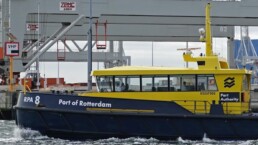

2020 was quite a special year for the Harbour Master’s Division of the Port of Rotterdam Authority. COVID-19 was a dominant factor in the port as well. Additional corona containment measures led to an increase in work pressure. Although employees had to perform considerably more tasks, work continuity was not compromised. In the port, one serious accident occurred when a hawser onboard a vessel broke. The number of sea-going vessels putting in at Rotterdam decreased by four percent: from 29,491 to 28,170.
‘I am proud of my colleagues. We have managed to keep the port running and safe under extreme circumstances,’ says (State) Harbour Master René de Vries.
‘I am proud of my colleagues. We have managed to keep the port running and safe under extreme circumstances,’ says (State) Harbour Master René de Vries.’
 — René de Vries, Harbour Master
Safety
Both the nautical safety index for accidents (8) and the safety environmental index for inspections (7.8) showed a higher score than the target figure 7.5. Due to COVID-19, the number of inspections and fines was lower than normal, as the social distancing measure was complied with as much as possible in the port as well. The number of accidents (primarily parking damage) showed only a slight increase, from 113 to 122.
To an increasing extent, drones are deployed for safety and order on the water. The Port Authority regularly calls in the Joint Fire Brigade Drone Team for inspections in the event of accidents and possible spills. The Human Environment and Transport Inspectorate of the Ministry of Infrastructure and the Environment also conducts inspections using drones, for instance to measure emissions and detect illegal degassing.
The Port Authority organised the first package delivery by drone to the sea-going vessel Pioneering Spirit.
Vital sector
The port is of vital interest to the Netherlands. After all, it is in the port where our food, medicines, and various raw materials arrive. In March, when the Netherlands was reeling under COVID-19, the port of Rotterdam had to stay open.
‘We immediately took a number of measures to keep the port operational 24/7. All training was temporarily discontinued, we reduced the crew on vessels and staffing at operational posts to a minimum, and we work with the same crew as much as possible. We only meet when necessary, and we respect measures like social distancing where we can,’ René de Vries says.
GRIP 4: cooperation in times of corona
Since March, stage 4 of the Coordinated Regional Incident-Management Procedure (Gecoördineerde Regionale Incidentbestrijdings Procedure, GRIP 4) has been in place for the Rotterdam Safety Region. It is the highest state of alert, which applies to a calamity involving multiple municipalities. The Harbour Master’s Division is a partner in the Safety Region. Cooperation with the Safety Board, the GGD (Regional Health Service), and the municipality of Rotterdam is intensive, and there is regular contact between the Port Authority, the port business sector, and the service providers to discuss the lay of the land and establish any actions needed.
The PHAR – Port Health Authority Rotterdam, a partnership between the coast guard, the GGD, the Safety Region, Seaport Police, and the Port Authority – plays an important part under the current circumstances. In pre-COVID days, the Maritime Declaration of Health – the health declaration to be completed for the vessels – was only a formality. Today, completing this document is compulsory before the vessel enters the port, and it has to be completed carefully. So far, this has resulted in over 25,000 emails with statements issued.
René de Vries considers it the harbour master’s task to help crews in distress. This is why the port of Rotterdam helped vessels and their crews that would otherwise be stranded due to COVID-19. Thanks to the humanitarian approach in Rotterdam, some 4,000 crew members from cruise ships could be repatriated. As a consequence, the love for Rotterdam among seafarers has greatly increased.
Bunkering
With container vessel CMA CGM Jacques Saade and cruise ship Mardi Gras refuelling, bunkering LNG (liquid natural gas) became commonplace in the port in 2020. The amount of LNG bunkered rose by as much as 170 percent. Nowadays, about ten LNG bunker vessels are active in the Rotterdam region.
The port is still by far the largest bunker port in Europe. Last year, fuel transshipment increased, see Rotterdam Bunker Port. Rotterdam also wants to be the most reliable bunker port. Therefore, the Harbour Master’s Division will introduce the ‘permit for bunker fuel suppliers’ on 1 February at the initiative of the bunker market and on behalf of the municipality. To date, 17 applications for a permit have been submitted

FERM
Harbour master René de Vries is the port cyber resilience officer of the port and as such the face of FERM. FERM is an initiative of the Port of Rotterdam Authority, the municipality of Rotterdam, Seaport Police Rotterdam, Deltalinqs, and the Rotterdam Safety Region. FERM is focused on connecting entrepreneurs and organisations in the port of Rotterdam online and offline, with the object of safeguarding digital security. In its five-year existence, FERM has developed into the ultimate cyber resilience centre of the port of Rotterdam. Since 1 January 2021, the partnership has been a foundation with its own director and organisation. FERM dedicates itself to developing the services (scans, training, information about threats, and exercises) further. The idea is that 100 companies in the port of Rotterdam will have joined this ‘digital’ fire brigade by 2023.
Pilotage Requirement New Style
On 1 January 2021, the Dutch Shipping Traffic Act (Scheepvaartverkeerswet) was amended. Since this date, the Netherlands has had a new Pilots’ Act (Loodsenwet). With the pilotage requirement decree and regulation 2021 a new system of exemptions has been in place in the form of so-called Pilotage Exemption Certificates (PECs). A captain holding a PEC is granted exemption from the pilotage requirement for a certain vessel on a route where pilotage is compulsory. There are various PEC types, depending on the length of the vessel. The Port Authority is currently handling 600 PEC applications from the former register for small sea-going vessels. Additionally, the current exemption statements and exemptions (approximately 130) will be converted into the new PEC system by the end of 2021 at the latest.
Harbour Master’s Division
On behalf of the State and the mayor of Rotterdam, the Harbour Master’s Division is responsible for the public duty: the safe and smooth handling of shipping traffic. The division has 440 employees, 380 of whom work in operations, for instance on patrol vessels, or they work on traffic scheduling, or handle and inspect hazardous substances.*



Related News.
Meet the panellists of the CSN London Maritime Forum – Panel Discussion – “International Rule of Law; Is it a thing of the past?”
Meet the Panellists of the CSN London Maritime Forum "Shipping: Predicting an Unpredictable Future" - Panel Discussion - “International Rule of Law;…
1ST Joint Maritime Committee Meeting Cyprus and India
The 1st meeting of the Cyprus–India Joint Maritime Committee was held yesterday in Limassol, within the framework of the Bilateral Agreement on…
BSM expands offshore services with strategic investment in OffshoreCrew
Bernhard Schulte Shipmanagement has agreed to acquire a 50% stake in OffshoreCrew AS, a Norwegian specialist in offshore recruitment and crewing…

Australia’s accelerated coal phase-out demands swift dispatchable capacity replacement, says GlobalData
Australia operates one of the world’s fastest-decarbonizing power systems, marked by a rapid structural shift away from thermal baseload generation…
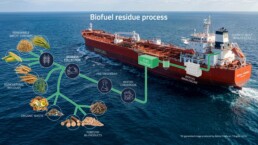
From residue to resource – the Rise and Risks of Marine Biofuels
While corn, sugarcane, wheat, or vegetable oils can be converted into fuel, their use for food is driving demand to develop waste or bi-products from…
PATH TO NET ZERO: Shipping companies face slow low-carbon bunker transition
Intensity reduced, not total emissions Cost of green fuel much higher Cargo owners less willing to pay premiums This is the sixth…
Allied Weekly Market Review Week 39
Pls find below the Allied - Weekly Market Review - Week 39 ALLIED - Weekly Market Report- Week 39
DORIC MONTHLY CHINA BAROMETER SEPTEMBER 2026
Pls find below the DORIC MONTHLY - CHINA BAROMETER SEPTEMBER 2026 CHINA_BAROMETER_SEPTEMBER_2026

Intermodal Report Week 39 2026
Pls find below the Intermodal Report - Week 39 2026 Intermodal Report Week 39 2026
New Direct Travel sustainability report sets context for lower-carbon crew change travel
Scope 1, 2 and 3 emissions baseline established across the combined organisation Report highlights marine expertise in addressing travel-related…
Subscribe to our newsletter!
if you dont want to swim alone in the ocean of news, sign up for the newsletter, and you will receive daily all the important news of world shipping!
